
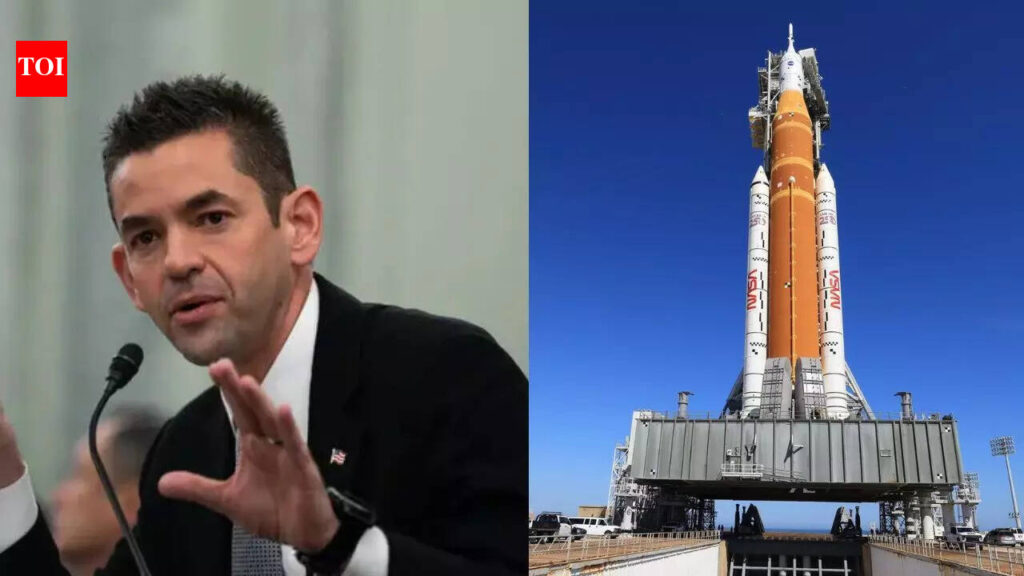
 PC: New York Times and Space NASA is shaking up its Artemis programme. The agency had originally planned a simple sequence: Artemis II would fly around the Moon, then Artemis III would attempt a lunar landing in 2028. But it seems things aren’t so straightforward. Now Artemis III will stay closer to Earth first, with astronauts heading to low-Earth orbit in 2027. The idea is to test docking with a lunar lander before actually going to the Moon. It seems a cautious step, maybe even necessary given the long gaps between missions and the technical hurdles. Experts say it could help reduce risks and smooth out one of the most complex operations NASA has attempted in decades.
NASA plans Artemis II mission to send astronauts around the Moon
Artemis II remains on track to take four astronauts around the far side of the Moon. The flight had been scheduled for March, but a helium leak on the Space Launch System (SLS) rocket delayed things. The rocket was returned to the Vehicle Assembly Building at Kennedy Space Center for repairs. NASA says the earliest launch is now April, though it might slide depending on how fast the fixes are completed. It seems delays like this are par for the course with rockets.NASA administrator Jared Isaacman explained that the current plan “was not a pathway to success.” Long waits between uncrewed tests, Moon flybys, and actual landings could increase risks. Testing the Orion spacecraft and the lunar lander in low-Earth orbit first might catch problems early. “I would certainly much rather have the astronauts testing the integrated systems in orbit than on the Moon,” he said.
NASA seeks faster lunar lander plans to keep Artemis III on track
One big unknown remains. NASA hasn’t selected the final lunar lander yet. SpaceX, led by Elon Musk, has a contract to build a lander using its Starship rocket. But delays with Starship have prompted NASA to ask for a new plan to speed things up. Blue Origin, Jeff Bezos’ company, has also been asked to pitch an accelerated lunar lander design. Artemis III might test docking with one or both of these landers.There’s a subtle urgency here. China aims for a Moon landing by 2030 and is steadily progressing. Both nations seem particularly interested in the Moon’s south pole, potentially for long-term bases. NASA might feel pressure to get its missions lined up efficiently. It seems this added orbit step could give the US some breathing room while still keeping 2028 in sight for a historic lunar return.
NASA slowly prepares for the Moon landing
NASA’s plan is evolving, step by step. Artemis III orbiting Earth first might look like a minor detour. But it seems a careful one. Testing systems in a safer environment could save time, headaches, and maybe even lives. The Moon is still a long way off, but these small adjustments suggest NASA is learning to pace itself, even while the countdown continues.