
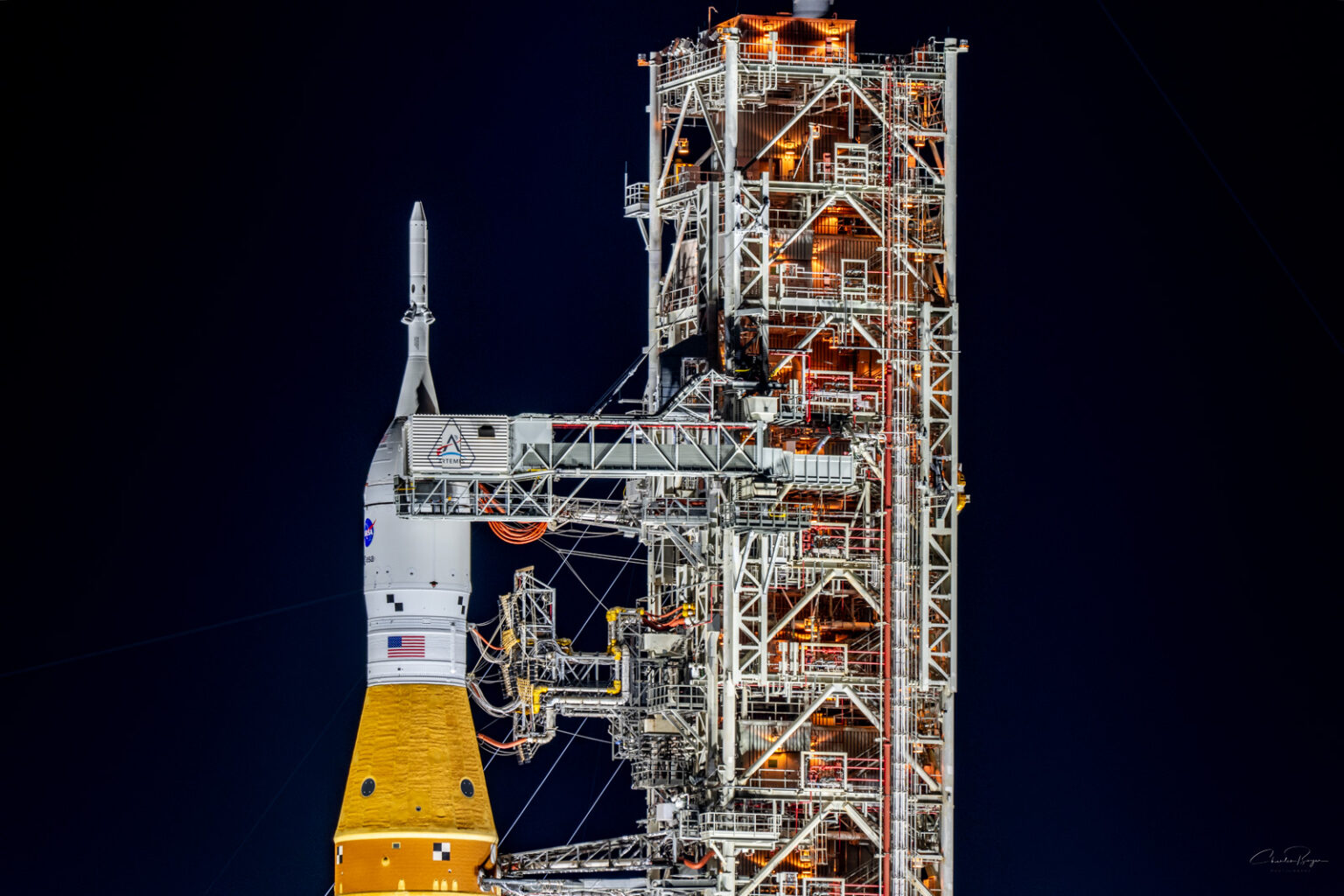
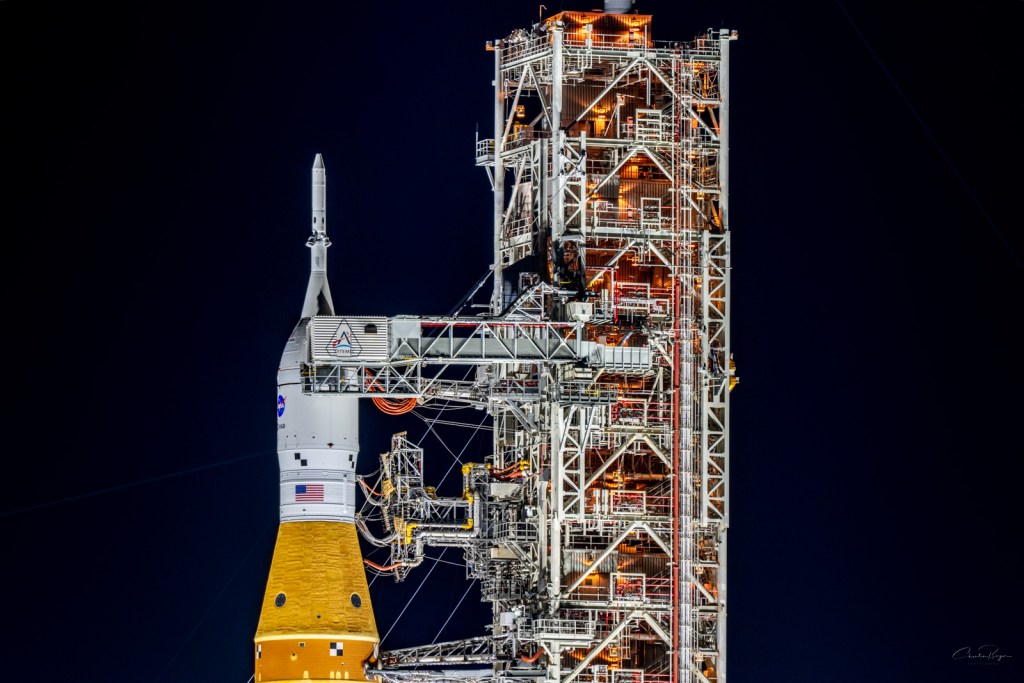
Artemis II
Photo by Charles Boyer
NASA announced a major restructuring of the Artemis program today, scrapping the long-planned Block 1B upgrade to the Space Launch System, converting the Artemis III mission from the first crewed lunar landing in over 50 years into a low Earth orbit test flight similar to Apollo 9, and committing to what Administrator Jared Isaacman called an Apollo-style buildup — with annual Moon missions and a target launch cadence of just ten months between flights.
The changes represent the most significant restructuring of the Artemis campaign since the program was established during President Trump’s first term. At their core, the decisions reflect a blunt assessment from NASA leadership: the current approach of launching SLS once every three years while simultaneously introducing major vehicle upgrades and attempting increasingly ambitious missions is, in Isaacman’s words, “not a path to success.”
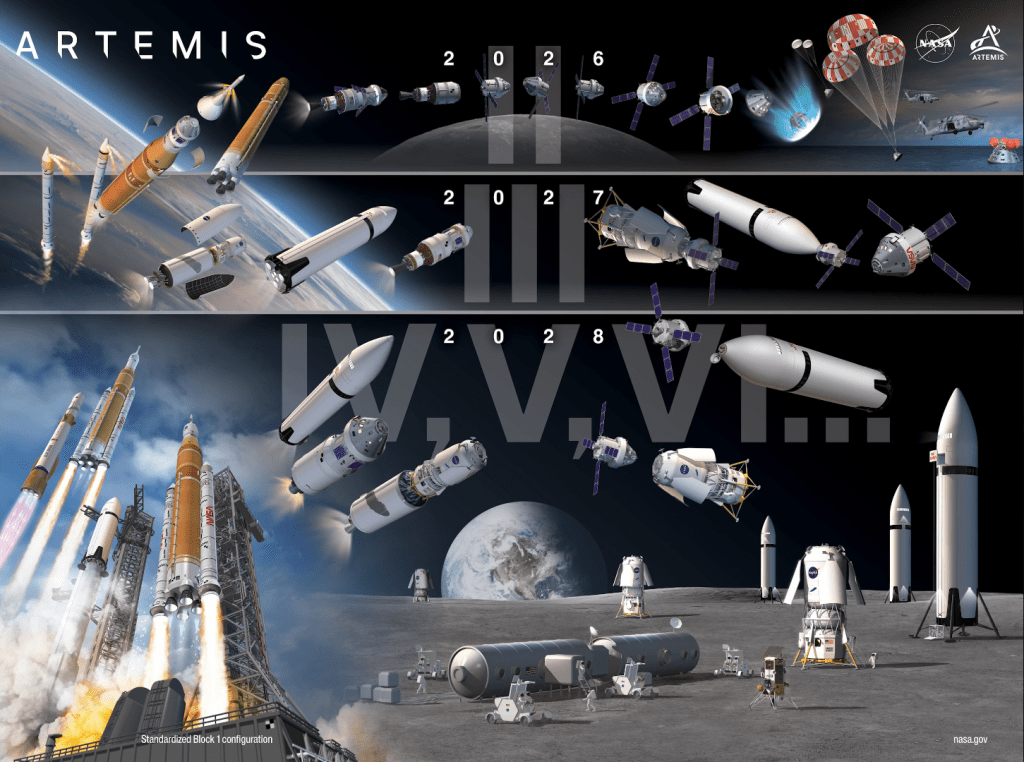
NASA released this graphic of the plans for Artemis: from top to bottom, Artemis II this year, Artemis III in 2027 and Artemis IV in 2028. Credit: NASA
Artemis III: Now An Apollo 9-like Mission
Under the new plan announced today, Artemis III will fly in mid-2027 to low Earth orbit. The mission will carry a crew aboard SLS and Orion to rendezvous and potentially dock with one or possibly both commercial landers: SpaceX’s Starship Human Landing System and Blue Origin’s Blue Moon. NASA intends to use the flight as an integrated shakedown of the systems that will eventually carry astronauts to the lunar surface. They plan to test docking interfaces, life support crossover, communications, and propulsion systems while the vehicles are still close to home.
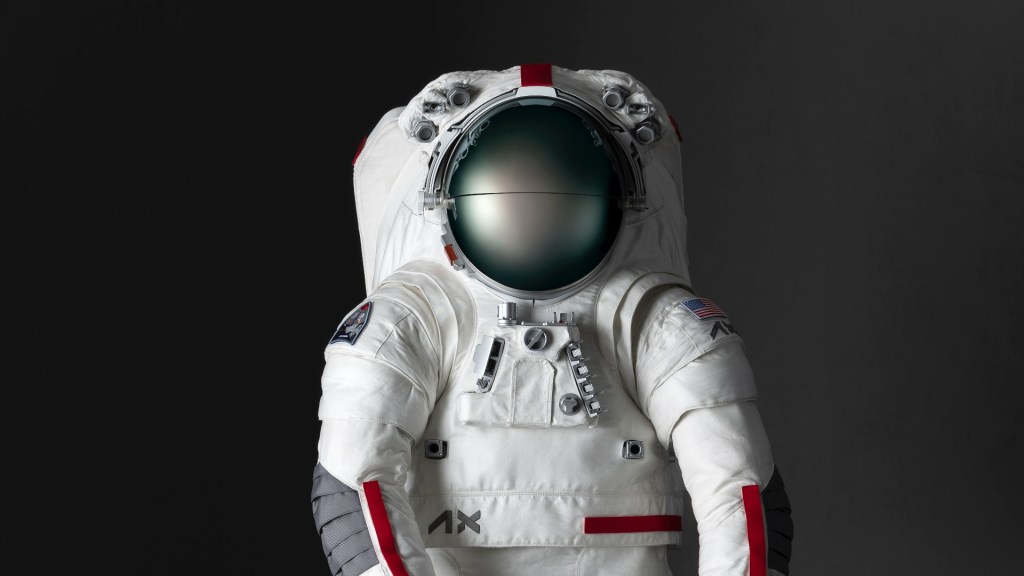
The single AxEMU architecture is evolvable, scalable and adaptable for missions on the lunar surface and in low-Earth orbit (LEO). The AxEMU has significant advancements in safety, mobility, sizing, and performance. Photo: Axiom Space
If Axiom Space’s EVA suits development timelines allow, the agency also wants to test those for vehicle interface testing, or at a minimum, suit up an astronaut in microgravity inside a lander. “I would certainly much rather have the astronauts testing out the integrated systems of the lander and Orion in low Earth orbit than on the Moon,” Isaacman said. “I’d like them to get in the suits for the first time, even inside the vehicle — this doesn’t necessarily have to be an EVA — before they actually walk on the Moon in them.”
The first crewed lunar landing now shifts to Artemis IV, targeted for early 2028. Artemis V would follow in late 2028, giving NASA two shots at a surface mission that year. Whether the agency can actually achieve that pace depends on how quickly it can turn the launch pad, something it hasn’t done in under three years since the program began flying. They will also need hardware, specifically SLS, landers and suits being operationally ready at that time.

SLS Block 1B Is Now Kaput
Also, Friday’s announcement includes the effective cancellation of the SLS Block 1B configuration.
Block 1B was supposed to debut on Artemis IV, replacing the Interim Cryogenic Propulsion Stage with the more powerful Exploration Upper Stage and requiring the still-under-construction Mobile Launcher 2. The upgrade would have significantly increased SLS payload capacity to the Moon and was considered essential for missions carrying co-manifested cargo to the planned Lunar Gateway station.
That’s now off the table for the near-term. Associate Administrator Amit Kshatriya framed the decision as a return to the incremental philosophy that made Apollo successful: “We want to fly the landing missions in as close to the same Earth ascent configuration as possible. This means using an upper stage and pad systems in as close to the Block 1 configuration as possible.”
When pressed on whether the Exploration Upper Stage is formally canceled, both Isaacman and Kshatriya declined to discuss contractual specifics, saying only that NASA would “work with our partners that have been developing the evolved block configuration of these systems to take proper actions to align their efforts towards this goal.”

Boeing, the SLS core stage prime contractor and the company most directly affected by the EUS decision, issued a supportive statement.
“Boeing is a proud partner to the Artemis mission and our team is honored to contribute to NASA’s vision for American space leadership. The SLS core stage remains the world’s most powerful rocket stage, and the only one that can carry American astronauts directly to the moon and beyond in a single launch. As NASA lays out an accelerated launch schedule, our workforce and supply chain are prepared to meet the increased production needs. With a rocket designed at NASA’s Marshall Space Flight Center in Huntsville, Alabama, built at America’s rocket factory at NASA’s Michoud Assembly Facility in New Orleans, and integrated at NASA’s Kennedy Space Center in Florida, we are ready to meet the increased demand.”
— Steve Parker, President & CEO, Boeing Defense, Space & Security
Not so fast, my friends: while many are saying that EUS is canceled, a close reading of what was stated today seems to be much more ambiguous than an announcement of outright cancelation.
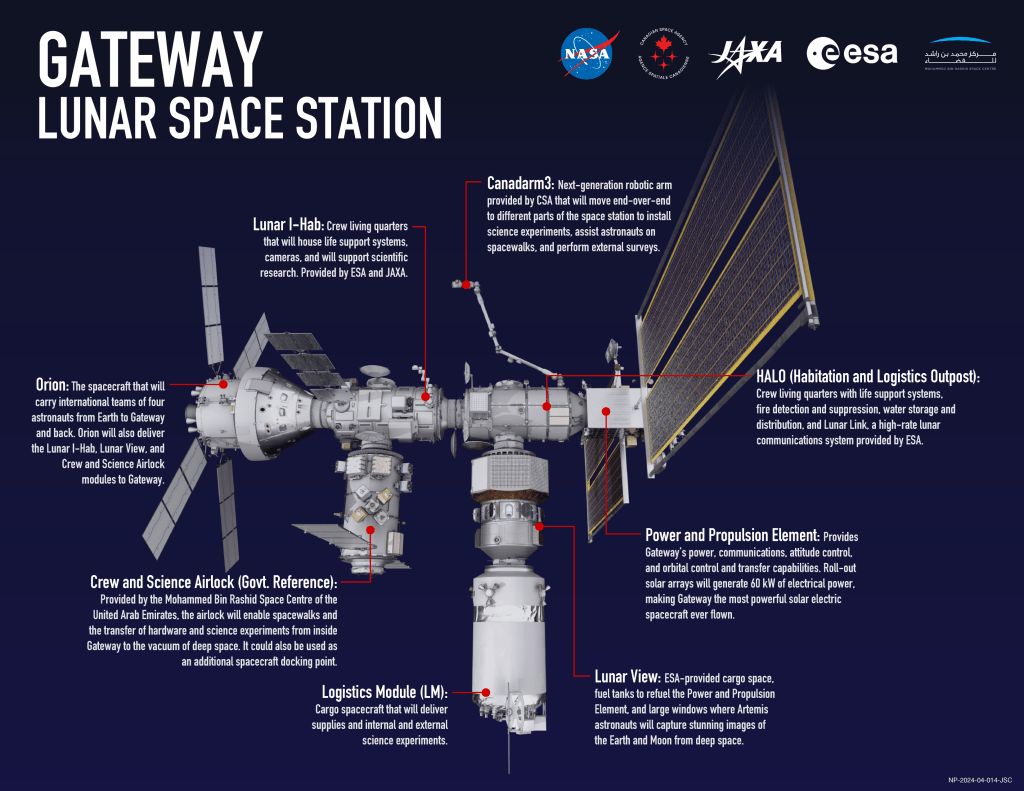
The Lunar Gateway, the planned space station in lunar orbit that was supposed to serve as a staging point for surface missions starting with Artemis IV was conspicuously absent from Friday’s revised architecture. Isaacman deflected questions about Gateway’s status, saying the focus needs to stay on “the hardest part — what we haven’t been able to do in the last 53 years, which is getting a good launch cadence and sending American astronauts to and from the Moon.”
Credit: ESA
Finally, when asked about hardware post-Artemis V, Jared Isaacman said, “President Trump created a program to return to the Moon, to build out a moon base. That’s going to require lots of missions to and from the Moon — crew and cargo — in a very affordable, repeatable way. This architecture will naturally evolve just as it is today. I can’t tell you exactly what Artemis X looks like. I bet it’s going to look very different from what Artemis V looks like, as I’m sure it will for Artemis L. That’s the idea. When you say you’re going to go back to the Moon and be able to stay.”
Hardware Currently In The Pipeline
For a plan that involves flying four SLS missions by the end of 2028, the question of whether enough hardware actually exists was largely answered today. Kshatriya provided a rapid-fire inventory during the press conference that suggests the production pipeline is further along than the program’s sluggish flight rate might imply.
Artemis Vehicle Production Status
Mission
Component
Status
Details
Artemis III
Orion Crew & Service Module (CSM-3)
In Progress
In the factory at Kennedy Space Center, nearing mate
Artemis III
AVCOAT Heat Shield
Ready
Redesigned to address AVCOAT permeability issues from Artemis I; at Kennedy Space Center
Artemis III
SLS Core Stage — Upper Four-Fifths
In Progress
Major structural join completed at Michoud Assembly Facility in January; expected to ship to KSC within a couple of months
Artemis III
SLS Core Stage — Engine Section
At KSC
Already delivered to Kennedy Space Center
Artemis IV
Orion Crew & Service Module (CSM-4)
In Production
Being populated with hardware at Kennedy Space Center
Artemis IV
European Service Module (SM-4)
Delivered
Delivered to Kennedy Space Center from Bremen, Germany
Artemis IV
SLS Core Stage — Barrel Sections
In Production
Barrel sections currently in production at Michoud
The hardware exists or is well along. The constraint, as Isaacman and Kshatriya both emphasized, is the workforce and ground infrastructure needed to process, stack, and launch it at the tempo they’re targeting.
NASA’s recently announced workforce directive, which calls for converting contractor positions to civil servant roles and rebuilding in-house technical competencies, is positioned as a key enabler of the faster cadence.
Isaacman noted that 75 percent of NASA’s current workforce is contractors and argued that many of those roles should be filled by civil servants who can provide continuity across missions and maintain the institutional knowledge needed to complete the mission at hand. “We should have the ability to make changes and adjustments as we see fit because we are NASA,” he said. “We did all this the first time.”
The directive also envisions more “side-by-side” work between NASA civil servants and contractor teams — a departure from the more hands-off commercial services model that has characterized much of the Artemis era. Whether this represents a philosophical shift in how NASA manages its commercial partnerships or simply a response to the realities of processing complex vehicles at a government launch site remains to be seen.
Isaacman said today that “We’re also asking people to work faster. We’re talking about hiring and bringing in workforce. So there are areas where we expect savings as a result of this approach, and there are areas we expect to spend more. We do believe that we have the resources available to achieve this.”
Bottom Line: Will This Program Shift Work?
Whether NASA can actually execute a ten-month launch cadence with SLS — a vehicle that has never turned faster than three years and has to date launched only once — is the central question. The hardware pipeline is healthier than most people realize. The workforce plan is ambitious but grounded in historical precedent. The political support, at least for now, appears genuine and bipartisan.
The risk is that this becomes another in a long line of Artemis rebaselines, where a bold plan on paper that slowly erodes under the weight of technical reality, budget pressure, and the sheer difficulty of what NASA is trying to do. Isaacman seems aware of that trap: “Launching every three years and making massive changes in the configuration of the vehicle is not a recipe for success,” he said. “There is simply a right and wrong way to go about doing this.”
The next 18 months will determine whether this time is different and will show us whether NASA is actually going to travel beyond low-Earth orbit in the foreseeable future.