
Stargazers will soon have an opportunity to view six planets in alignment in the night sky, according to NASA.
Mercury, Venus, Neptune, Saturn, Uranus and Jupiter will take part in a rare planetary parade on Saturday, the space agency said.
MORE: NASA targets Wednesday for rollback of Artemis II rocket and spacecraft
Planets are always on the move, so the viewing window will be brief. The best time to see the planets align will be just after sunset.
For the best view, astronomy guides recommend looking toward the western horizon about 30 minutes after sunset. This will give viewers the highest probability of spotting at least three planets at the same time, since Saturn, Mercury and Venus set in the west right after the sun.
The six planets will appear low in the western sky, with Mercury and Venus appearing the lowest and sinking below the horizon shortly after sunset, according to astronomers. Mercury and Venus are usually tricky to spot but will be visible on Saturday.
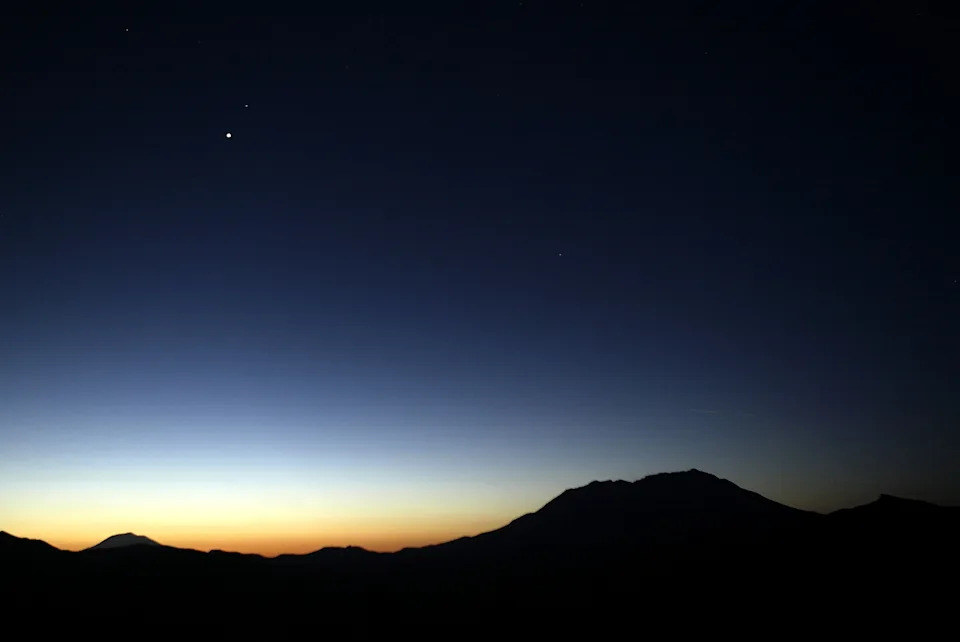
David Mcnew/Getty Images – PHOTO: Mount St. Helens National Monument, Washington.
Saturn and Neptune will appear just above Mercury and Venus, while Jupiter and Uranus will appear a bit higher in the western sky, to the left of the others.
Viewers will need optical assistance via telescope or binoculars to see Uranus and Neptune, but the remaining four planets will be visible to the naked eye, NASA said.
MORE: 7-planet parade will be visible on last day of February
Planets can sometimes appear “bunched together in the sky” because they orbit the sun in the same plane, known as the ecliptic, according to NASA. The planets will form a clear line along the ecliptic plane.
On the same day last year — Feb. 28, 2025 — seven planets were in alignment: Mars, Jupiter, Uranus, Neptune, Mercury, Saturn and Venus.
NASA says these planetary alignments happen every few years. The last one was visible from Earth in August 2025.
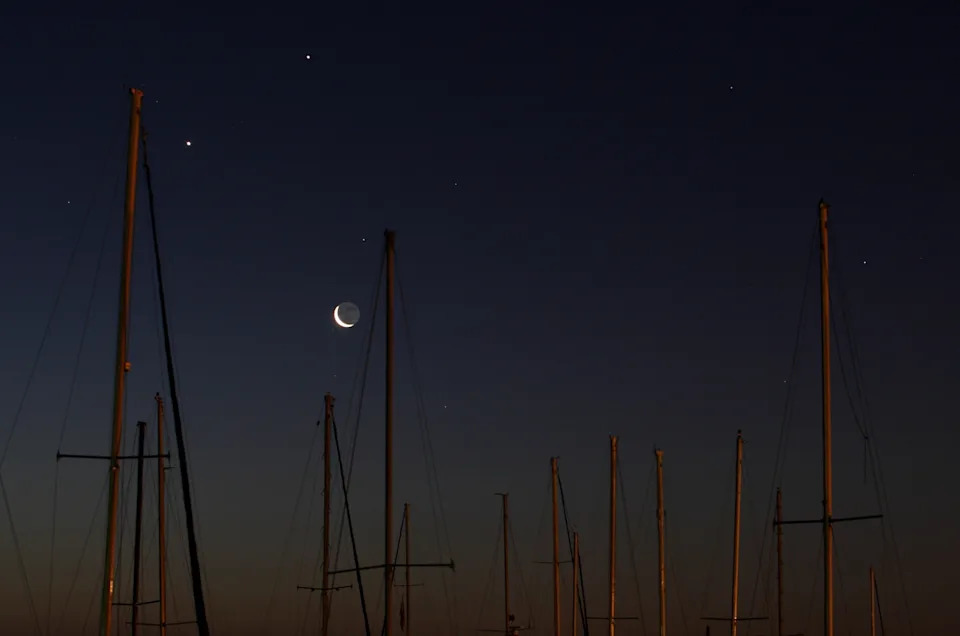
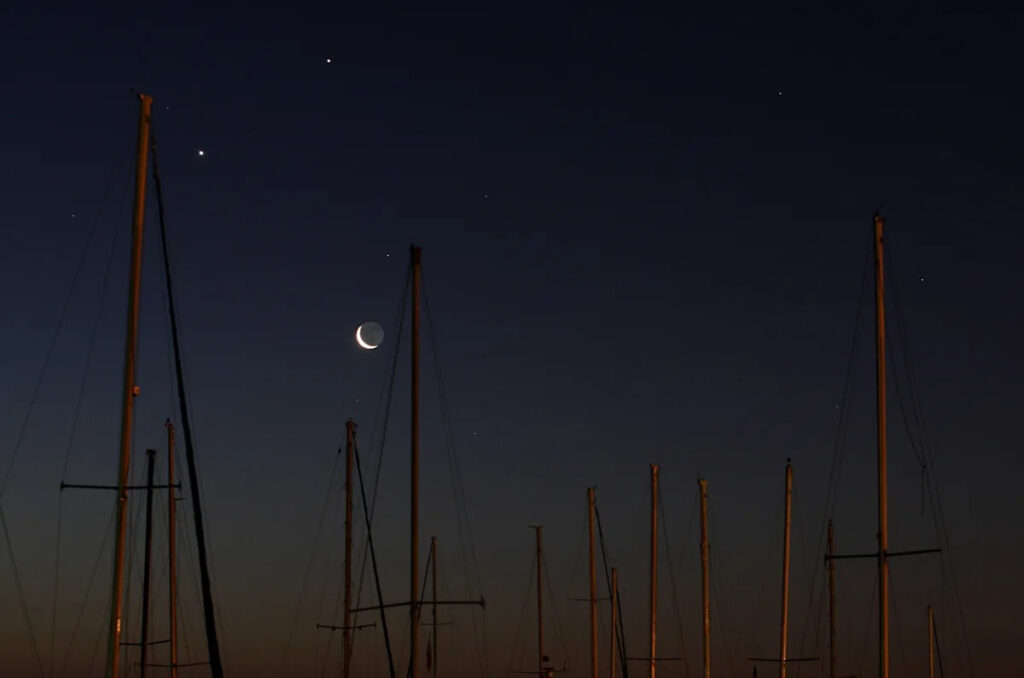
Stan Honda/AFP via Getty Images – PHOTO: In a rare alignment, the crecent Moon rises with the planets Venus (L) and Jupiter (top) over boat masts at a dock at dawn on February 4, 2008 in Titusville, Florida.
This year’s parade of planets is one of the first notable astronomical events taking place in 2026, according to NASA.
A total lunar blood moon eclipse will be visible from North America on March 3, especially for viewers on the West Coast. This will be the first lunar eclipse visible in the Americas since 2025.
A rare blue moon — which signifies the rare occasion of having a second full moon in the same month — will take place on May 31.
MORE: Astronomers witness dawn of new solar system for 1st time
From June 8 to 9, the two brightest planets in the sky, Venus and Jupiter, will be in conjunction, appearing “only a pinky finger apart,” according to NASA.
The Perseids meteor shower, considered the best meteor shower of the year due to its swift and bright meteors, will be best seen from Aug. 12 to 13, during a darker sky courtesy of the new moon.
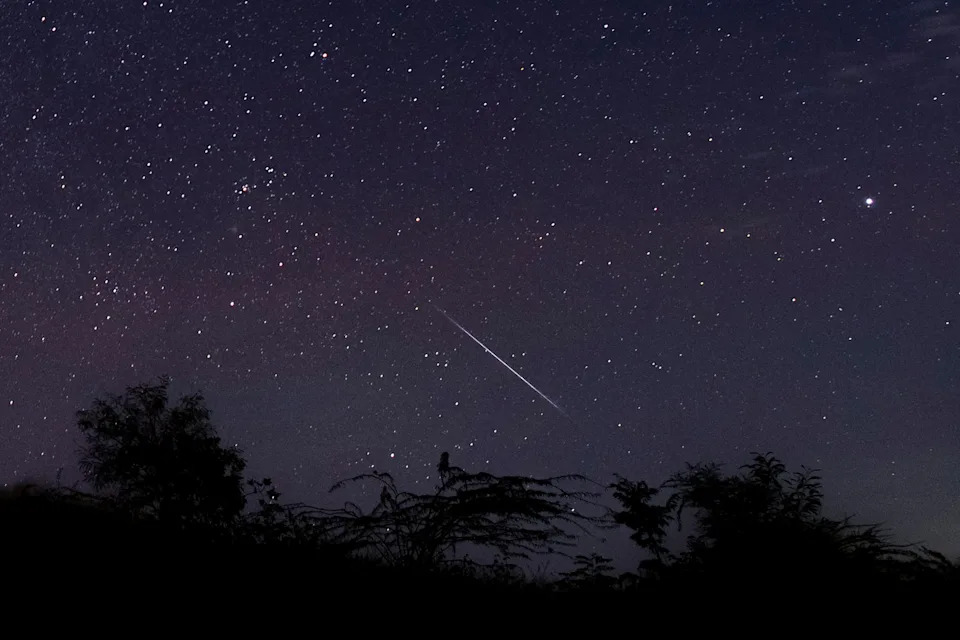
Ye Aung Thu/AFP via Getty Images – PHOTO: This photo taken late December 14, 2018 with a long time exposure shows a meteor streaking through the night sky over Myanmar during the Geminid meteor shower seen from Wundwin township near Mandalay city.
And the Geminids, the most reliable meteor shower of the year, will take place from Dec. 13 to 14.
A Christmas Eve supermoon — when a full moon is closest to the Earth — rounds out the most spectacular astronomical events in 2026, according to NASA.
ABC News’ Briana Alvarado contributed to this report.