
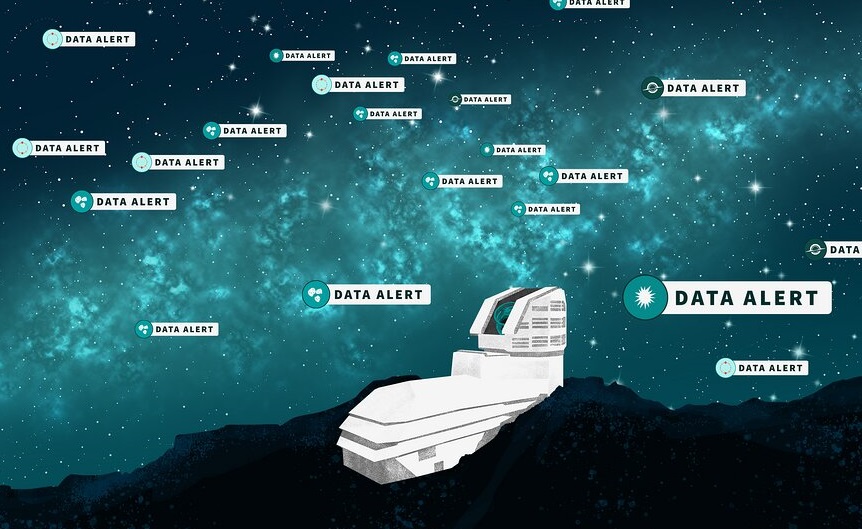
The Vera C. Rubin Observatory has launched its new near-real-time alert system, designed to notify astronomers of real-time changes in the night sky. On the night of 24th February, the system sent out its first wave of 800,000 alerts. Once fully operational, the observatory is expected to generate up to seven million alerts per night.
First Alerts and Upcoming Survey
The first alerts include supernovae, variable stars, active galactic nuclei, and fast-moving objects in our Solar System, like asteroids. These alerts mark one of the final steps before the Rubin Observatory begins its full-scale survey later this year, called the Legacy Survey of Space and Time (LSST).
During the LSST, Rubin will scan the Southern Hemisphere sky every night for ten years. It will use the largest digital camera ever built to capture even the smallest changes. These alerts will help track the many discoveries Rubin is expected to make. In its first year alone, the observatory could image more objects than all other optical telescopes in history combined!
‘The discoveries reported in these alerts reflect the power of NSF–DOE Rubin Observatory as a tool for astrophysics and the importance of sustained federal support,’ said Kathy Turner, program manager in the High Energy Physics program in the DOE’s Office of Science.
A Window into a Changing Universe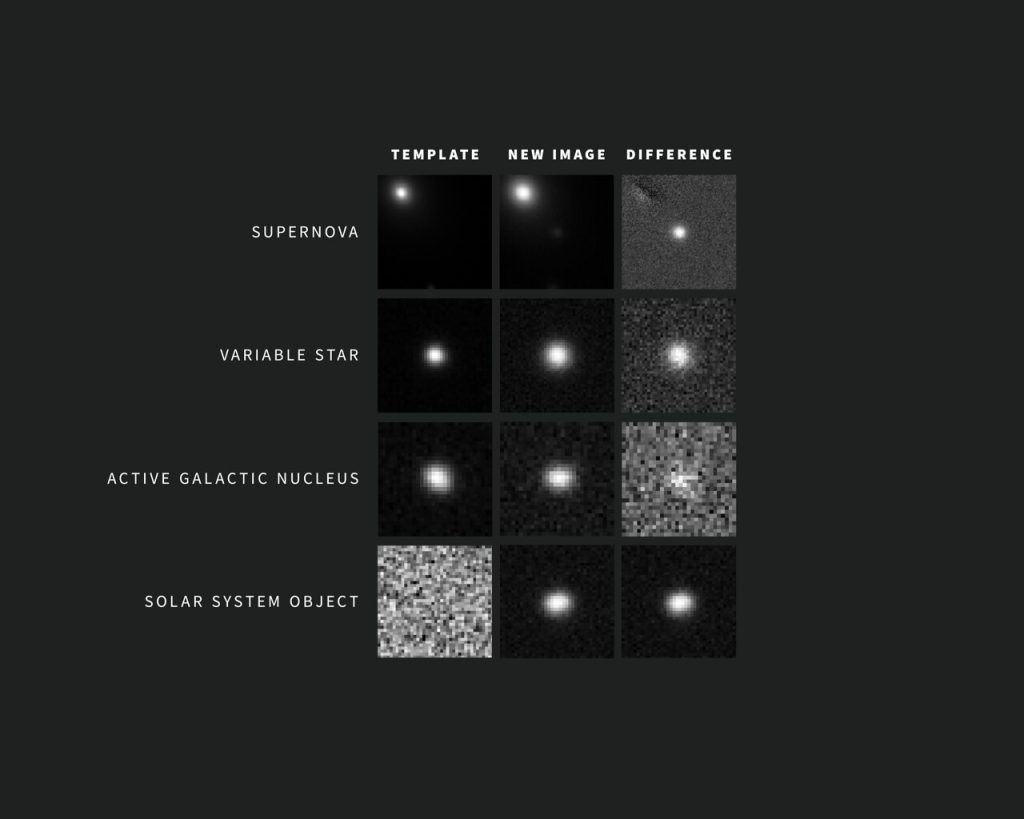 Examples of Alerts from NSF–DOE Rubin Observatory. Credit: NSF–DOE Vera C. Rubin Observatory/NOIRLab/SLAC/AURA. Alert images with classifications provided by ALeRCE and Lasair
Rubin’s alerts will fuel discoveries across astronomy, astrophysics, and cosmology. Though the night sky appears still to most of us, it’s constantly changing. Each alert highlights something new: a star that brightened or dimmed, a previously unseen object, or something moving across the sky.
These real-time updates will help scientists catch supernovae in their earliest stages, track asteroids that could pose a threat to Earth, and spot rare interstellar visitors passing through the Solar System. The data will also provide fresh insights into dark matter, dark energy, and other cosmic mysteries.
Enabling Global Collaboration
Moreover, because Rubin’s alerts are made public in near real time, scientists around the world can quickly coordinate follow-up observations using other ground- and space-based telescopes. This unprecedented level of collaboration will allow researchers to study cosmic events in greater detail as they unfold.
Published by Space Enthusiast
An amateur rocket enthusiast with a keen interest in all space-related activity. Looking forward to the day when the UK starts launching rockets into space and I’m able to watch launches (from a safe distance of course).