
Astronomers have discovered a very small and extremely far away galaxy that it’s forming stars at very high speed. This galaxy is called MACS0416_Y1, but it’s also known as Y1 (much easier, right?). The most striking thing about it, apart from its distance, is the speed at which it creates new stars.
Y1 is found more than 13 billion light-years away, which means we are seeing it as it was when the universe was barely 600 million years, a bit after the Big Bang. Despite the universe being very young at the time, this galaxy already worked as a truly star-producing factory.
The research was published in the scientific journal Monthly Notices of the Royal Astronomical Society, highlighting the importance of the finding for understanding how galaxies formed in the early universe. So, let’s find out more about this, shall we?
A galaxy creating stars very fast
To understand the importance of this discovery, we should compare it to our own galaxy, the Milky Way. This creates about one solar mass worth of new stars each year, which means that it creates roughly the equivalent of one Sun per year. However, Y1 transforms more than 180 solar masses of gas into new stars every year. So, it creates stars around 180 times faster than our own galaxy.
The thing is that Y1 is small, but works in a very high rhythm. This is why scientists describe it as if it were in ‘’turbo mode.’’
How it was discovered
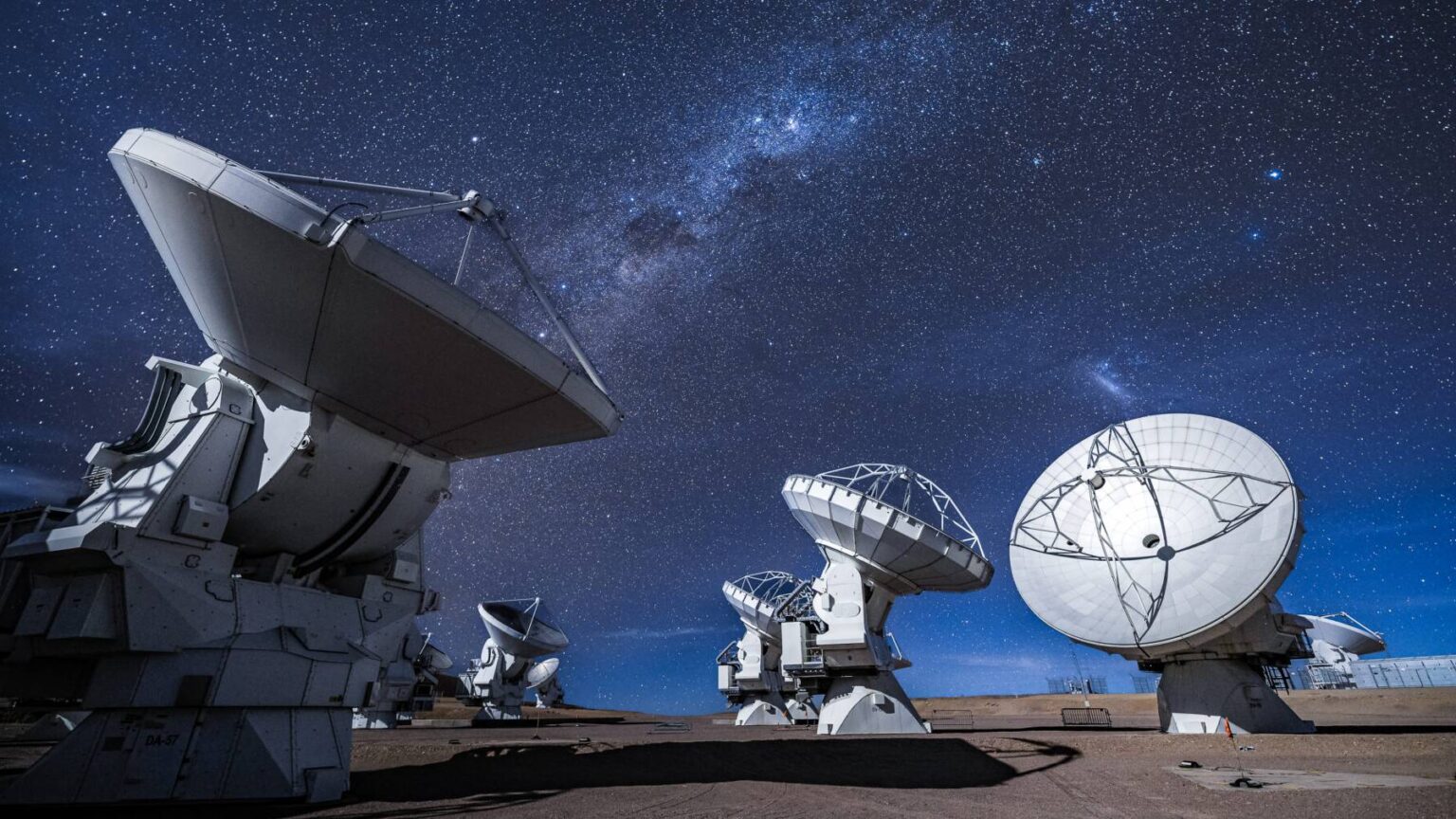
Due to its huge distance, Y1 can’t be studied with common telescopes, so scientists had to use the Atacama Large Millimeter/submillimeter Array (ALMA), located in Chile. ALMA doesn’t observe visible light as we see it with our own eyes, it detects millimeter and submillimeter wavelengths, which allow scientists to see cold dust and gas in distant galaxies. In the case of Y1, ALMA measured the glow coming from dust inside the galaxy.
This dust has a temperature of about 90 Kelvin, which is approximately minus 180 degrees Celsius. This is extremely cold, right? Well, it is actually unusually warm for a galaxy so far away and so early in the universe’s history, most distant star-forming galaxies show dust that is much colder. So, the warmer temperature suggests that Y1 is filled with young, massive stars releasing large amounts of energy into their surroundings. These newborn stars heat the dust, causing it to glow brightly.
Another important detail is that Y1 is located behind a closer cluster of galaxies. The gravity of that cluster bends and magnifies Y1’s light, acting like a natural magnifying glass. Therefore, this gravitational effect helps astronomers detect such a distant and faint object.
The mystery of the dust in the first galaxies
For years, astronomers have faced an issue: some very old galaxies seemed to contain more dust than they should for their age. Cosmic dust is normally formed around aging stars or in supernova explosions. In such a young universe, there shouldn’t have been enough time to produce big amounts of dust.
So, Y1 helps solve this mystery since its dust is warmer, even a relatively small amount can shine very brightly in infrared light. This brightness can make it appear as though there is much more dust than actually exists. Basically, some early galaxies may not have had enormous dust reservoirs, their dust may simply have been hotter and therefore more visible.
This finding changes how scientists estimate how quickly the first galaxies enriched their surroundings with heavy elements. What’s more, it improves computer models that try to explain how the early universe evolved from simple gas into the complex network of galaxies we see today.
Importance of this finding beyond astronomy
Although Y1 is billions of light-years away, what happens inside is related directly to us. Why? Because inside galaxies like Y1, stars produce heavier elements like helium and, when those stars die, they release those elements to space. With the passage of time, that material forms new stars, planets, and solar systems.
And did you know that the iron in blood, the calcium in seashells, and the silicon used in solar panels all originate from ancient generations of stars? So galaxies like Y1 represent the early ages of this process.
So, by studying this galaxy, scientists gain a clearer picture of how the universe transformed from simple primordial gas into a place capable of forming rocky planets and, eventually, life.