
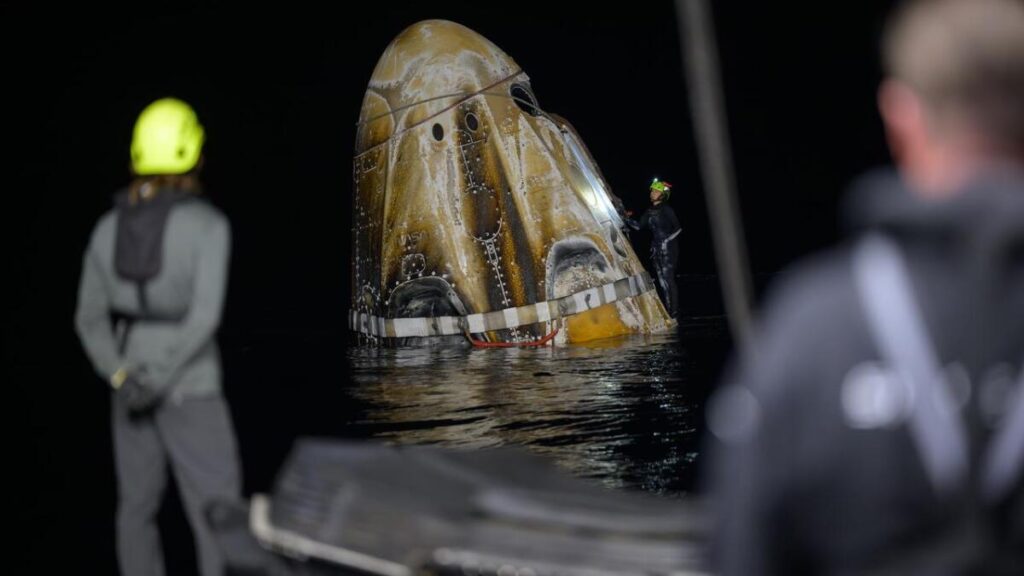
The astronaut who experienced a medical issue in space last month has identified himself as the sick member of his crew prompting an evacuation from the International Space Station.
Col. Mike Fincke, pilot of the four-member SpaceX Crew-11, said in a statement released through NASA on Wednesday that he’s “doing very well” and continuing the standard rehabilitation all astronauts undergo following their missions.
While Fincke refrained from disclosing his diagnosis, he said the medical event that occurred on Jan. 7 — one day before he was scheduled to perform a spacewalk — required immediate attention from his crewmates.
“Thanks to their quick response and the guidance of our NASA flight surgeons, my status quickly stabilized,” he said.
NASA’s decision to bring the crew home one month early, on Jan. 15, marked the agency’s first controlled medical evacuation from the station in its 25 years of continuous operations. The incident highlighted the limits of treating complex health problems 250 miles away from Earth.
SEE ALSO:
NASA’s aging crawler is about to haul 18 million pounds on its back, again
Their premature departure left Chris Williams, who arrived on a Russian Soyuz spacecraft in November 2025, as the only American astronaut at the station for a month until Crew-12 arrived on Feb. 14.
Mashable Light Speed
Fincke, 58, is a Pennsylvania native with a wife and three children. He joined NASA in 1996 and is now a veteran of four spaceflights: Expedition 9 in 2004, Expedition 18 in 2009, STS-134 in 2011, and most recently Expedition 74, for which he served as commander.
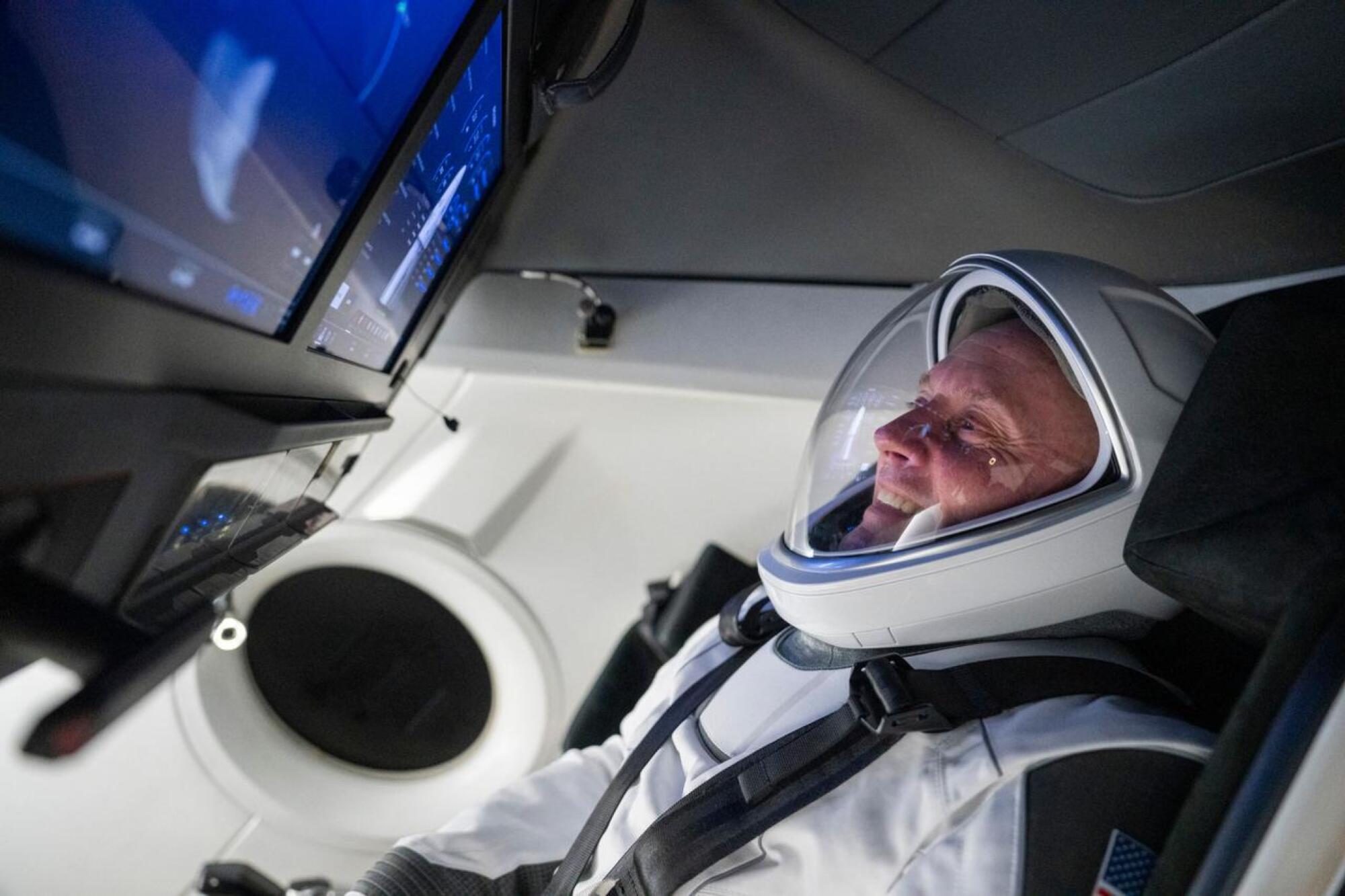
NASA astronaut Mike Fincke has logged 549 days in space, with nine spacewalks totaling 48 hours and 37 minutes.
Credit: SpaceX
He and three crewmates — Zena Cardman, Japan’s Kimiya Yui, and Russia’s Oleg Platonov — arrived at the space station on Aug. 1, 2025. He has logged 549 days in space, with nine spacewalks totaling 48 hours and 37 minutes, according to NASA.
Immediately after Fincke’s medical event, NASA officials said they wouldn’t name the affected astronaut, citing medical privacy concerns. During a news briefing the next day, NASA’s chief health and medical officer J.D. Polk said the incident wasn’t an injury in the course of work, though he stopped short of saying whether it was some other kind of injury.
In Fincke’s Wednesday statement, he described the evacuation as allowing him to get advanced medical imaging that wasn’t available at the station. He thanked the staff at Scripps Memorial Hospital La Jolla near San Diego, California, who checked him out upon the crew’s splashdown.
“Spaceflight is an incredible privilege,” he said, “and sometimes it reminds us just how human we are.”
This Tweet is currently unavailable. It might be loading or has been removed.
Astronauts have handled many maladies over a quarter-century at the space station, but most, such as toothaches and earaches, aren’t deadly. Astronauts also have managed minor injuries and infections, back pain, motion sickness, headaches, and vision changes with telemedicine and the onboard medical kit, according to public reports.
They’ve even dealt with a blood clot in the neck, treating it with injections of a blood-thinning drug and later oral medicine, once it arrived on a cargo resupply ship.
NASA described the evacuation as a “controlled expedited return,” rather than an emergency deorbit, which would mean departing the station immediately, regardless of the landing’s timing, sea conditions, or weather.