
Back to Article List
Today in the history of astronomy, Comet West is an unexpected dazzler.
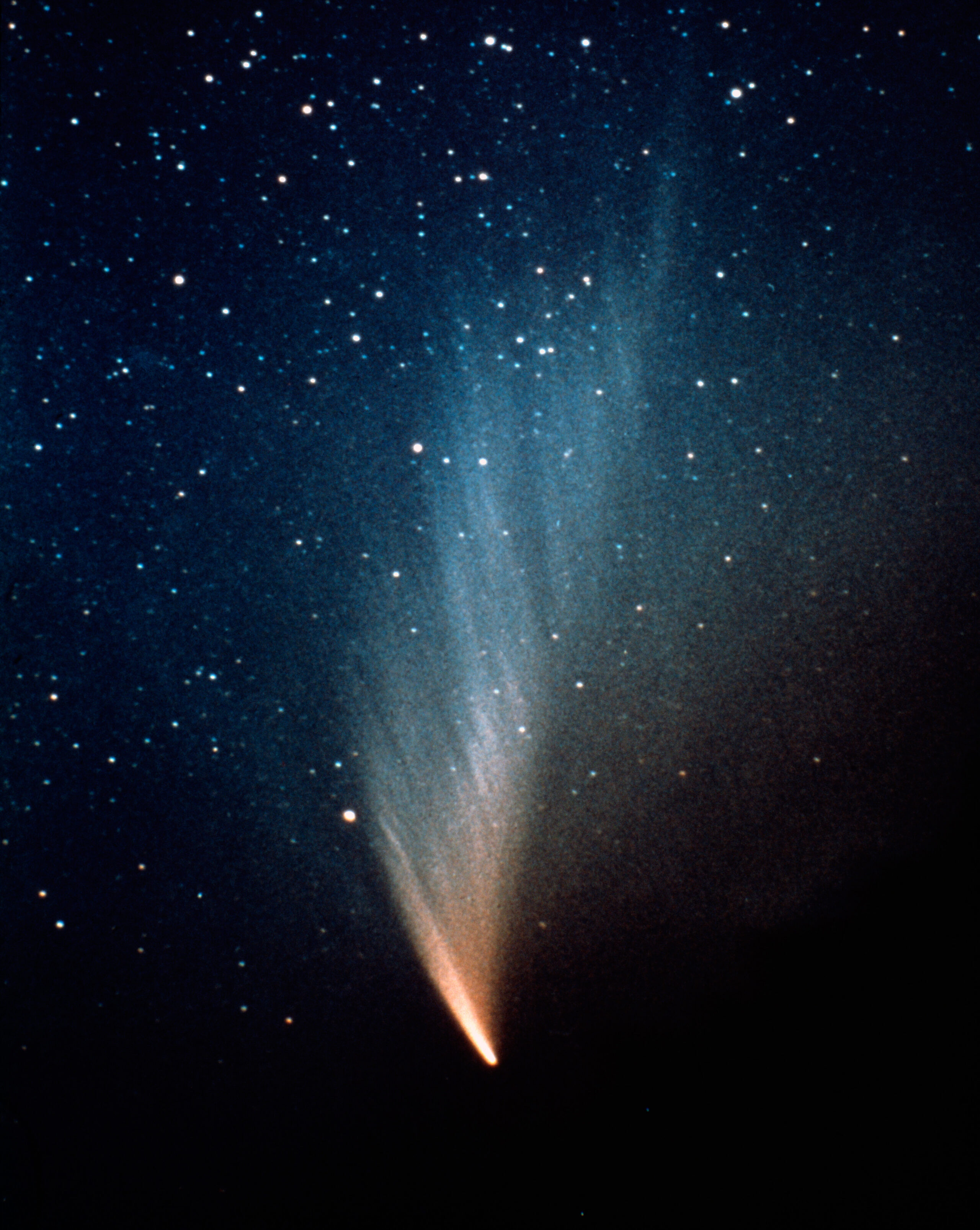
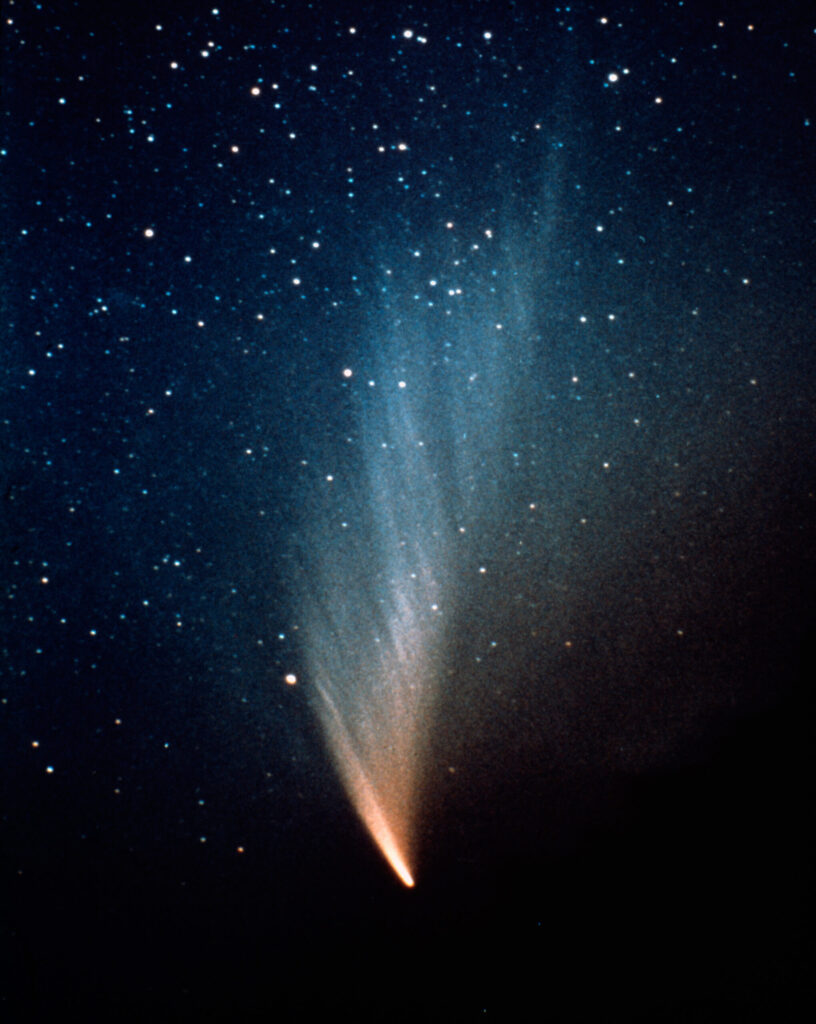
Comet West reached peak brightness in March 1976, showing off its fan-shaped tail in this lovely photograph from that month. Credit: P. Stättmayer/ESO, CC BY 4.0 via Wikimedia Commons
Danish astronomer Richard M. West discovered the comet that would bear his name Nov. 5, 1975, in images taken at the European Southern Observatory in La Silla, Chile. As this was soon after the Comet Kohoutek debacle, when a much-hyped comet brightened much more slowly than expected and proved a disappointment to the hundreds of thousands of people who went to view it, most astronomers voiced low expectations for Comet West, saying it probably wouldn’t be an impressive sight when it emerged from behind the Sun.
What a nice surprise then, when for three days around its perihelion of Feb. 25, 1976, it reached magnitude –3 and became visible in broad daylight — the first comet since Ikeya-Seki in 1965 to grow that bright. During the first week of March, its magnitude dropped to 0, but it sported a tail some 25° long.
At perihelion, West passed 18.3 million miles (29.4 million km) from the Sun. During its close encounter, tidal forces from our star broke the comet into four pieces.