
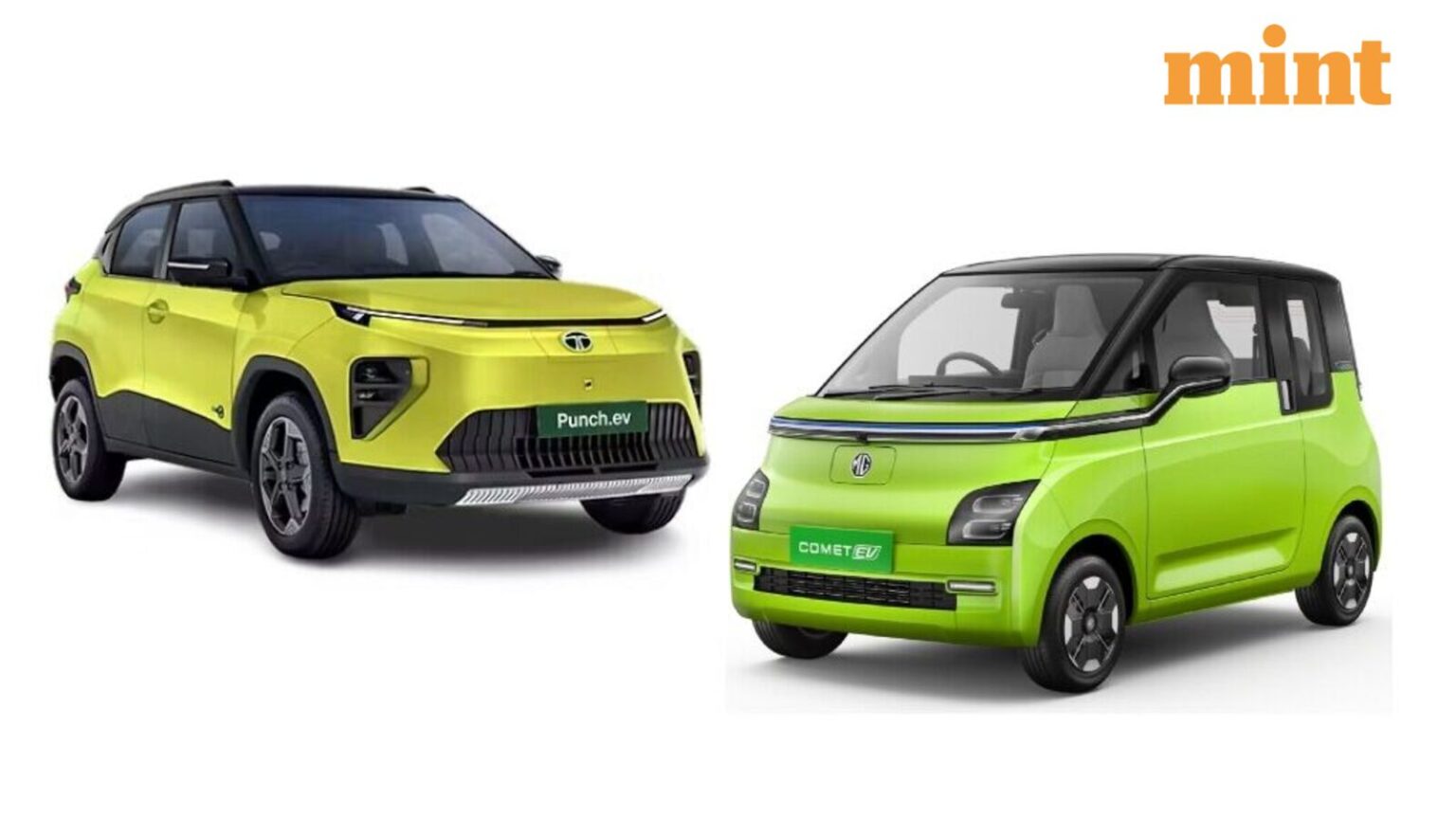
Tata Motors launched the 2026 Tata Punch EV in India just a few days back as a significantly updated iteration of the electric micro SUV. The launch took place on the heels of the Tata Punch facelift that arrived in January 2026. With a plethora of updates at the exterior, inside the cabin and on the powertrain front as well, the 2026 Tata Punch EV aims to ramp up its appeal to the customers.
The Tata Punch EV became the first car from the automaker to adopt a Battery-as-a-Service (BaaS) program, under which the electric SUV is priced from ₹6.49 lakh (ex-showroom) and commands a ₹2.60 charge per kilometre driven. The SUV commands an outright price ranging between ₹9.69 lakh and ₹12.59 lakh (ex-showroom).
The Tata Punch EV is one of the most affordable electric cars in India. In the same segment, there are multiple other models as well, which include the MG Comet EV, as well as the Tata Tiago EV. While the MG Comet EV directly competes with the Tata Tiago EV, the pricing of the MG electric car, as well as the Tata Punch EV, is close to each other.
Both the Tata Punch EV and MG Comet EV are available with multiple purchase options, including both BaaS and outright purchase. Here is a quick and comprehensive comparison of the two electric cars’ BaaS plans and pricing to understand which one offers better value for money.
The 2026 Tata Punch EV is available from s 6.49 lakh when purchased under the BaaS program. This requires the customers to pay ₹2.60 per kilometre driven. If a customer opts for outright pricing that includes the cost of the battery and the vehicle both, the Tata Punch EV is priced between ₹9.69 lakh and ₹12.59 lakh (ex-showroom).
On the other hand, the MG Comet EV is priced between ₹4.99 lakh and ₹7.63 lakh (ex-showroom), if purchased with BaaS. The small electric car comes with a battery rental of ₹3.20 per kilometre driven. The outright pricing of the MG Comet EV ranges between ₹7.62 lakh and ₹10 lakh (ex-showroom).