
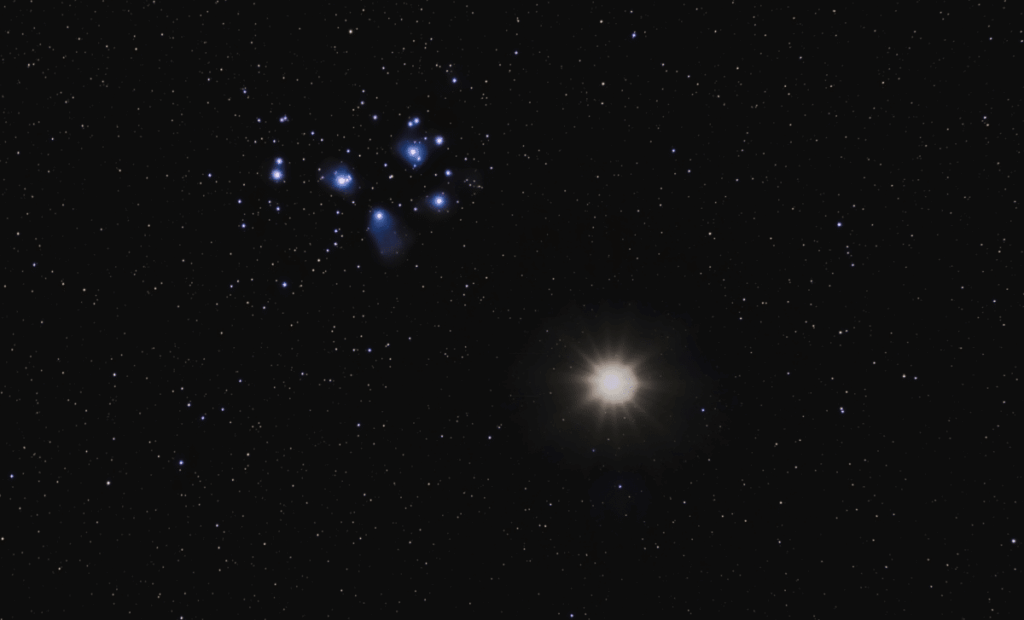
The night sky is filled with wonders, and on February 23, 2026, one of the most beautiful sights to look for will be the moon’s close encounter with the Pleiades star cluster. According to a report from Space.com, this celestial event offers a rare chance to see the moon shining brightly alongside the cluster, known for its “mini-dipper” shape. Stargazers in North America will get the perfect view of this cosmic alignment as the moon and the Pleiades sit just a degree apart from each other.
The Pleiades: A Stellar Cluster to Marvel At
The Pleiades star cluster, also known as M45, is one of the most well-known celestial objects in the night sky. It is a group of stars that is easily identifiable due to its compact and visually striking pattern. The cluster has been admired by cultures around the world for centuries and holds significant mythological meaning for many societies. In ancient times, it was often seen as a symbol of unity or a group of sisters, as reflected in its nickname “Seven Sisters.”
Despite being known as the “Seven Sisters,” most observers can only spot six stars with the naked eye. However, when viewed through binoculars or a telescope, the cluster reveals a much greater number of stars, about 100 or more, scattered in a dense formation. Located about 444 light-years away from Earth, the Pleiades is one of the closest star clusters to our planet, making it an exciting and accessible target for amateur astronomers.
What to Expect on February 23, 2026: The Moon and Pleiades Alignment
Tonight, the moon will come exceptionally close to the Pleiades, creating a visually stunning alignment. As darkness falls, look towards the southern sky, where you will find the nearly first-quarter moon shining brightly. Just to its right, a hazy patch of light will reveal the Pleiades, although the brightness of the moon may wash out the fainter stars of the cluster.
According to Space.com, the moon and the Pleiades will be separated by just over one degree, a distance that can be measured by holding your thumb outstretched against the sky. Despite the moon’s bright glare, the main stars of the Pleiades will remain visible. This close encounter provides a wonderful opportunity to explore one of the most famous star clusters in the sky, offering both amateur astronomers and casual skywatchers a chance to marvel at the cosmic beauty.
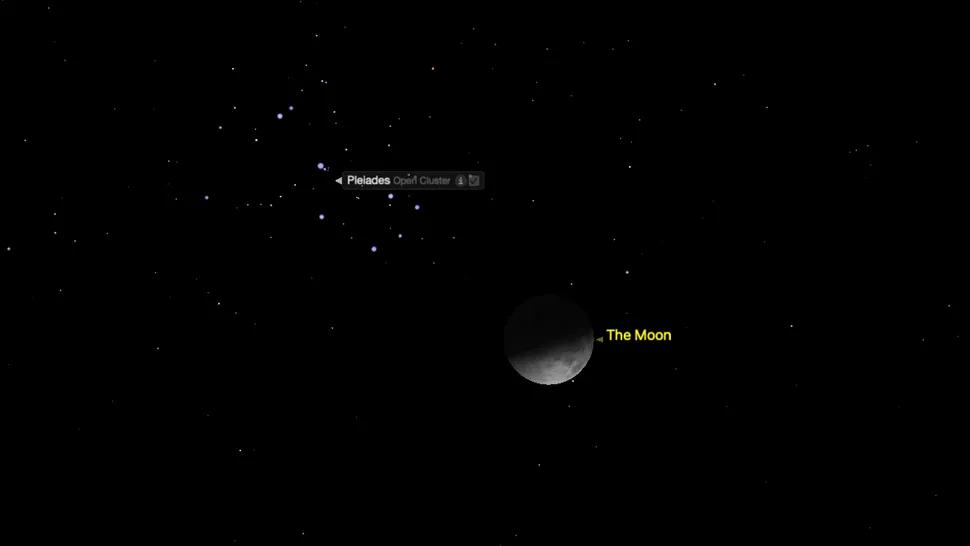 Look for the moon shining close to the Pleiades tonight (Feb. 23). (Image credit: Starry Night)
Why This Event Is Special for Stargazers
While the Pleiades star cluster is visible throughout the year, its close interaction with the moon tonight, will make it especially easy to find. For those in urban areas where light pollution often obscures stars, the combination of the moon and the Pleiades will offer a clear visual reference point in the sky. This event is also a perfect way for beginners to practice using telescopes or binoculars, allowing them to view the stars in the cluster in greater detail.
Beyond its aesthetic beauty, the Pleiades has fascinated astronomers for centuries. The cluster is thought to be about 100 million years old and contains stars that are much younger than our Sun. Its formation is the result of a process where gas and dust collapse together to form new stars, and it continues to be a subject of ongoing scientific study.
Stargazing Tips for the Night
To get the best view of this celestial event, it’s essential to find a location that provides an unobstructed view of the southern sky. Try to get as far from city lights as possible, as the bright glow of urban areas can overwhelm the night sky. Once you’re settled in a dark spot, give your eyes a few minutes to adjust to the darkness, this will enhance your ability to see the faint stars in the Pleiades.
A pair of binoculars or a small telescope will allow you to see the individual stars of the cluster in greater detail. If you don’t have binoculars, you can still enjoy the view with the naked eye, as the moon’s proximity to the Pleiades will make the cluster relatively easy to spot, even from light-polluted areas
The Science Behind the Moon-Pleiades Interaction
While the visual spectacle of the moon and the Pleiades is certainly beautiful, there is also an interesting scientific reason behind their alignment. The moon’s orbit brings it close to various celestial objects throughout the month, and tonight, it just so happens that the Pleiades will lie in its path. This close proximity between the two objects is a natural occurrence and a result of the orbital dynamics of the moon and the positioning of the stars. Although the moon’s glare will dim the fainter stars of the cluster, the event offers an excellent opportunity to learn more about the moon’s orbital patterns and how it interacts with other objects in the night sky.