
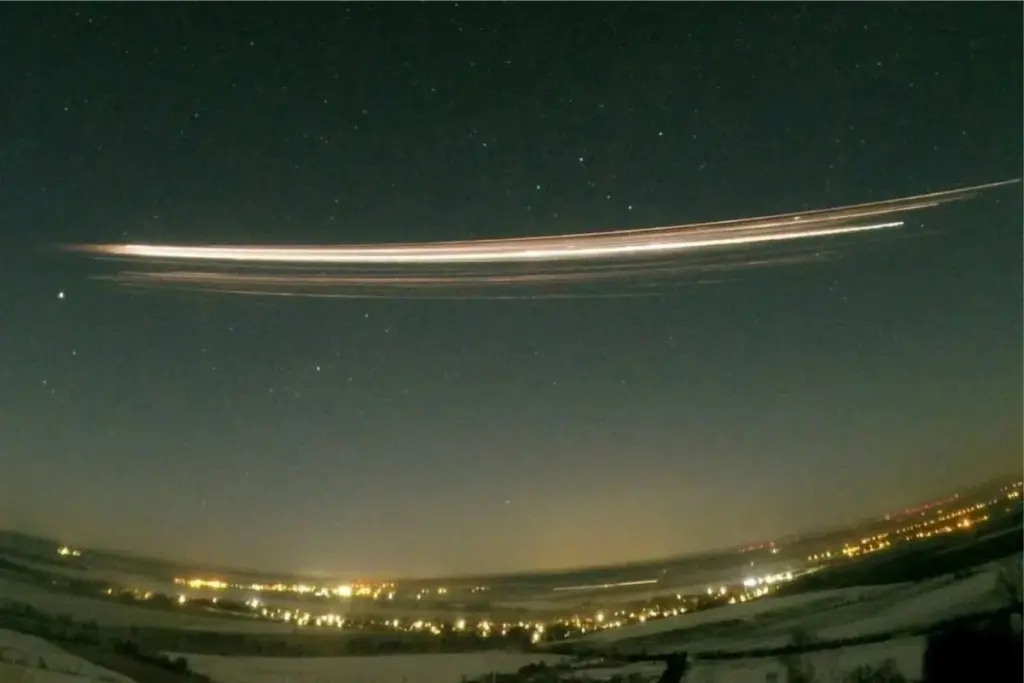
For the first time, scientists have managed to directly measure the pollution generated by the reentry of a rocket. The study detected a sudden increase in lithium in the high atmosphere following the uncontrolled entry of the upper stage of a Falcon 9.
The event occurred in February 2025, when the artifact reentered off the west coast of Ireland and disintegrated over Central Europe. About 20 hours later, an unusual concentration of lithium was recorded in Germany.
The research was led by the Leibniz Institute of Atmospheric Physics. The data revealed levels up to ten times higher than the usual average in layers where this element hardly appears naturally.
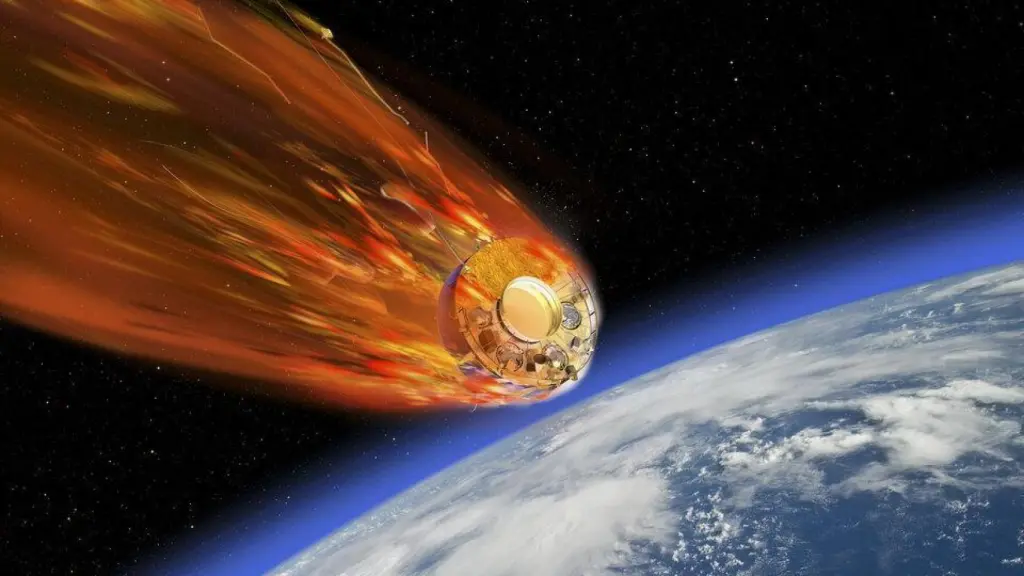 Detectan por primera vez contaminación atmosférica por reingreso de cohetes y alertan sobre impacto espacial. Foto: El Español.
How the “column” of pollution was measured
The team used atmospheric lidar technology to analyze particles between 25 and 80 kilometers in height. Additionally, they combined radar information and wind trajectories to reconstruct the movement of the contaminated air mass.
The lithium cloud was located between 94 and 97 kilometers in altitude. It remained detectable for 27 minutes until the instrumental recording concluded.
To rule out natural causes, the scientists examined geomagnetic conditions and ionospheric data. The results confirmed that the origin was the disintegration of the rocket, whose components released metals during the ablation process.
Atmospheric pollution from space activity
Lithium is used in batteries and space electronic systems. However, in the mesosphere and lower thermosphere, its natural presence is minimal, so an abrupt increase is significant.
Each reentry of decommissioned satellites or upper stages involves the release of metals and metal oxides. Although many materials chemically transform as they descend, some remain suspended.
With the sustained increase in orbital launches over the past decade, reentries are becoming more frequent. Consequently, a continuous flow of anthropogenic metals could be established in the middle atmosphere, with potential cumulative effects on chemical and climatic processes.
 Detectan por primera vez contaminación atmosférica por reingreso de cohetes y alertan sobre impacto espacial. Foto: Reddit.
An emerging environmental challenge
Until now, these episodes were difficult to quantify. Therefore, the study marks a turning point in the evaluation of the environmental impact of the space industry.
Additionally, it raises questions about the regulation of launches and the design of less polluting materials. The partial reuse of rockets reduces waste, but does not eliminate the emission of particles in high layers.
Ultimately, the expansion of space activity requires incorporating the atmospheric variable into the global environmental agenda. What happens almost 100 kilometers high is also part of the planet’s ecological balance.