
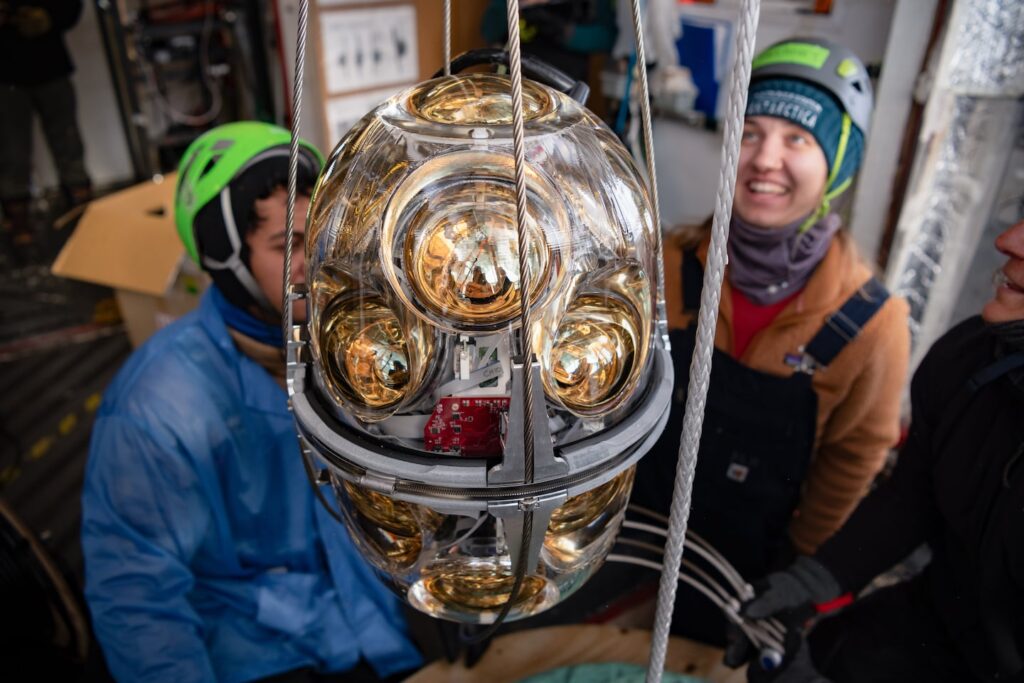
In November, scientists arrived at the South Pole in planes outfitted with skis to pull off a construction project seven years in the making.
They had a short summer window — November to early February — to drill six new holes at least a mile and a half deep into the Antarctic ice and install long cables, beaded with hundreds of orb-shaped light detectors. This dense network of eyes is an upgrade to the IceCube Neutrino Observatory, a massive 15-year-old system made up of more than 5,000 sensors embedded in a gigaton of ice.