
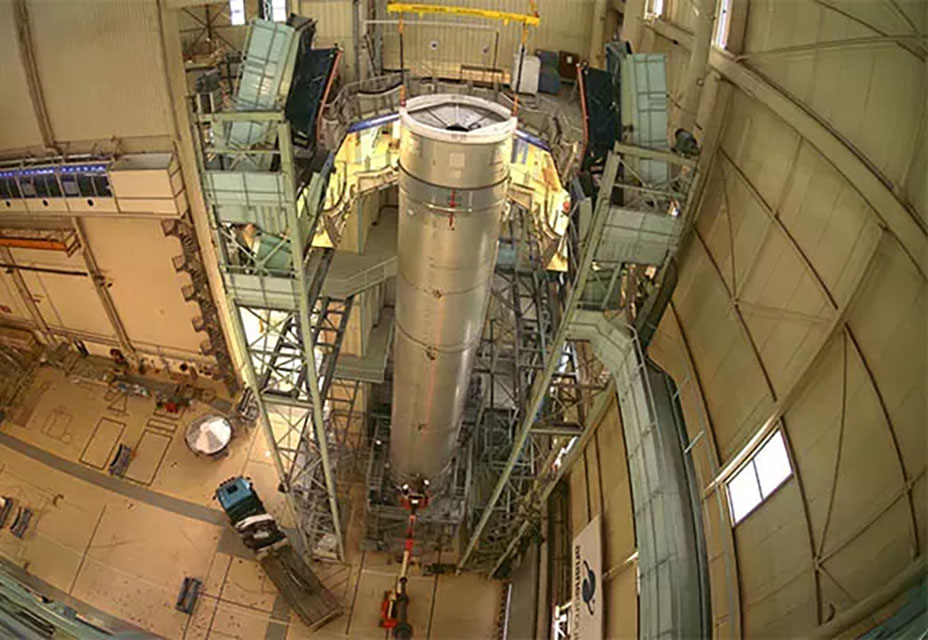
KIRUNA, Sweden — The European Space Agency (ESA) and prime contractor ArianeGroup are preparing for the first low-altitude “hop test” of the Themis reusable launcher demonstrator, currently scheduled for the second quarter of 2026.
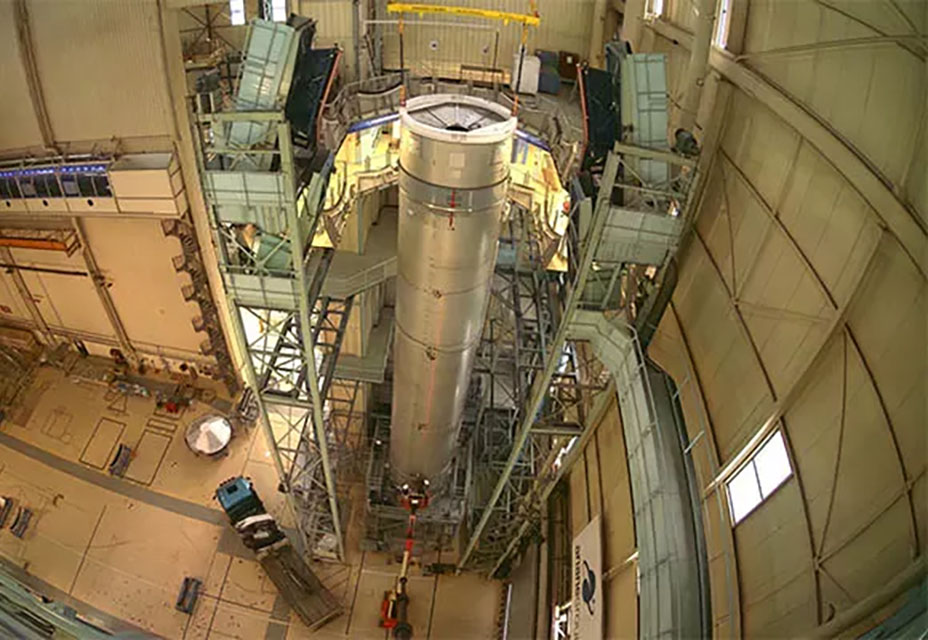
In an update provided on Monday, February 23, 2026, officials confirmed that the project has gained significant momentum following the successful installation of the prototype at the Esrange Space Center.
The upcoming flight test of the Themis T1H (1-Engine Hop) model represents a critical milestone for the SALTO (reuSable strAtegic space Launcher Technologies & Operations) project, an initiative funded by the European Commission to ensure sovereign, reusable access to space for the European Union.
Program Context and Funding Evolution
The Themis program was established in 2019 to mature the building blocks for a future family of eco-friendly European launchers. The project operates in synergy with the ENLIGHTEN (European iNitiative for Low cost, Innovative & Green High Thrust Engine) project, which focuses on advanced production technologies for the Prometheus engine.
While the initial SALTO project launched with a €39 million budget, the scope of European reusability testing has expanded significantly. In late 2024, ESA awarded ArianeGroup an additional €230 million to accelerate the development of the T1E (Evolution) variant for medium-altitude tests and the T3 (3-engine) variant, which is slated for higher-altitude flight envelope testing at the Guiana Space Centre in French Guiana by 2027.
Technical Specifications: The T1H Demonstrator
The Themis T1H is a full-scale main-stage demonstrator designed to validate the complex vertical landing phase required for launcher recovery. Key specifications include:
Height: 30 meters (comparable in dimension to a medium/heavy launcher first stage).
Propulsion: A single 100-ton thrust class Prometheus engine, fueled by liquid oxygen (LOX) and liquid methane.
Landing Gear: Integrated landing legs developed by MT Aerospace, designed to support soft vertical landings on a dedicated pad.
Site Infrastructure: The tests utilize the newly inaugurated Launch Complex 3B at Esrange, the first orbital launch complex on the European mainland.
Timeline to First Flight
During a recent briefing in early 2026, Toni Tolker-Nielsen, acting Director of ESA’s Space Transportation program, noted that the inaugural flight was dependent on seasonal conditions in northern Sweden. With the launch facility in Kiruna currently under heavy snow, technical teams are utilizing the “combined test” phase to trial the interfaces between the vehicle and the launch pad’s fluid and electrical systems.
“We are waiting for spring,” Tolker-Nielsen explained, indicating that the first 100-meter vertical takeoff and landing (VTOL) test is expected NET (No Earlier Than) April or May 2026.
Strategic Outlook for European Autonomy
The successful recovery of a Themis stage would signal a major shift in the European launch landscape, which has historically relied on expendable architectures like the Ariane 5 and Ariane 6. ESA Director General Josef Aschbacher has emphasized that the transition to reusable technology is essential to maintaining Europe’s competitiveness against the rapid industrial scale-up of U.S. and Chinese providers.
Following the T1H hop tests, the program will pivot toward the T1E model, which incorporates upgraded variants of the Prometheus engine and more advanced avionics to reproduce high-energy trajectories representative of an actual operational launch.