
The topic of UFOs, now known as Unidentified Anomalous Phenomena (UAP) constantly cycles in and out of the news. Recent comments by President Obama that aliens are real (with some clarification) and claims by President Trump that he is directing agencies to release UAP records has created a lot of speculation.
However, flying under the radar, is the fact that UAP records are already being reviewed and released by the government. In 2023, a law set in motion a review of UAP records across all federal agencies with a goal of consolidating at the National Archives. Over the last couple years, I have been researching these UAP record transfers and now seems like the perfect time to address them.
Let’s start with the basics…
Yes. There is no question that UAP are real. While they often get conflated with being extraterrestrial, UAP simply represent unknown observations that have yet to be explained. By nature, UAP will encompass a range of phenomena. Some may eventually resolve as prosaic, like weather phenomena, celestial bodies, or human technology. Regardless, there always remains phenomena that haven’t been explained.
The more unusual a phenomenon is, the more it gets stigmatized. The moment anyone speculates that UAP are from a non-human intelligence (NHI), the conversation is shut down as nothing more than science fiction. Though, just because you reject a given belief on what something is doesn’t mean you should stop being curious about it. If something is unknown, the only way to understand it is to research it. Even if a sighting turns out to be prosaic, there is potential to learn about nature, technology, and how people psychologically and socially process the unknown.
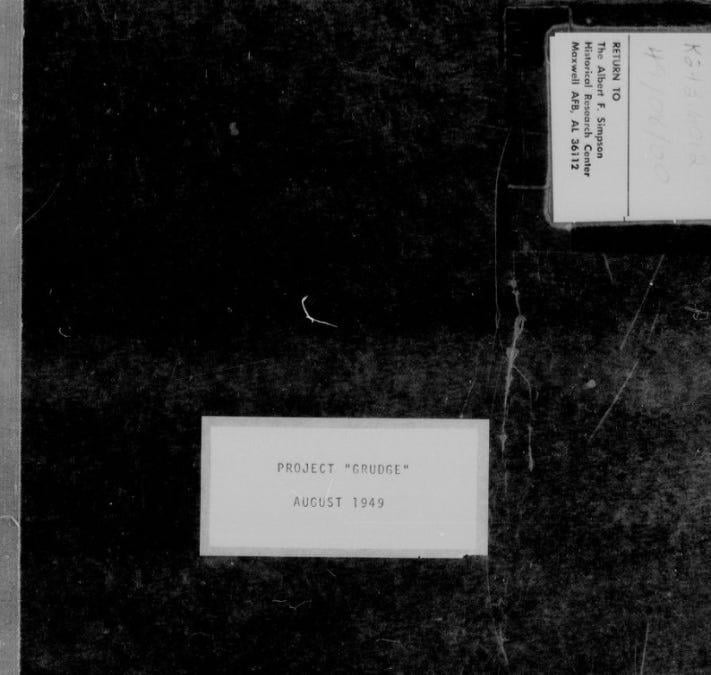
The government knows the importance of researching the unknown and has been investigating UAP since at least the 1940’s. Early investigations include Project Sign, Project Grudge, Project Twinkle, and Project Blue Book. More recently was the establishment of the All-Domain Anomaly Resolution Office (AARO). And, while the X-Files may be fiction, there are in fact FBI agents investigating UAP.
How much does the government have on UAP that hasn’t been released? How long should they have a right to keep information from the public? The decades of secrecy make that hard to address, but the government clearly has an ongoing interest in it and so should you.
In 2023, the National Defense Authorization Act for Fiscal Year 2024 (NDAA) was signed into law which included an amendment requiring federal agencies to review for UAP records and transfer them to the National Archives (NARA) to be included in a consolidated research page.
A timeline was then provided by NARA to review and transfer records. Agencies had until October 20, 2024 to identify UAP records and by September 30, 2025 agencies were required to transfer these records to NARA. These records could be transferred on a rolling basis up to that date and from there NARA was required to provide public access within 30 days of receipt and upload the records to their online catalog within 180 days. This sets the end of March as the latest these records should be made available online.
At this time, there have been six agencies/departments that have records uploaded to NARA’s catalog.
- Department of State (DOS): 8 records of e-mails detailing UAP sightings.
- Federal Aviation Administration (FAA): 575 records, primarily pilot reports of UAP sightings.
- National Security Agency (NSA): 38 records previously released by FOIA, articles and reports of sightings.
- Nuclear Regulatory Commission (NRC): 9 records detailing sightings and reporting procedures.
- Office of the Director of National Intelligence (ODNI): 4 records with an assessment and annual UAP reports.
- Office of the Secretary of Defense (OSD): 30 records with reports, assessments, and AARO cases.
Note: All but the Department of State are only partially available online. There is no indication on how many records remain withheld from these agencies.
There are notable agencies missing from NARA’s catalog. Below are some of the agencies confirmed to have records not yet in the catalog.
- Air Force: Released a list of 30 records identified for transfer.
- Federal Bureau of Investigation (FBI): Confirmed that they reviewed for UAP records, but withheld lists of records identified.
- National Aeronautics and Space Administration (NASA): Confirmed that they have UAP records, but will not be transferring them as they are owned by the Department of Defense.
- National Archives and Records Administration (NARA): Yes, NARA themselves still have UAP record received prior to these transfer that have not been uploaded to their catalog.
The status of the transfers remains unclear. While receiving responses from NARA has never been consistent, the last few months have been complete silence. I have emails sent to their public relations dating back to December 2, 2025 that remain unanswered. I have tried other email addresses and contacts over the last few months with no success. Additionally, NARA has ended their online chat, closed and removed the content of their support forum (History Hub), and their phone numbers are mostly recordings or are disconnected.
With promises of transparency, time is running out for an already established, legally mandated means for releasing UAP records to the public. There will still be work needing to be done after the publicly releasable records are uploaded. The law allowed for records to be transferred to NARA, but withheld from public release. NARA has been in deliberations with agencies to work on making these records public. However, without oversight and transparency of what is going on behind the scenes, there is no way to know the scale of records withheld.
There isn’t clear guidance or oversight with the current UAP record reviews and transfers, which is why a more thorough law is needed to ensure public release of records. The UAP record transfers were originally a part of a larger amendment introduced by senators Chuck Schumer and Mike Rounds. The original amendment would have established a review board, with means to oversee and enforce the review and release of UAP records. Attempts have been made over past years to include it in full, but it inevitably gets rejected.
Even the recent statement by Trump does not have teeth to enforce UAP record release without an Executive Order or legislation. These records need declassification and are often buried away within agencies, requiring a thorough review to get all relevant records. And, it is vital that records aren’t cherry-picked for release. Without a complete release of records, incorrect narratives and conclusions will form. While it’s not likely that all UAP records will be released, doing as broad and thorough of a release as possible will ensure a more accurate picture of what involvement the government has had with UAP and what the phenomena may be.
Releasing UAP records is not just to satiate human curiosity, it’s also about government transparency. The government has gone through great lengths to conceal this subject for decades and it’s not the only one. If the government can’t even commit to the legal obligation to release decades old records on a subject it often dismisses, how many other subjects will continue to be buried?
by HM05_Me