
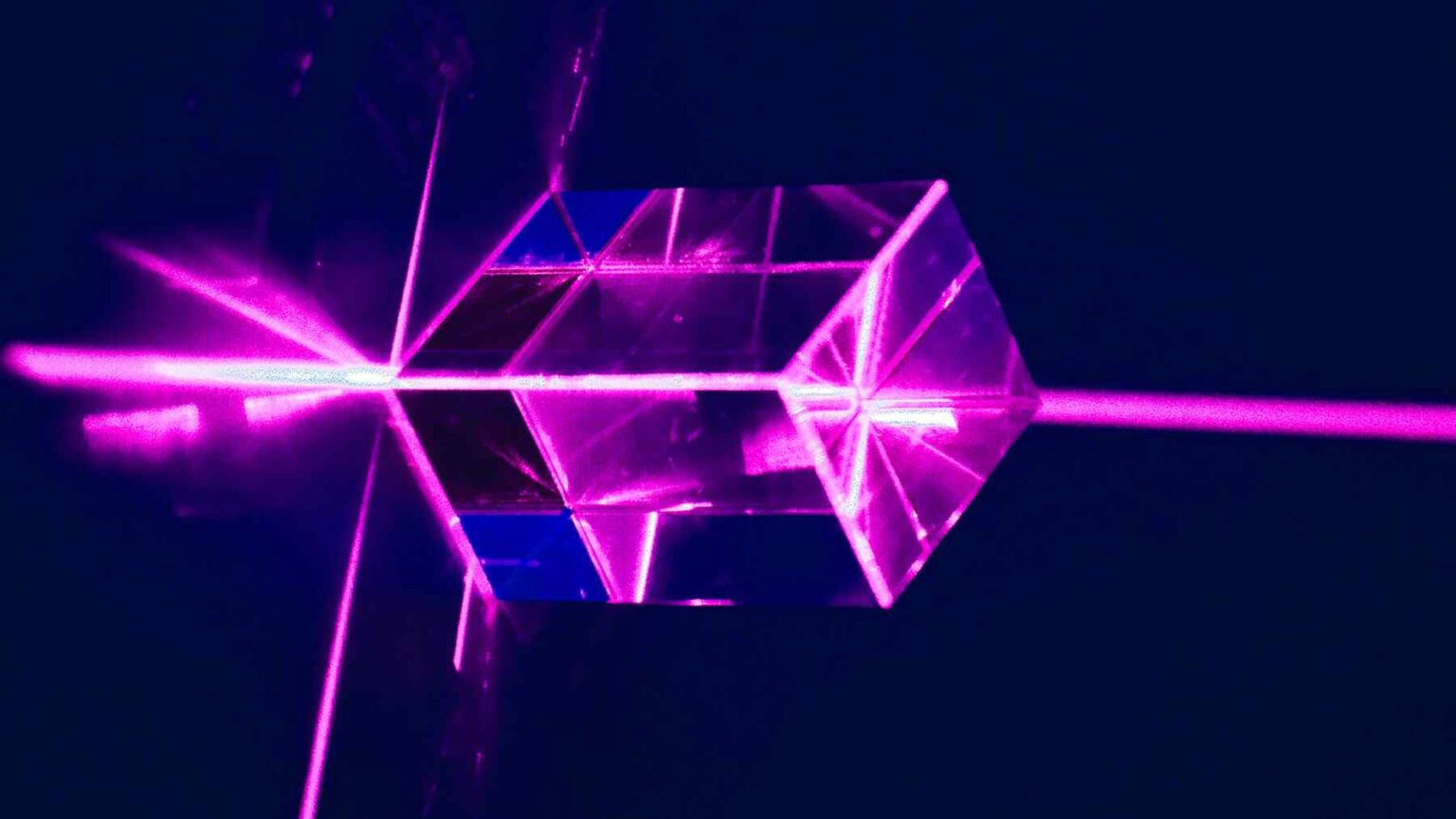
You’ve been told one rule about the universe your entire life: nothing moves faster than light.
It’s the ultimate speed limit — baked into physics, untouchable. But what if a lab experiment appeared to break that rule?
In one test, a laser pulse didn’t just travel incredibly fast. It seemed to leave a chamber before it even fully entered it.
It sounds impossible, so why exactly are scientists still talking about it?
The speed of light, the only limit we cannot exceed
Speeding past the speed of light sounds like the ultimate cosmic cheat code, like something out of Star Trek.
But here’s the straight-up reality: nothing with mass can ever outpace light — not rockets, not particles, and not us. That’s because the speed of light in a vacuum, which is about 299,792,458 m/s, isn’t just how fast photons zip around.
It’s the ultimate speed limit of the universe itself.
Imagine you’re in a car that keeps bumping into more invisible walls the faster you go. Once you reach a certain speed, every bit of extra gas you pump into the engine doesn’t make you go faster — it just makes the car heavier. That’s what happens as an object with mass approaches light speed.
To actually hit the speed of light, you’d need infinite energy — something current physics says is simply impossible. One engine, however, has managed to approach reaching lightspeed.
What if we could “trick” the universe? A group of experts has achieved it
In physics labs, “tricking the universe” isn’t just a sci-fi dream.
Back in 2000, a team of physicists led by Lijun Wang at the NEC Research Institute in Princeton, USA, pulled off a mind-bending experiment. They fired a precisely shaped laser pulse through a special chamber filled with cesium gas and watched what happened next.
But it got wild.
Instead of the light pulse taking its sweet time to pass through the chamber, it emerged on the other side way earlier than expected.
In fact, when they measured it, the pulse appeared up to 310 times “faster” than the speed of light over that very short distance — a result so striking that the peak of the pulse was detected earlier than Einstein’s cosmic speed limit would predict.
What the scientists actually created was not a magic time machine, but a precision trick of wave physics.
This is a phenomenon that plays with how light pulses behave in specially prepared media and challenges our intuition about cause and effect.
It’s one of those rare moments where reality feels stranger than fiction, like this supercell that makes light explode like a bomb.
It was going so fast that it came out of the box before it went in
This is where physics starts to feel like a magic trick.
The experiment made headlines for one outrageous reason: a laser pulse appeared to exit a chamber before it had fully entered it. Yes, you read that correctly.
They sent a light pulse through a specially prepared chamber filled with cesium vapor. The setup was engineered to create what’s called anomalous dispersion, a condition that dramatically alters how light waves travel through a medium.
And then something amazing happened: the peak of the pulse exited the chamber 62 nanoseconds before the peak of the pulse entered.
It looked like the laser had gone backward in time, or so it seems according to the conclusions published in Nature.
In terms of calculated group velocity, the pulse was measured at around 310 times the speed of light — a number that sounds like it shatters Einstein’s cosmic speed limit.
But here’s the twist: no actual information traveled faster than light and no laws of physics were technically broken.
What moved faster was the shape of the pulse — its peak — distorted by the medium inside the chamber.
Still, watching a light pulse leave a box before it fully goes in? That’s the kind of experiment that makes even physicists pause, like this theoretical engine that researchers say may reach the speed of light.