
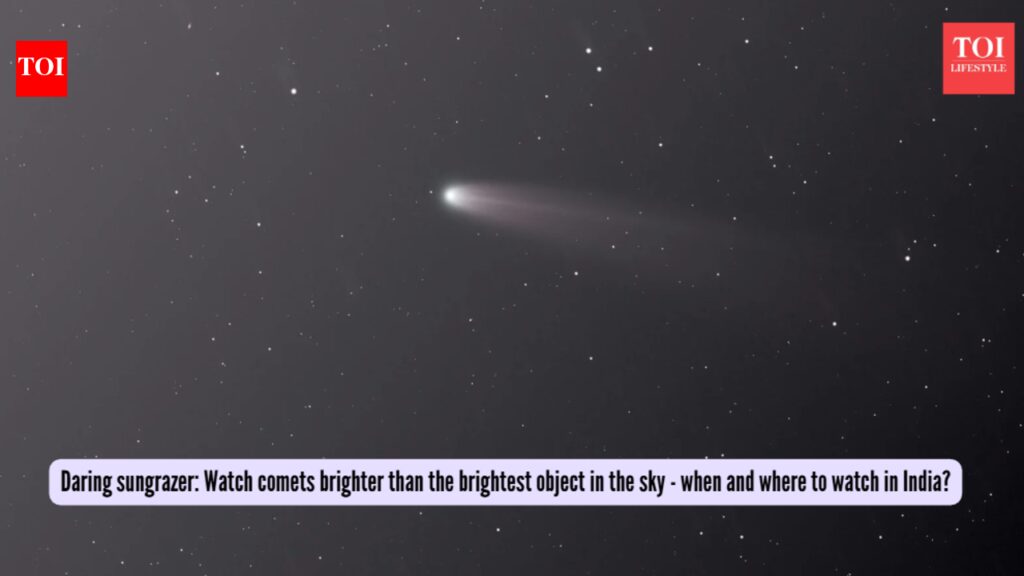
 A newly discovered comet, C/2026 A1 or MAPS, is predicted to become exceptionally bright, potentially outshining Venus. This Kreutz sungrazer, spotted by amateur astronomers, will reach its closest point to the Sun in April 2026. If it survives the intense solar heat, it may be visible to the naked eye, even during daylight, with a distinctive turquoise tail. Comets are among the brightest, most interesting and most mysterious objects in space, but imagining one of these to be even brighter than the ‘brightest object in the night sky’ can seem like a myth.k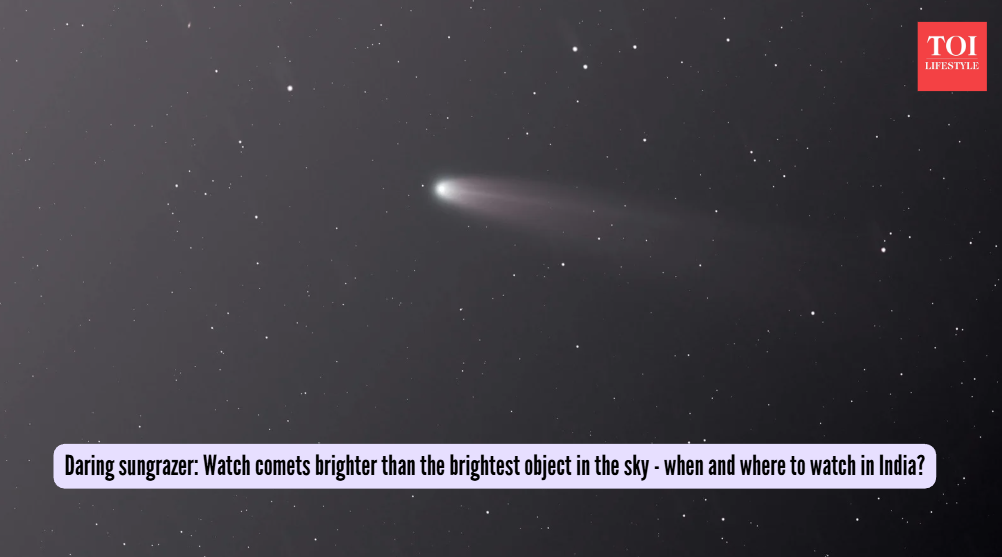
Daring sungrazer: Watch comets brighter than the brightest object in the sky – when and where to watch in India?
Meet the comet brighter than Venus in the night sky
A brand-new comet, C/2026 A1 or MAPS, has skywatchers worldwide on edge. Spotted on January 13, 2026, by French amateur astronomers Alain Maury, Georges Attard, Daniel Parrott, and Florian Signoret via their Chile-based telescopes, hence the “MAPS” acronym, it was the farthest-out sungrazer ever detected at discovery, hinting at a potentially massive size.According to Starwalk News, this comet belongs to the Kreutz sungrazing family, named after German astronomer Heinrich Kreutz. Kreutz sungrazers dive perilously close to the Sun, unlike typical comets that orbit safely at a distance.Intense solar heat sublimates their ices into gas, causing brilliant glows that are sometimes also visible in daylight. But there is also a flip side: extreme proximity can shred them apart entirely.
What are daring sungrazers?
Kreutz sungrazers originally belonged to a colossal parent body, likely over 100 km wide, that grazed the Sun around the 3rd or 4th century BCE.It fractured into two big pieces and countless fragments, which have returned over centuries as record-breakers. The Great Comet of 1882, for example, peaked 100 times brighter than a full Moon, dominating skies for months. 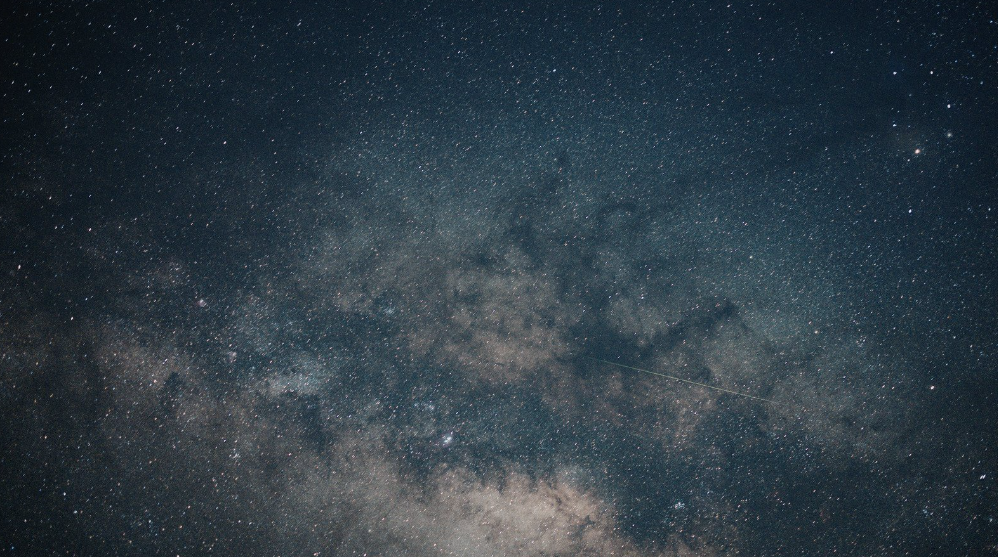
Representative Image
When and where to watch this bright comet
MAPS hits perihelion, or its closest approach to the Sun, on April 4–5, 2026, skimming just ~170,000 km above the solar surface. If it survives, observers can expect Venus-level shine and it could possibly be viewed during daytime with the naked eye as a turquoise tail formed by exotic gases.
How and when to catch it from India
Observers in India, especially in southern regions, might glimpse it low in the southwest 30–45 minutes after sunset in early April; binoculars or small telescopes will help against solar glare.Northern areas face tougher odds due to horizon clutter.You can also track the comet using apps like Stellarium.