
NEED TO KNOW
A new study may bring scientists one step closer to answering the question of whether life ever existed on Mars
Researchers analyzed a rock sample from the Red Planet and found molecules that may have been caused by ancient life-based processes
The rock sample was attained by NASA’s Curiosity rover, which has been on Mars since 2012
New questions are being raised about whether life may have once existed on Mars.
In a study published in the peer-reviewed journal Astrobiology on Feb. 4, scientists analyzed data collected by NASA’s Curiosity rover. The scientists found that certain organic molecules preserved in ancient Martian rock could potentially be connected to the past presence of living organisms.
The molecules, known as long-chain alkanes, were discovered in a 3.7-billion-year-old mudstone formation inside Gale Crater. On Earth, similar carbon-based molecules are often associated with life-based processes.
Never miss a story — sign up for PEOPLE’s free daily newsletter to stay up-to-date on the best of what PEOPLE has to offer, from celebrity news to compelling human interest stories.
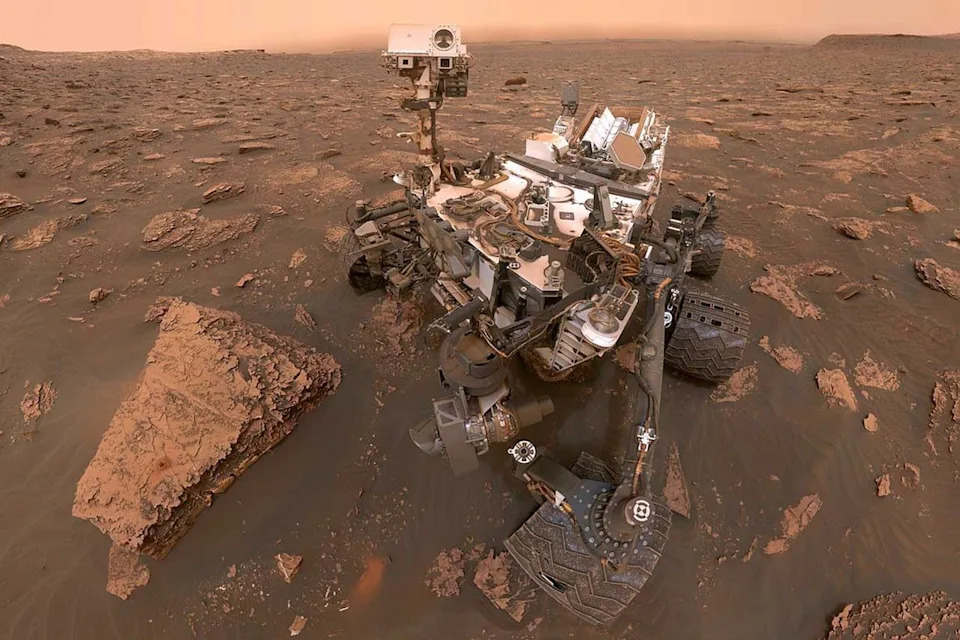
 NASA’s Curiosity Mars rover
NASA/JPL-CALTECH/MSSS / HANDOUT/Anadolu Agency/Getty
While long-chain alkanes can be caused by chemical processes that are unrelated to living organisms, the researchers believe that they would have originally been present in too high a concentration to be explained merely by those processes alone.
However, the researchers caution that the discovery does not confirm the existence of past life on the Red Planet.
The study’s authors emphasized that alternative explanations remain possible, and that further missions and analysis will be needed to determine whether the molecules truly point to ancient life.
NASA’s Curiosity rover launched in 2011 and has been exploring Mars since 2012, according to NASA.
The size of a car, Curiosity was NASA’s largest and most advanced rover ever launched at the time, and it was launched to answer one main question: Could Mars have once harbored life?
The remote-controlled Curiosity rover is still active on Mars and continues to explore the planet’s terrain, having traveled around a distance of 22 miles, per NASA.
Read the original article on People