
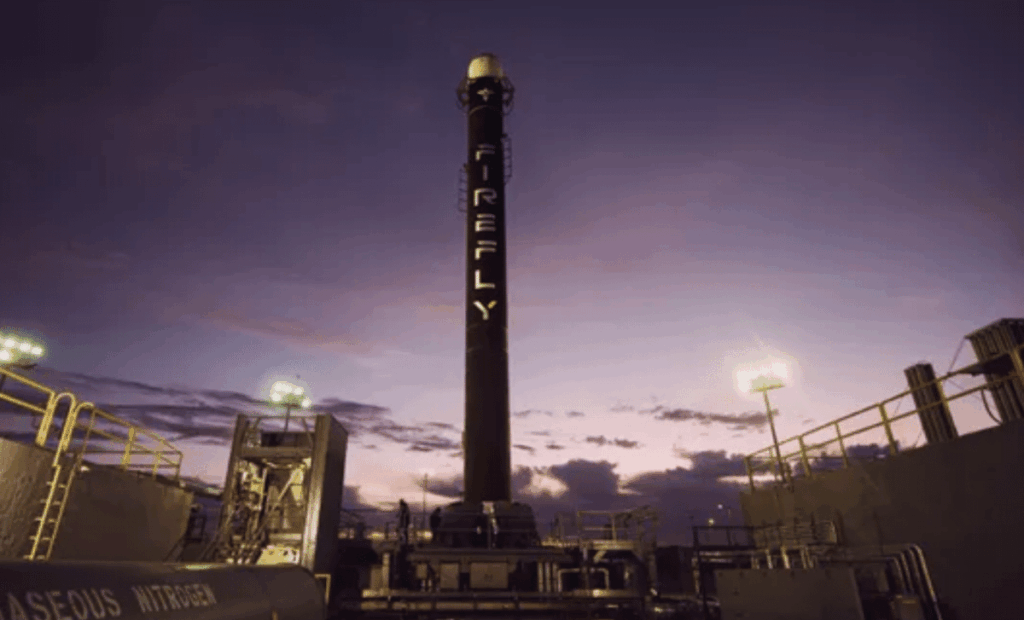
Firefly Aerospace, the Texas-based space company, is gearing up for a highly anticipated launch of its Alpha rocket. After a long 10-month hiatus caused by significant mishaps during previous tests, Firefly is targeting February 27 for the “Stairway to Seven” mission. This mission marks an essential milestone for the company, as it seeks to recover from its previous setbacks and demonstrate the capabilities of its rocket, Alpha, once again. In this article, we explore the significance of this mission, what Firefly aims to achieve, and the future of its rocket program.
The “Stairway to Seven” Mission: A Critical Step for Firefly
The “Stairway to Seven” mission will be the first test flight of the Alpha rocket since two significant mishaps grounded the vehicle last year. Firefly Aerospace had to delay its progress significantly as it investigated the causes behind these failures. The most recent issue, a combustion event that occurred in September, set the company back months in its timeline. However, Firefly quickly pinpointed the problem, tracing it back to “a process error during stage one integration that resulted in a minute hydrocarbon contamination,” according to the company’s November investigation report.
Despite the lengthy delay, Firefly remains optimistic about the upcoming flight. The company views this mission as vital for restoring confidence in the Alpha rocket and its future capabilities. The seventh flight of Alpha will test the rocket’s critical systems in a “demo payload” configuration, which was a change from the original plan to carry a Lockheed Martin payload. This new configuration will allow Firefly to verify Alpha’s readiness for future missions while ensuring that the rocket’s performance meets the required standards.
Alpha Rocket’s Design and Key Improvements
Alpha, designed by Firefly Aerospace, is a small-to-medium-sized launch vehicle that has been developed to carry satellites into orbit. The company’s objective with this rocket is to offer a cost-effective and reliable solution for launching payloads into space. The Alpha rocket stands at 96.7 feet tall and is powered by four Reaver engines, which are tested in static fire tests prior to each launch.
The upcoming “Stairway to Seven” mission will be the final flight of Alpha’s Block I configuration. This version of the rocket has served as the baseline for Firefly’s launch vehicle development. Following the successful completion of Flight 7, Firefly will begin testing a new and improved version of Alpha, the Block II configuration.
“Flight 7 will test and validate key systems ahead of Firefly’s Block II configuration upgrade on Flight 8 that’s designed to enhance reliability and manufacturability across the vehicle,” the company wrote on the mission’s website.
The Block II rocket will be taller than the current Block I by 7 feet, reaching a total height of 103.7 feet.
The improvements in Block II include carbon composite components, upgraded thermal protection systems, enhanced avionics, and more reliable power systems. These changes are expected to significantly improve the performance and reliability of Alpha, paving the way for more ambitious missions in the future. The upgrades will also help Firefly scale up its manufacturing capabilities to meet growing demand for commercial and governmental payload launches.