
Link to the original Science article
When a massive star reaches the end of its lifetime, its core collapses and releases neutrinos that drive a shock into the outer layers (the stellar envelope). A sufficiently strong shock ejects the envelope, producing a supernova.
If the shock fails to eject it, the envelope is predicted to fall back onto the collapsing core, producing a stellar-mass black hole (BH) and causing the star to disappear.
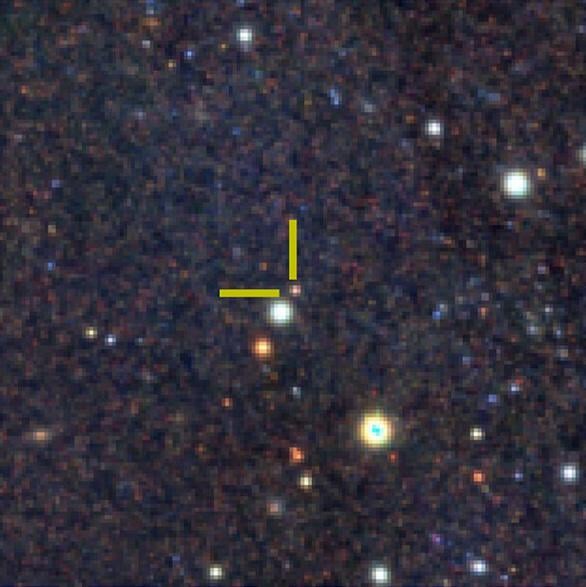
We report observations of M31-2014-DS1, a hydrogen-depleted supergiant in the Andromeda Galaxy.
In 2014, it brightened in the mid-infrared, then from 2017 to 2022, it faded by factors of more than 10,000 times in optical light (becoming undetectable) and more than 10 times in total light.
We interpret these observations, and those of a previous event in NGC 6946, as evidence for failed supernovae forming stellar-mass BHs.
Image Credit: PanSTARRS PS1 survey
by Busy_Yesterday9455
1 Comment
If the star goes supernova the planets orbiting it are screwed.
If the star has a direct collapse the planets orbiting it are screwed.
🗿