
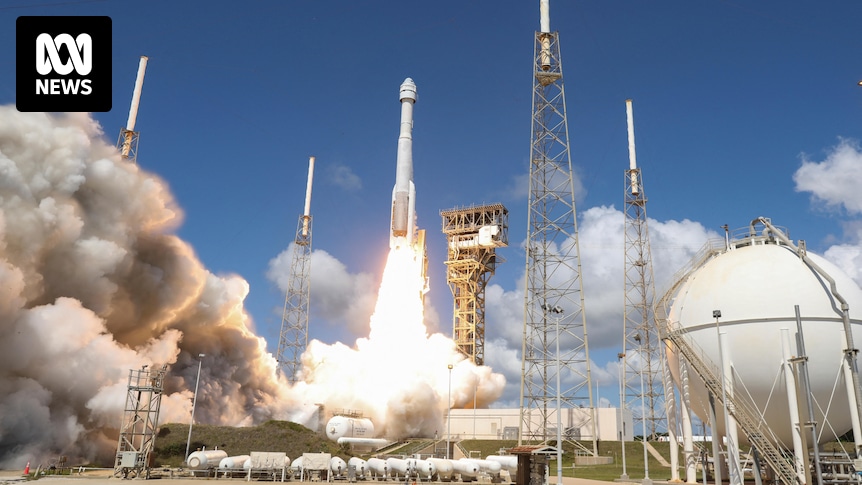
A botched Boeing mission that left two astronauts stranded in orbit on the International Space Station for nine months has been criticised by NASA’s new boss following the release of a report.
Administrator Jared Isaacman said Starliner’s troubles were due to poor leadership and decision-making at Boeing.
Two test pilots, Butch Wilmore and Suni Williams launched into space as Starliner’s first crew in June of 2024 for what was expected to be an eight-day test mission.
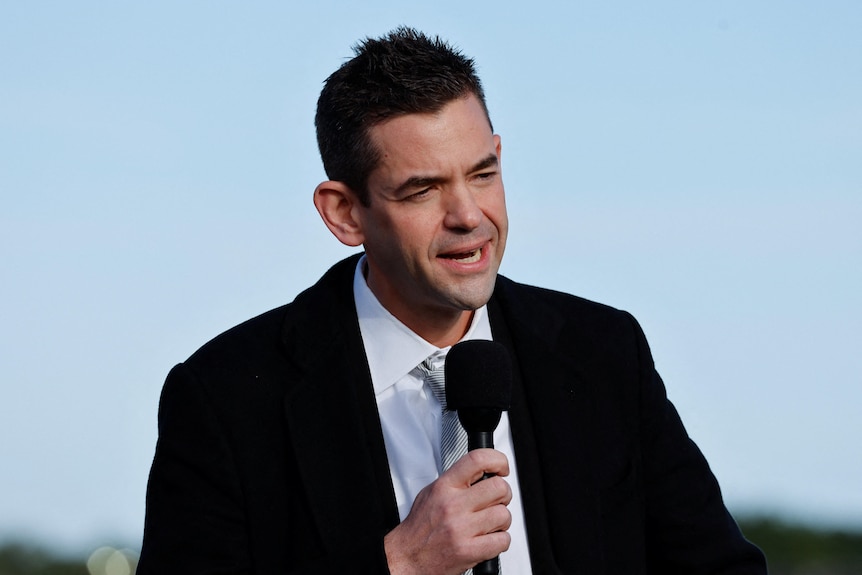
NASA Administrator Jared Isaacman says problems with Boeing’s Starliner spacecraft need to be fixed before anyone else flies on it. (Reuters: Joe Skipper )
Issues with the Starliner’s propulsion system led to cascading delays in their return home, culminating in a NASA decision to have them take a SpaceX craft back to Earth last year as part of the agency’s crew rotation schedule.
Now a report into the failings of the mission have been released by NASA, declaring it a “Type A mishap,” something that could endanger a crew.
NASA astronauts say they would fly on Boeing’s Starliner capsule again ‘in a heartbeat’
Investigators identified an interplay of combined hardware failures, qualification gaps, leadership missteps, and cultural breakdowns that created risk conditions inconsistent with NASA’s human spaceflight safety standards.
Mr Isaacman said Starliner’s problems must be better understood and fixed before any more astronauts strap in.
He added that It was a mistake that Starliner was not designated a serious mishap right from the start, citing internal pressure to keep Boeing on board and flights on track.
“This is just about doing the right thing,” he said.
“This is about getting the record straight.”
Thruster failures and other problems almost prevented Wilmore and Williams from reaching the space station after launch in the first place.
While there were no injuries and the mission regained control prior to docking, this highest-level classification designation recognises there was potential for a significant accident.
“We almost did have a really terrible day,” said NASA Associate Administrator Amit Kshatriya, referring to a potential loss of life.
Key findings spelled out in the report were that there was:
• Inadequate qualification testing of the propulsion system
• Insufficient flight data limiting the ability to assess thruster performance
• Schedule pressure: Persistent proximity to launch over several years created a high-stress environment, dictated a restrictive risk reduction initiative, and contributed to degraded trust with the workforce and overall fatigue.
• Cultural and contractual misalignment: The shared accountability model was poorly understood and inconsistently applied, leading to muddling of roles, responsibilities, and risk ownership.
The findings are more detailed here.
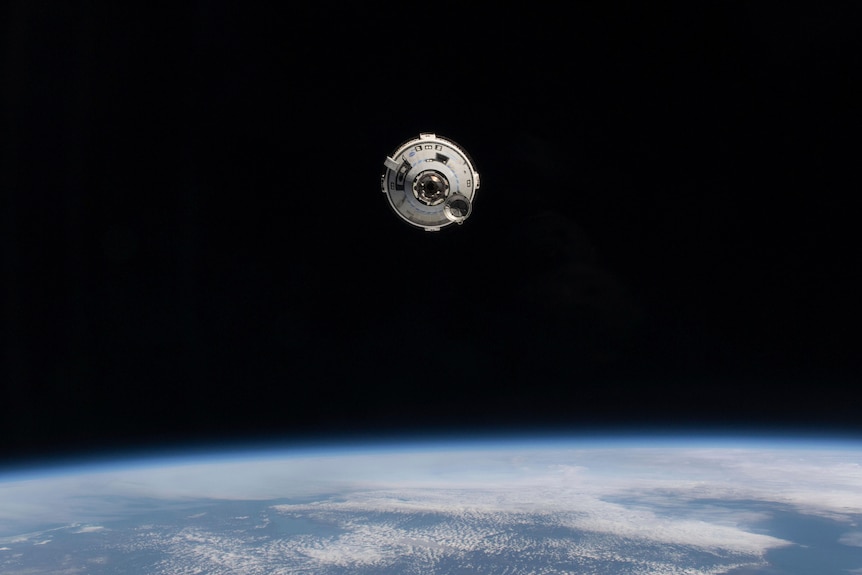
The Boeing Starliner spacecraft approaches the International Space Station in June 2024 after experiencing thruster failures. (AP: NASA)
“The Boeing Starliner spacecraft has faced challenges throughout its uncrewed and most recent crewed missions. While Boeing built Starliner, NASA accepted it and launched two astronauts to space,” Mr Isaacman told a news conference.
“The technical difficulties encountered during docking with the International Space Station were very apparent.”
Boeing said the findings would help the company move forward in ensuring crew safety, and stressed that the Starliner program would continue.
Despite the difficulties, following their return to Earth the stranded astronauts said they would do another Starliner mission “in a heartbeat” and staff at all levels, including them, were responsible for the errors.
There is as yet no timeline for when Boeing can launch Starliner on another test flight to prove its safety before astronaut flights.
The grounding leaves Elon Musk’s SpaceX as the only US taxi service for astronauts.
“Boeing has made substantial progress on corrective actions for technical challenges we encountered and driven significant cultural changes across the team,” Boeing said in a statement.
A history of Starliner issues
It’s not the first time Boeing has experienced issues with its Starliner.
The first test flight in 2019, without anyone on board, ended up in the wrong orbit and forced a repeat mission, which had its own difficulties.
NASA hired Boeing and SpaceX in 2014, in the wake of the space shuttles’ retirement, to ferry astronauts to and from the orbiting lab.
Their contracts are worth billions.
SpaceX just delivered its 13th crew to the space station for NASA since 2020.
NASA says it will continue to work closely with Boeing to fully understand and solve the technical challenges with the Starliner vehicle alongside incorporating the investigative recommendations before flying the next mission.