
INSIDE THIS REPORT
For decades, Americans were told there was “nothing to see.”
Then the U.S. government admitted unidentified aerial phenomena were real.
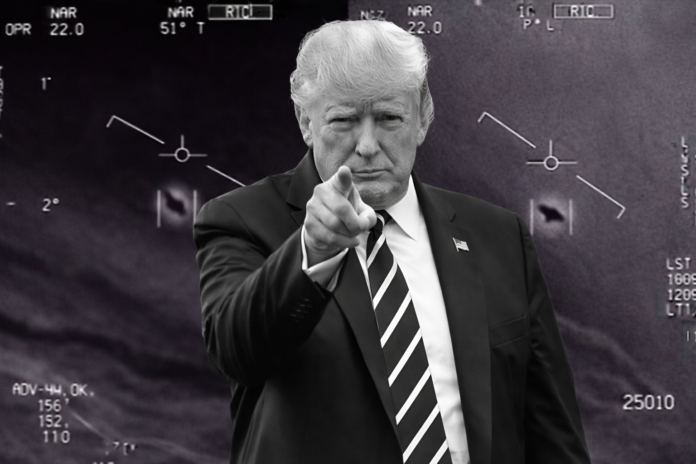
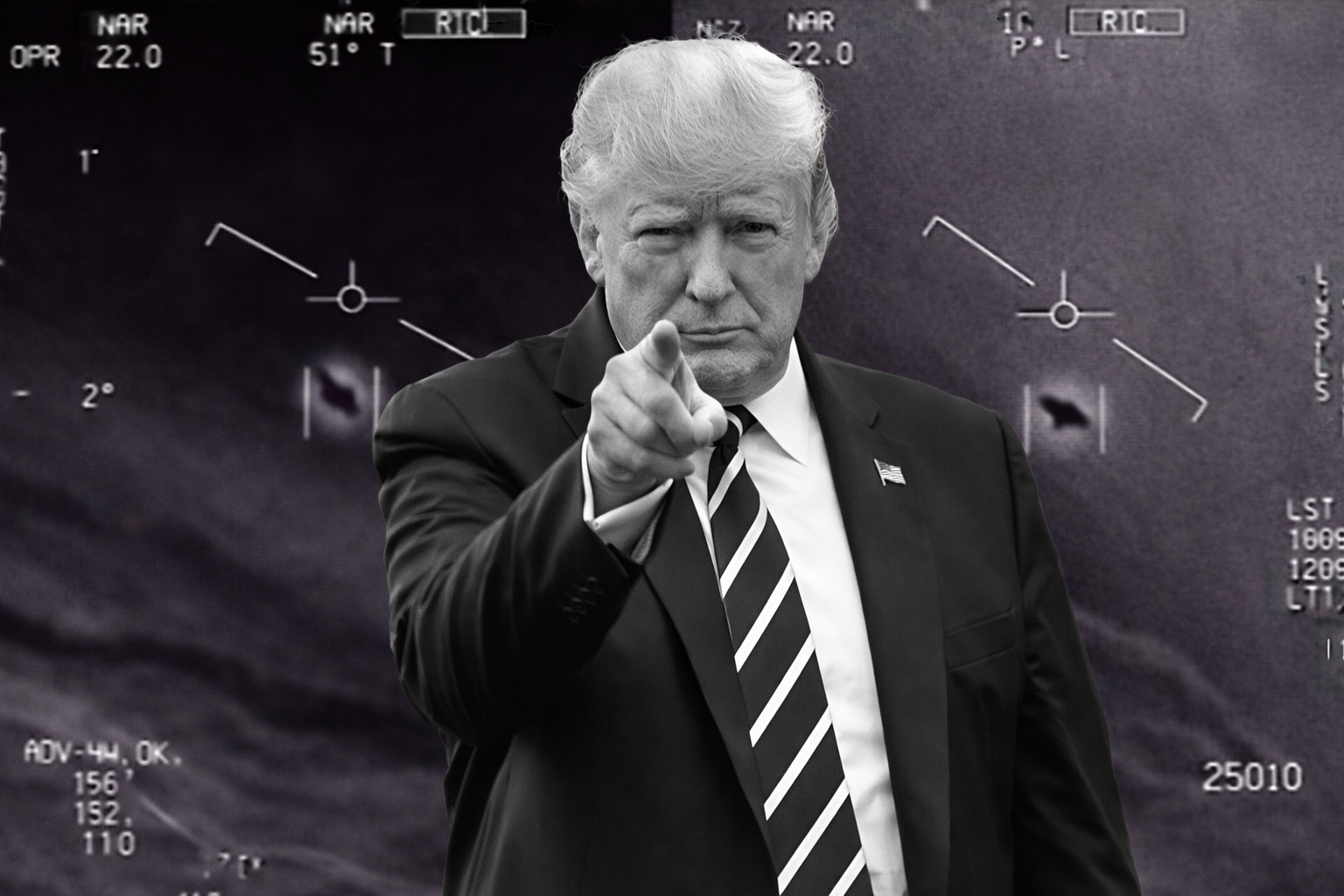
Now, President Donald Trump’s disclosure posture may be setting the stage for the most consequential transparency shift in modern national security history.
[USA HERALD] – President Donald Trump has marked a shift in how the federal government addresses unidentified aerial phenomena (UAP). While prior administrations largely deflected or minimized the topic, Trump’s directive emphasizes declassification review, inter-agency coordination, and formal reporting channels within the Department of Defense.
This is not a theatrical “alien reveal.”
It is a structural change.
The Strategic Rationale
Supporters of Trump’s disclosure posture argue it is rooted in strength, not sensationalism.
If unidentified craft are entering restricted U.S. airspace, the issue is first and foremost a sovereignty question.
That shifts the frame from science fiction to air defense.
The establishment of the United States Space Force during Trump’s administration reinforced this doctrine. Space was formally recognized as a warfighting domain. Now, any unidentified object — terrestrial or otherwise — becomes a domain awareness issue.
How U.S. Disclosure May Pressure Other Nations To Release Their Files
If the United States openly acknowledges unexplained aerial incursions and invests in public-facing analysis, other nations would face a credibility dilemma.
Countries with long-standing UFO archives — including Russia, China, France, Brazil, and the United Kingdom — would face increased domestic and international pressure to clarify their own records.
A formal American disclosure creates a ripple effect: