
Science Desk
Last Updated: 19 February 2026, 10:13 AM IST
From a young girl in Lucknow dreaming of space to leading NASA’s James Webb Space Telescope mission
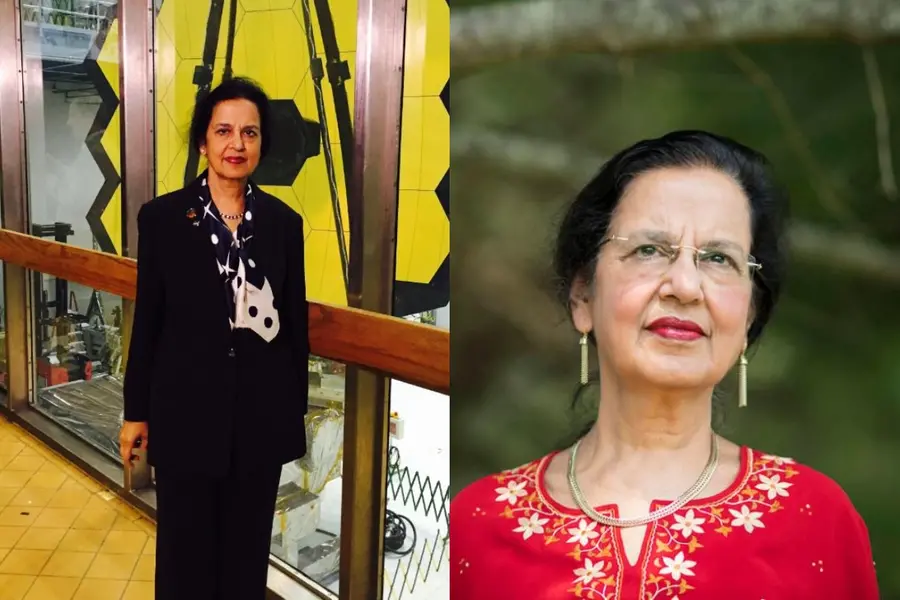
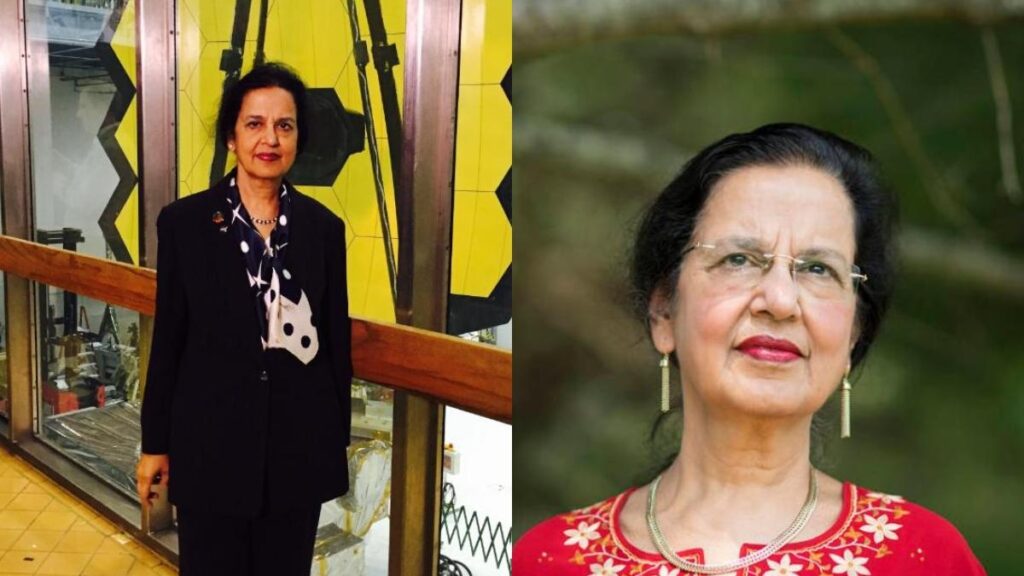
From a seven-year-old girl in Lucknow watching Sputnik in 1957 to leading NASA’s Hubble and James Webb Space Telescope missions, Hashima Hasan’s journey is a testament to dreaming big and breaking barriers in science.
Growing up in Lucknow, Hashima Hasan’s fascination with the stars began at the age of seven when she watched Sputnik streak across the sky. That early inspiration propelled her into a remarkable career in space science, eventually steering some of NASA’s most complex space telescopes.
Early inspiration and academic journey
In a personal account released by NASA, Hasan recalled, “That morning, as I saw Sputnik and the dark, starry sky, I dreamt the impossible dream that one day I would be a space scientist.” She earned a doctorate in theoretical nuclear physics from the University of Oxford in 1976, navigating the challenges faced by female scientists amid societal pressures. After post-doctoral work and faculty positions across three continents, she moved to the United States in 1985 with her husband and two infant sons.
Pioneering work at NASA
At the Space Telescope Science Institute in Baltimore, Hasan developed the Telescope Image Modelling (TIM) software for the Hubble Space Telescope, crucial in analysing the telescope’s first images and correcting its spherical aberration. Appointed as the Optical Telescope Assembly scientist, she maintained Hubble’s focus until a permanent fix was designed, adjusting it every three months.
She later joined NASA Headquarters in 1994 and became program scientist for Hubble by 1999, overseeing critical instruments and participating in servicing missions SM3A and SM3B.
Leadership on the James Webb Space Telescope
Hasan’s involvement with the James Webb Space Telescope began in 1995 when it was known as the Next Generation Space Telescope. She served as program scientist for JWST from 2011 to 2015, leading technology development and international collaborations, including with ESA and CSA on the Mid-InfraRed Instrument (MIRI). Despite the tragedy of 9/11, Hasan and her team persevered to ensure MIRI and other instruments were successfully installed on JWST.
A message to future explorers
Reflecting on her career, Hasan said, “I would like all readers to follow their dreams as I have and not to get discouraged, as we continue exploring the Universe. The sky belongs to all of us.”
Hashima Hasan’s journey from a backyard in Lucknow to NASA’s cutting-edge space missions exemplifies determination, innovation, and global collaboration in science.
Published: 19 Feb 2026, 10:13 am IST
Subscribe to our NewsletterGet Latest Mathrubhumi Updates in EnglishFollow
Disclaimer: Kindly avoid objectionable, derogatory, unlawful and lewd comments, while responding to reports. Such comments are punishable under cyber laws. Please keep away from personal attacks. The opinions expressed here are the personal opinions of readers and not that of Mathrubhumi.