

For centuries, magnets have challenged the brightest minds. The classical model of physics defines a magnetic field as a dipole, with a north and south pole. Scientists have searched for a monopole, a magnetic particle with only a north or south pole, not both. The discovery of this new particle would unify electromagnetic theory and have far-reaching impacts.
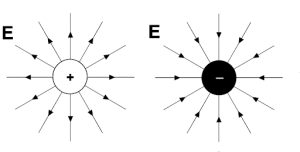 A visualization of a monopole. (Maschen via Wikimedia Commons, CC)
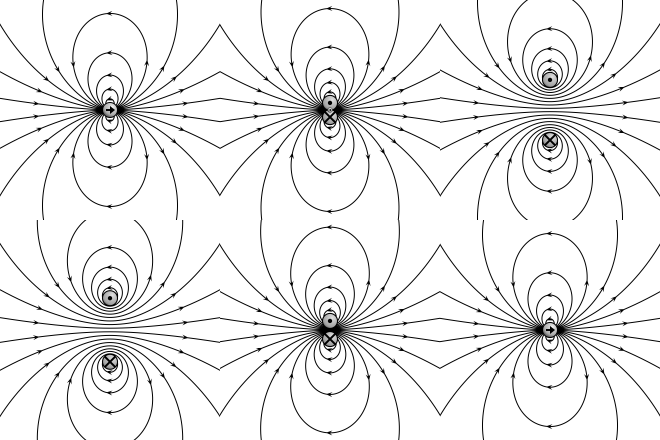 A visualization of a dipole. (Wikimedia Commons, CC)
Nicholas Sparks, a professor of practice in the Tulane School of Science and Engineering, has discovered a theoretical mass where monopoles can be created and observed. By using fundamental constants, Sparks determined that a mass of 22 trillion electron volts could create a monopole and its antiparticle in a process called pair production. Electron volts are a measure of the energy of a particle when it is accelerated.
Through a series of calculations, Sparks was able to compute this mass and determined it could be measured at the Large Hadron Collider, the world’s most powerful particle accelerator that can push particles to “near the speed of light,” thus allowing physicists to test theories of particle physics.
The existence of a monopole could provide a solution to Grand Unified Theories. Sparks said monopoles have “far-reaching cosmological implications,” helping scientists understand the expansion of the universe and determining whether the rate of expansion will slow.
Sparks theorized on the potential of monopoles as energy sources and their use for experimental purposes.
“[If scientists could] channel monopoles in some kind of a way, and put north and south [poles] together, it might produce a lot of energy,” Sparks said. “If you had magnetic monopoles, you could harness the technology that would control these fields even more accurately.”
A monopole would cause Maxwell’s equations, which define electromagnetic theory, to be completely symmetric. Maxwell’s equations are a set of equations that describe how electric and magnetic fields are generated and interact. They are foundational for electromagnetism.
“If the monopole is discovered … Maxwell equations have what’s called a duality symmetry, where all instances of electric and magnetic [calculations] can be switched around,” Sparks said.
Currently, magnetism is considered a product of electricity. Fully symmetric Maxwell’s equations would allow for a magnetic charge to equal an electric charge. The discovery of a monopole would also provide insights into physics’ most foundational questions, even the creation of the universe.