
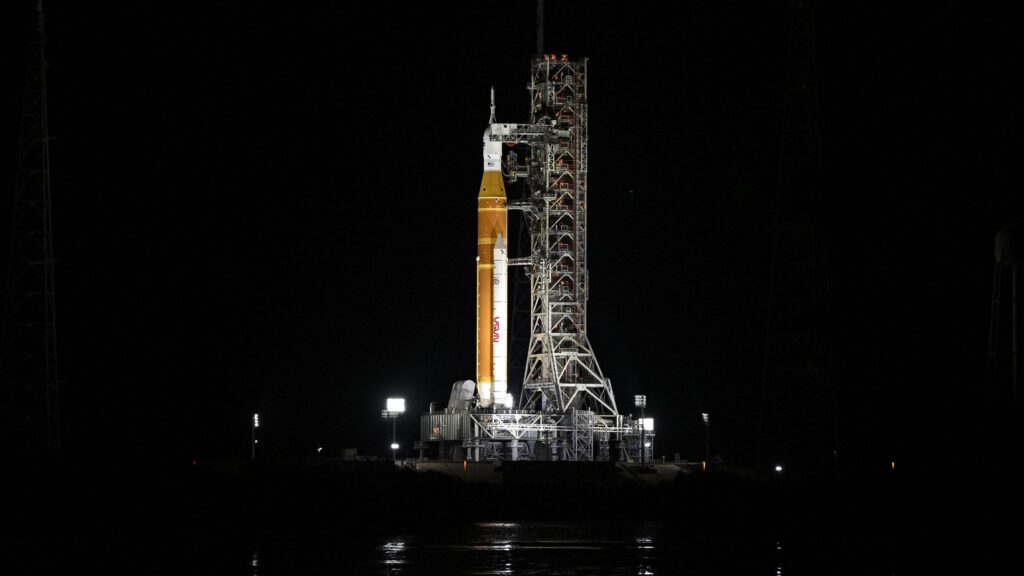
NASA is set to fuel the Artemis II rocket once more for a “wet dress rehearsal” on Thursday (Feb. 19) in preparation for its historic launch to the moon.
The fueling test will be NASA’s second try at a wet dress rehearsal to fuel its Space Launch System (SLS) rocket after hydrogen leaks plagued the first attempt earlier this month.
You may like
NASA traced the issue to two seals surrounding the fuelling lines, which have since been fixed. Yet the headaches continued following the premature ending of a Feb. 12 “confidence test” due to another problem that reduced the fuel flow to the rocket. NASA said in a statement that its engineers have replaced a filter that was suspected of disrupting hydrogen flow.
“Considering the issues observed during the lead-up to Artemis I, and the long duration between missions, we should not be surprised there are challenges entering the Artemis II campaign,” NASA Administrator Jared Isaacman wrote on the social platform X on Saturday (Feb. 14). “That does not excuse the situation, but we understand it. I am impressed with the NASA team and our contractors working diligently through the campaign.”
A historic mission
Artemis II is scheduled to take four astronauts on a 10-day trip around the moon. This is the first time NASA is sending humans back to the moon in more than 50 years, and the first time that a woman and a Black man will be part of a lunar crew. If the trip is a success, then NASA will have tested systems and gathered data ahead of the Artemis III mission, which aims to land astronauts on the moon in 2028.
NASA wants to establish a long-term presence on the moon through the Artemis Program, eventually using the lunar surface as a stepping stone to Mars. However, spaceflight is a difficult and delicate process, and that’s been repeatedly shown during the Artemis Program.
Hydrogen fuelling remains a key issue. The lightest element has been NASA’s fuel of choice since the Apollo program, but it’s also notorious for leaking — passing through solid metals by diffusing through their atomic lattices. To complicate matters further, hydrogen has a boiling point of minus 423 degrees Fahrenheit (minus 253 Celsius, or 20 kelvins), so NASA has to keep it extremely cold, at temperatures that can then freeze seals.
In 2022, NASA’s flagship Space Launch System (SLS) rocket returned to the Vehicle Assembly Building twice due to hydrogen leaks and other technical issues that arose during rehearsals for Artemis I, an uncrewed flight around the moon that eventually took off in November 2022. NASA is now experiencing similar problems with Artemis II.
NASA had already reported some other issues during the first rehearsal, including audio communications dropouts, problems with a replaced valve on the crew capsule and another hydrogen leak, which was blamed on cold weather and resolved by engineers warming up some components.
To pass the wet dress rehearsal on Thursday, NASA will have to demonstrate its ability to safely fuel more than 700,000 gallons (2.6 million liters) of its hydrogen-based cryogenic propellant and complete a simulated launch. This will include closing hatches on the Orion spacecraft, which the Artemis II crew will ride in on their trip to the moon.
Once NASA has a successful wet dress rehearsal, the space agency can proceed to a flight-readiness review before committing to a launch date for Artemis II. The March launch windows include March 6 to 9 and March 11. If Artemis II doesn’t fly on one of those days, it will be delayed until April, with the mission meant to launch no later than April 30.