
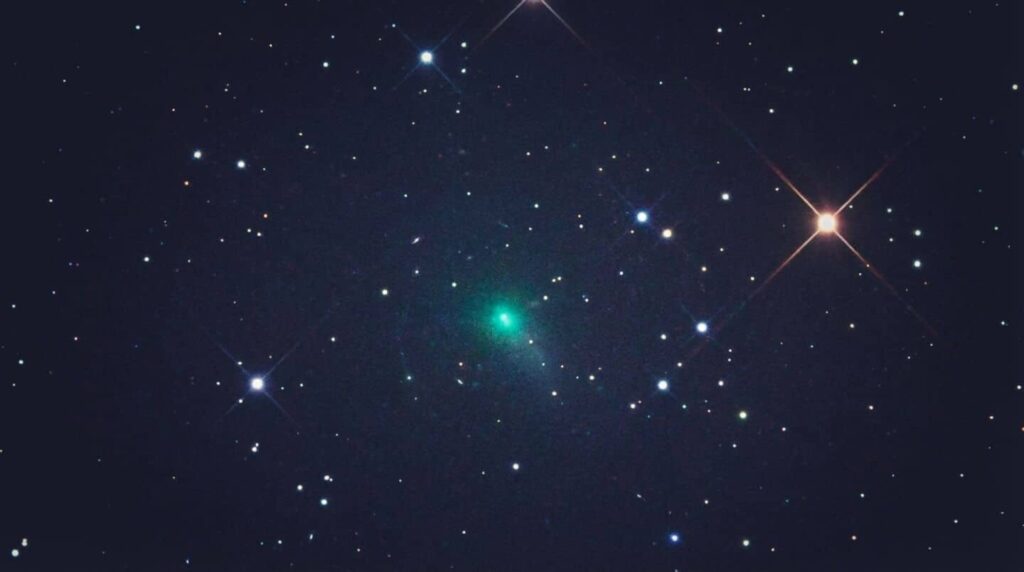
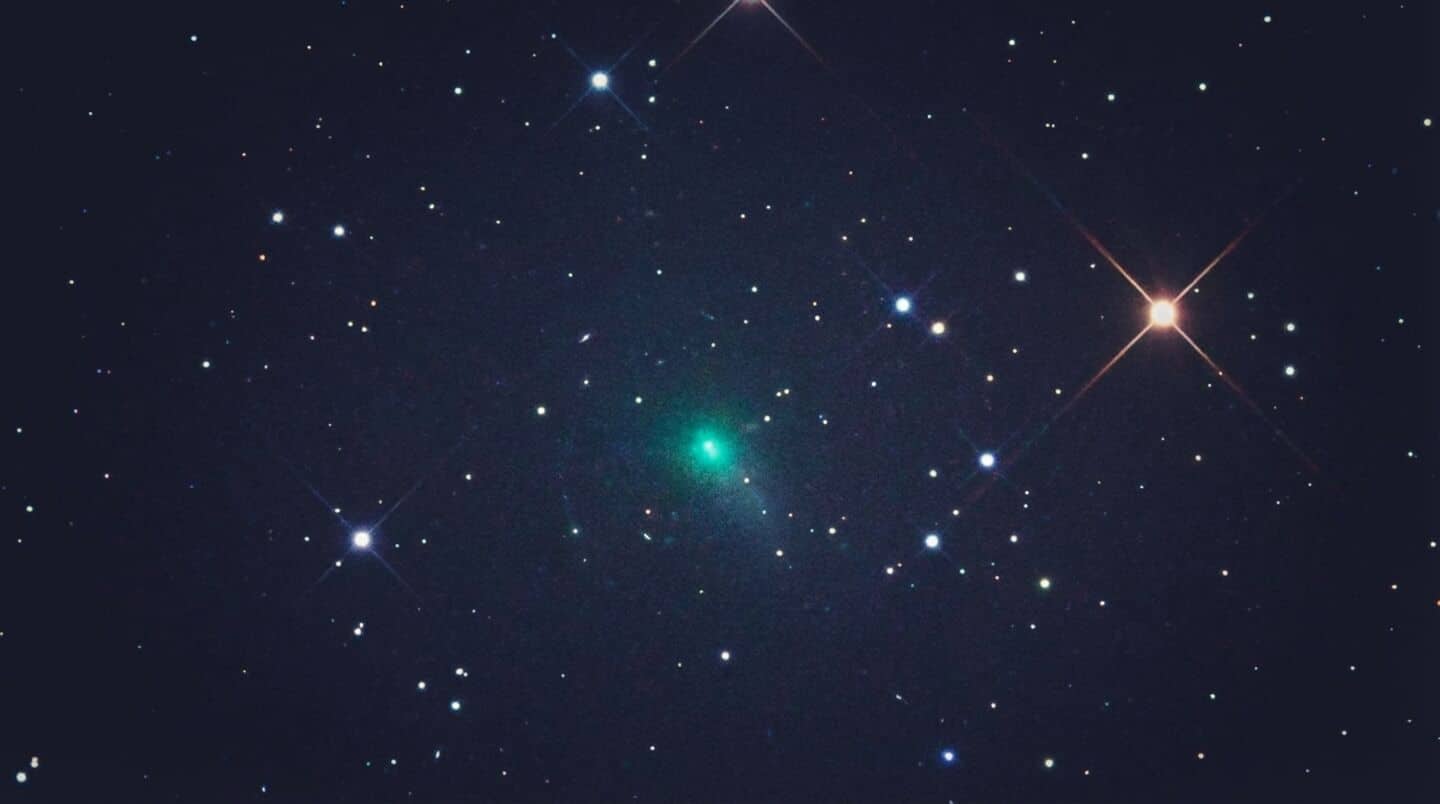
It was first spotted last month
What’s the story
A newly discovered comet, C/2026 A1 (MAPS), is hurtling toward the Sun and could be visible in India’s evening skies in early April.
The comet was first spotted by amateur astronomers in Chile last month.
If it survives its close encounter with the Sun, it could become bright enough to be seen without a telescope, even during daylight hours for a brief period.
What are sungrazing comets?
Comets are icy bodies from the outer regions of our solar system, made up of dust and rock. When they approach the Sun, heat turns their ice into gas, creating a glowing head and a long tail.
The comet C/2026 A1 (MAPS) belongs to the “Kreutz sungrazer” family—comets that come very close to the Sun’s surface.
Past sungrazers have been bright enough to be seen during daytime hours.
When and where to see it
The best chance of spotting comet C/2026 A1 (MAPS) will be on April 4-5, when it makes its closest approach to the Sun.
As of now, in February, it is too faint to be seen without large telescopes.
By mid-March, it may appear as a small fuzzy spot in 8-10-inch telescopes low in the southwestern sky after sunset.
Will India get a chance to see it?
People in India will be able to spot comet C/2026 A1 (MAPS), but only from certain areas.
It will be low in the western sky and close to the Sun’s glare, making it difficult for Northern Hemisphere viewers.
The best time to see it would be 30-45 minutes after sunset in early April through binoculars or a small telescope.
Southern India and equatorial regions may have slightly better luck than northern areas.
It could shine brighter than Venus
The brightness of comet C/2026 A1 (MAPS) is still uncertain. However, if it remains intact, it could shine as bright as Venus or even brighter for a few hours.
Some experts believe it could reach negative magnitudes and be visible in broad daylight.
Even if not exceptionally bright, its tail could still be easily spotted during twilight due to its glowing turquoise color from special gasses.