

Where are the aliens? Scientists reveal the most likely places – within our solar system
mystery

Express newspaper
16/02/2026 20:03
The search for extraterrestrial life has taken an unexpected turn after President Barack Obama said aliens exist, but he doesn’t know where they are.
The former president explained that extraterrestrials are “not kept” at Area 51, the US Air Force base that has long been linked to alien conspiracy theories.
“There is no object underground, unless there is a big conspiracy and they hid it from the president of the United States,” Obama said.

So, with the conspiracy theorists’ favorite theory ruled out, where could the aliens be hiding?
Scientists believe that the most likely places for extraterrestrial life are “Earth-like” planets orbiting distant stars in the galaxy.
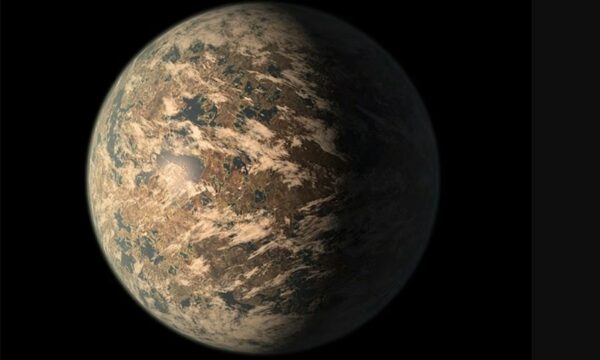
One such candidate is the planet TRAPPIST–1e, about the size of Earth and just 40 light-years away, within its star’s “Goldilocks zone,” where conditions are favorable for liquid water and life.
But astronomers believe we don’t need to look that far – even within our own solar system, Saturn’s moons, Enceladus and Titan, could offer the right conditions for life.
In an Instagram post, Obama explained: “Statistically, the universe is so large that there is a high chance of extraterrestrial life. But the distances between solar systems are so great that the chance of aliens visiting us is small. During my presidency, I have seen no evidence of extraterrestrial contact. Really!”
Professor Mark Burchell, of the University of Kent, explained to the Daily Mail: “There are so many stars, many have planets, and some planets are in the habitable zone, where solar heating allows for liquid water, that in a small percentage of cases the ‘magic’ happens and life arises.”
TRAPPIST–1e
TRAPPIST–1e is the fourth planet in the TRAPPIST–1 system, a small, red star with a very low temperature and a diameter of 84,180 km. The three planets in the system orbit within the Goldilocks zone, where the temperature allows the existence of liquid water. TRAPPIST–1e, close to its star, could support liquid water and is considered an ideal candidate for life. Studies with the James Webb Telescope showed that it has an atmosphere similar to Earth.
K2–18b
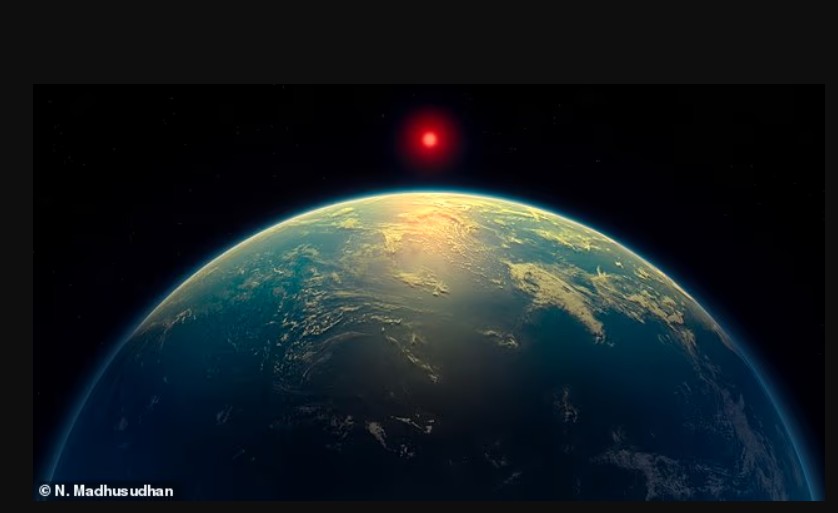
K2–18b, 124 light-years from Earth, is a planet completely covered in oceans, a “Hycean world.” It orbits a cool red star every 33 days and lies within the Goldilocks zone. Scientists have found chemical traces of compounds produced by living organisms on Earth, such as dimethyl sulfide (DMS) and dimethyl disulfide (DMDS). However, some experts consider the evidence for life there weak.
Kepler-62e and Kepler-62f
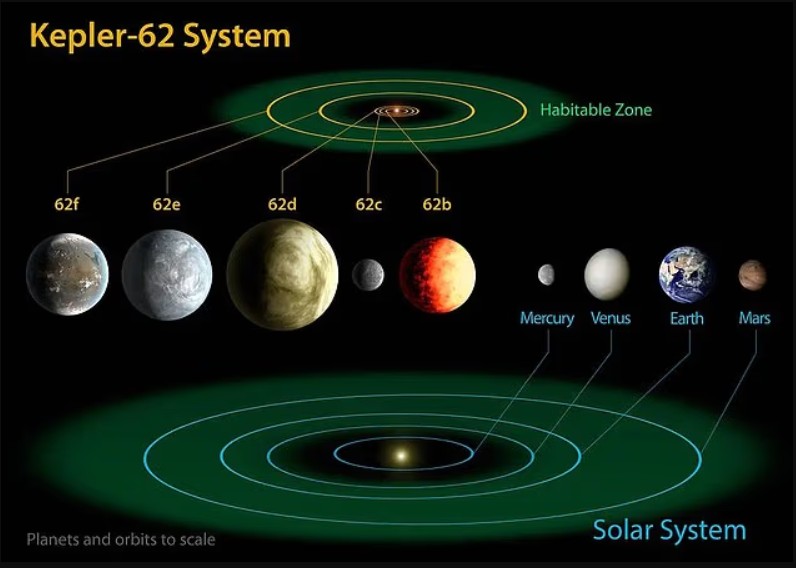
Kepler-62e and Kepler-62f are located 1,200 light-years from Earth, within the habitable zone of their star. Both planets could have liquid water, making it more likely that life could arise.
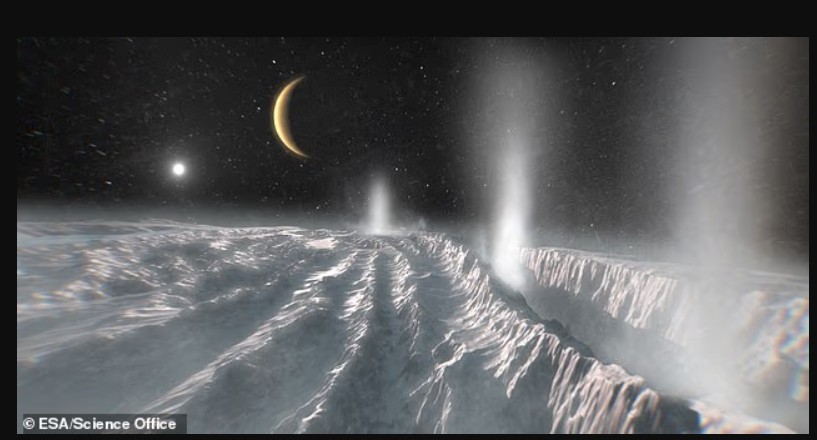
Enceladus
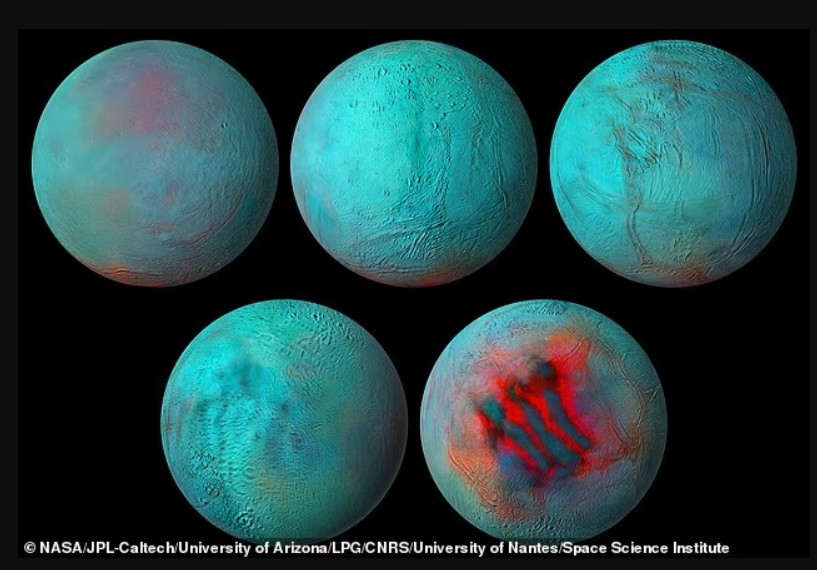
Saturn’s sixth moon, Enceladus, has a large subsurface ocean that could support life. Water plumes erupting from its south pole indicate complex molecular compositions that could support life.
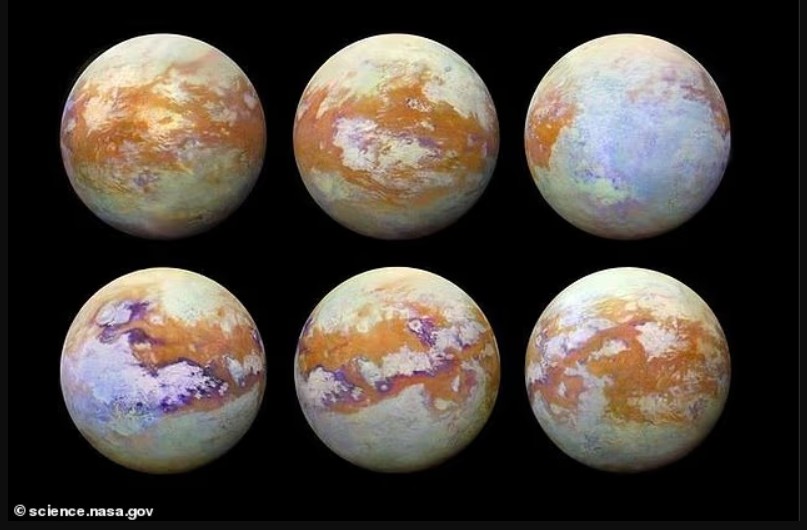
Titan
Titan, Saturn’s other icy moon, has tunnels of melted ice and pockets of fresh water that reach around 20°C – the optimal temperature for life like on Earth. Nutrients are concentrated, making it easy for simple organisms to grow. /GazetaExpress/