
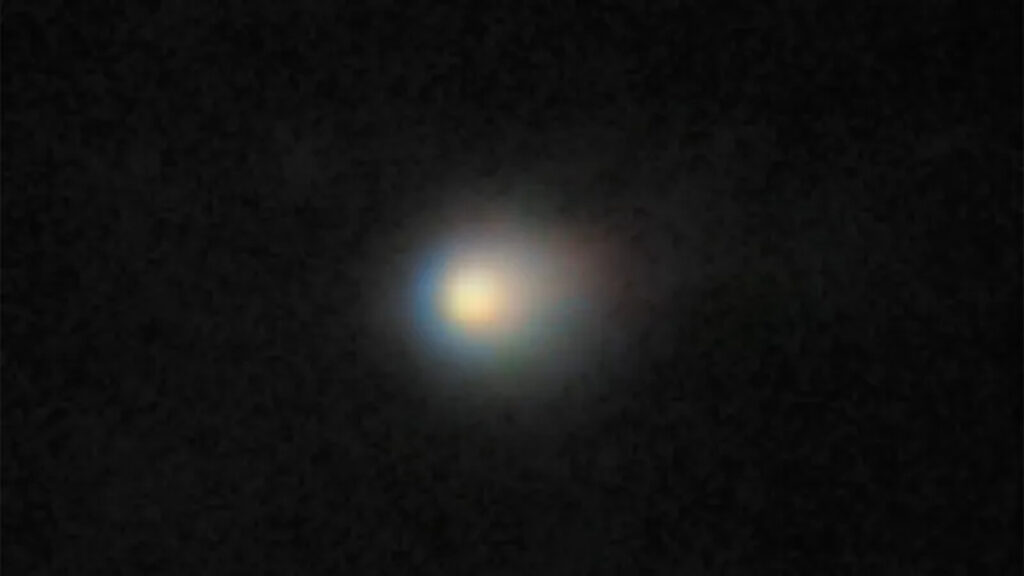
In December 2025, the NASA SPHEREx mission focused its infrared cameras on the interstellar comet 3I/ATLAS, revealing some details about the comet. This increases our existing understanding of the interstellar comet, as well as reveals a notable change in its brightness since Perihelion.
Changes To The 3I/ATLAS Comet Noted By The NASA SPHEREx Mission
One of the things the NASA SPHEREx mission was able to note about the 3I/ATLAS comet is that it contains some organic molecules. This detection revealed that the interstellar comet holds organic molecules like methanol, cyanide, and methane, which are the foundation of biological processes.
Does this discovery mean that the interstellar comet holds the ingredients for life? Well, not exactly, as the molecules detected can be created by non-biological processes.
Another observation from the mission about the interstellar comet was a significant change in its brightness. This change is significant compared to its previous brightness before it reaches its closest distance to the Sun, Perihelion.
Two months after passing Perihelion, the interstellar comet 3I/ATLAS significantly increased in brightness, and this was noticed by the NASA SPHEREx mission. But why did the brightness of this interstellar comet increase after Perihelion?
Why The Brightness Of Interstellar Comet 3I/ATLAS Increased
Carey Lisse of Johns Hopkins Applied Physics Laboratory in Laurel, Maryland, points out the cause of the increase in brightness of the interstellar comet 3I/ATLAS. While referring to the events after Perihelion, she says the comet “was releasing an abundance of new, carbon-rich material that had remained locked in ice deep below the surface.”
During Perihelion, interstellar comet 3I/ATLAS experienced peak heating. However, it was only after Perihelion that the heat from the Sun seeped into the comet, reaching the ice deep below its surface, causing it to undergo sublimation.
Phil Korngut, NASA SPHEREx instrument scientist at Caltech in Pasadena, California, says the sublimation caused “the pristine ices below the surface are warming up and erupting, releasing a cocktail of chemicals that haven’t been exposed to space for billions of years.” This is the reason why the brightness of interstellar comet 3I/ATLAS increased as NASA SPHEREx observed.