
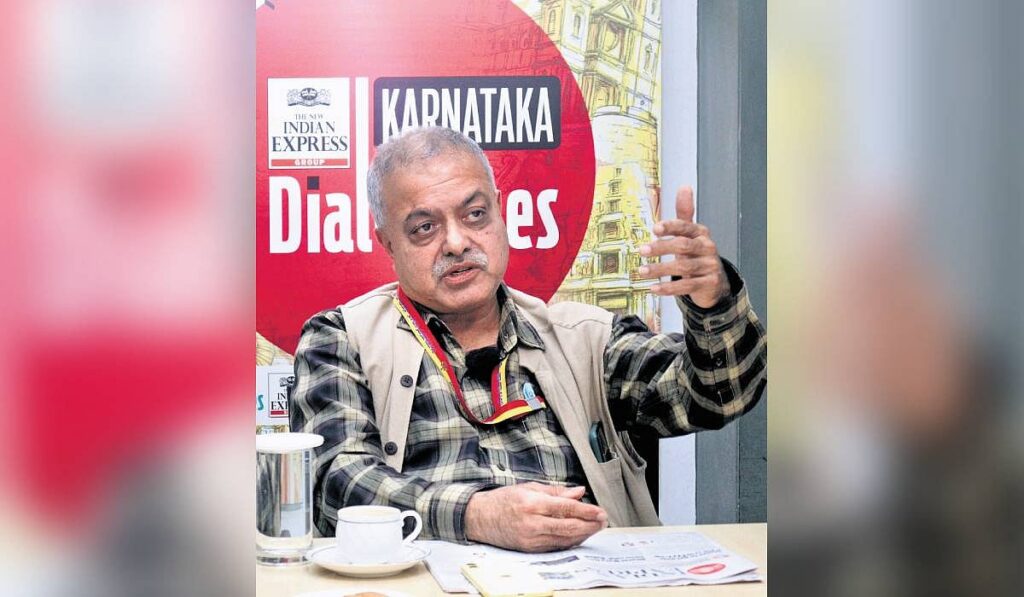
Advances in space-based applications have helped India strengthen its food security, communications, navigation and overall national infrastructure. In an interaction with The New Indian Express, Jawaharlal Nehru Planetarium Director BV Guruprasad says space science is complex and demands seamless integration of multiple engineering disciplines, but the trajectory of India’s space research remains strong despite setbacks of late. Excerpts…
What is the state of the Indian space sector currently?
Before 2020, things were a bit different because most of the work pertaining to space was being done by the Indian Space Research Organisation (ISRO). Then, the government brought in major reforms in the private sector. It created certain agencies like NewSpace India Limited (NSIL), whose mandate is to market India’s space capabilities. In the meantime, the private sector was already established.
For example, Godrej & Boyce has been working with ISRO in developing engines for launch vehicles like the Polar Satellite Launch Vehicle (PSLV). Then you have around 300 space research-based startups in India. For regularisation of all these elements, IN-SPACe was created as a regulatory body to help the space sector grow over the years.
Where do you see India in the next 10 years?
India has made remarkable progress in space research and continues to set ambitious goals. Upcoming missions include Chandrayaan-4 and Chandrayaan-5 in collaboration with Japan, the Bharatiya Antariksha Station and the Man on Moon mission that aim for a sustained presence in space. Space is complex and demands seamless integration of multiple engineering disciplines. But despite setbacks, the trajectory of India’s space research remains strong and optimistic.