
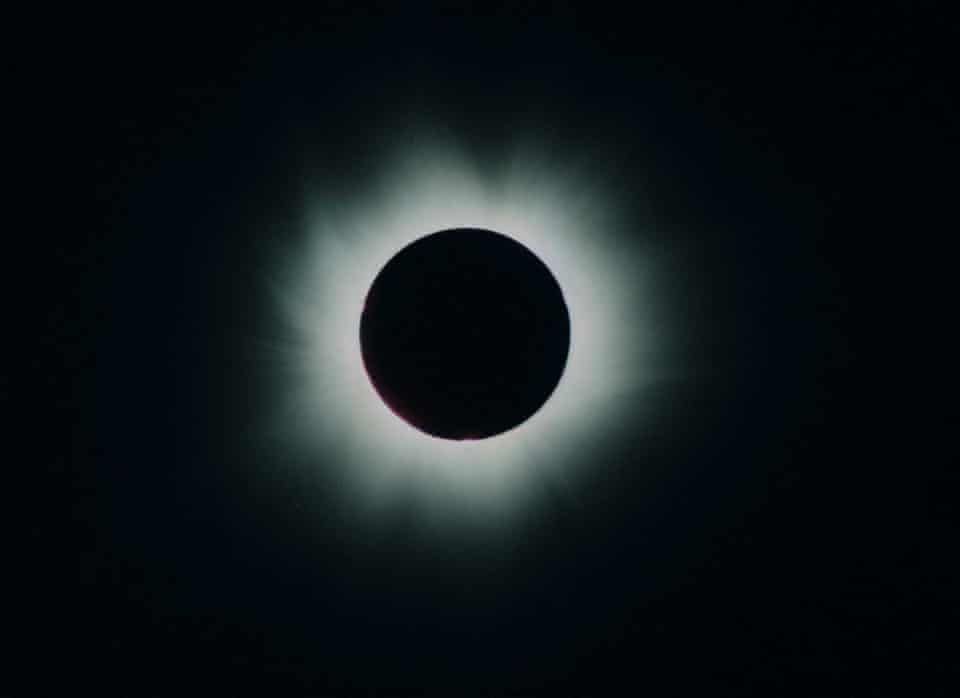
The phenomenon will culminate with a spectacular view from many parts of Iberia. This will be the first total solar eclipse visible from mainland Europe in over 27 years, providing a rare opportunity to witness the Moon completely obscuring the Sun. All are visible from Spanish soil and from small parts of northeastern Portugal.
So, what happens during a total solar eclipse?
During a total solar eclipse, the Moon moves directly between the Earth and the Sun, blocking out the bright solar disc and briefly turning the day into a kind of eerie twilight. Only observers located within the narrow band of “totality” (typically about 200–300 km wide) will experience the dramatic total phase, where the Sun’s bright light briefly disappears. Outside this band, observers will still see a partial eclipse, where the Moon covers much of the Sun but not its entirety.
Where to see the 2026 eclipse on the Iberian Peninsula?
Spain will be the best place to be. This is where “totality” will be most visible on 12 August 2026. The path of totality will first cross over Spain near the northwestern coast, including Galicia. It then crosses the country’s northern regions from west to east. Only certain northern and central Spanish regions, such as Castile, León, Aragón, Asturias and parts of northern Castilla-La Mancha, are going to be within the path of “totality”. Weather permitting, locations such as Palencia, León, Burgos, Soria, and Oviedo are expected to offer especially good views, with totality lasting nearly 1 minute and 40 seconds in some of these areas. The path will continue across eastern Spain and down towards the Mediterranean, eventually touching the Balearic Islands around sunset. See the map for clarity.
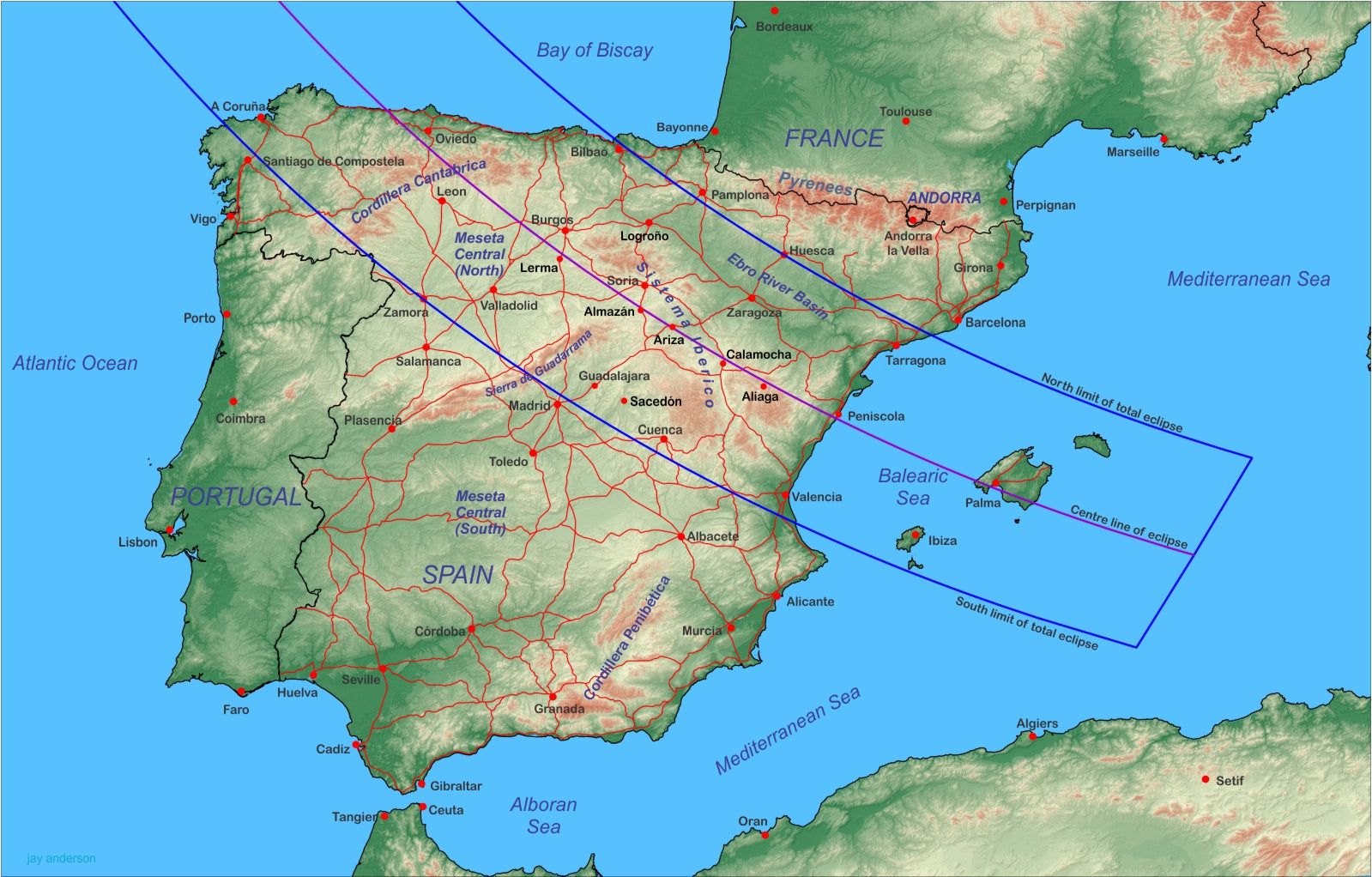
Portugal will also experience part of the phenomenon. A very small section in the extreme northeast of Portugal, near the border with Spain, falls inside the path of totality. Observers here may see a partial eclipse for only tens of seconds. Therefore, careful location planning is essential if you wish to witness the phenomenon fully.
Timing
Exact eclipse timings vary by location, but general guidelines for Iberia are as follows:
The phenomenon begins as the Moon starts to cover the Sun in the late afternoon/early evening. In northwestern Spain, totality will occur in the early evening (around 20:20–20:30 local time). This will be as the Sun descends toward the western horizon.
The total phase, when the Sun is completely hidden, will last from roughly 30 seconds up to about 1 minute 50 seconds, depending on your precise location within the path of totality. Because the eclipse happens during summer, the Iberian Sun will still be high enough above the horizon to provide a great view. In many areas, the sun will be only a few degrees above the western horizon at the peak. Choosing viewing spots with an unobstructed western view, such as open fields, plains, or coastal areas facing west, will doubtlessly improve your experience.
Practical tips for viewing
The first thing is to plan early. Accommodation and travel options in regions near the path of totality (northern Spain and northeast Portugal) are expected to fill quickly as eclipse tourism increases. Booking well in advance is highly recommended. Check local weather forecasts because, obviously, clear skies are going to be crucial, especially since the Sun will be low in the sky near sunset. Northern Spain’s weather in August tends to be most favourable, but localised cloud cover could still obscure the view. Choose a spot with a historically high chance of clear skies if that’s at all possible for you.
Eye safety
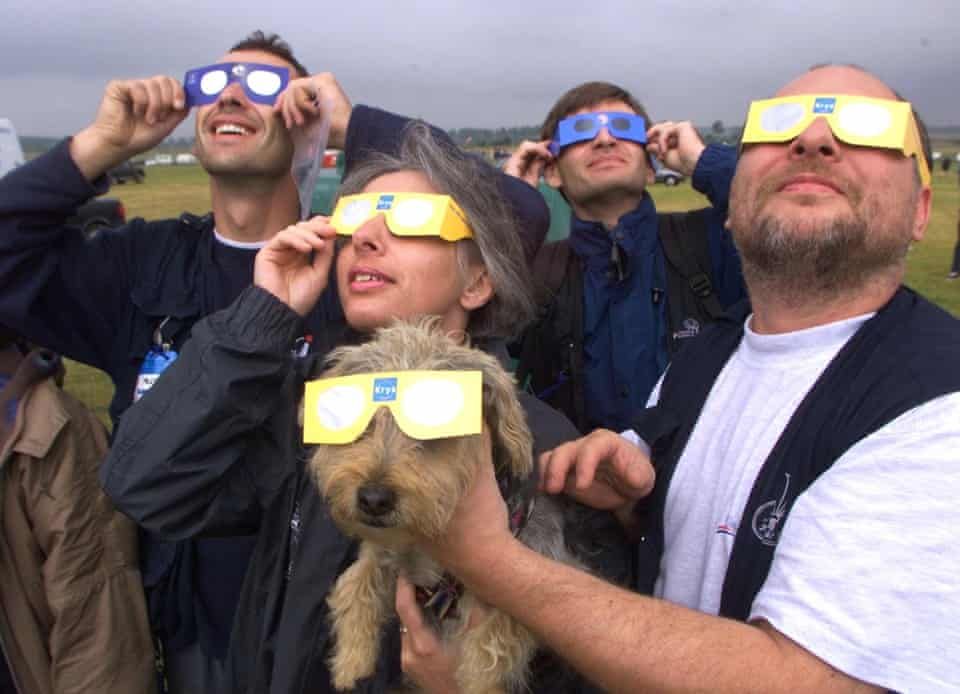
This might sound like stating the bleedin’ obvious. But it’s never a great idea to look directly at the Sun without proper eye protection. Use ISO-certified solar eclipse glasses or safe projection methods to protect your eyes at all times, both before and after totality.
Bring essentials
Pack a portable chair, drinking water, sunscreen, a radio or a smartphone equipped with specific eclipse timing apps to stay informed. If you choose to photograph the event, ensure you have solar filters for lenses and cameras.
A celestial memory for us all to treasure
I still remember the solar eclipse of 1999. That was the year my young family and I got to witness this amazing event in a lowly farmer’s field nestled above one of South Devon’s most glorious seaside villages, Bigbury-on-Sea. The viewing point also overlooked Burgh Island and its famous hotel, where Agatha Christie is said to have visited on numerous occasions. I half expected to see Hercule Poirot waddling into the hotel’s magnificent drawing room, sporting a pristine morning suit as well as his signature hat.
The whole experience remains one of my fondest memories. This is the reason why I’m planning to see the 2026 eclipse, some 27 years later. My goodness, that’s utterly frightening. I remember every detail of the 1999 event so vividly; it’s almost like it was only a few months ago, not 27 years. It was at eleven minutes past eleven, on the morning of 9 August 1999. It was utterly surreal. A strangely moving experience as the animals and the birds reacted with a strange combination of curiosity and confusion. People reacted with an equally bizarre blend of awe, fervour, reflection or just (as in my case) pure delight. I could literally hear people’s exclamations from miles along the coast, as the land was enveloped by a strange silence. The entire coastline lit up with thousands of camera flashes. But nothing will ever beat seeing the whole thing with my own eyes. No photo or video can capture the feelings and the pure splendour of those wonderful moments.
So, whether you’re an avid astronomer, a traveller seeking unique experiences, or you’re simply curious about the workings of the Cosmos, the 2026 total eclipse on 12 August presents an extraordinary opportunity. With thoughtful planning, a prayer for clear skies and safety in mind, we can all witness one of nature’s most awe-inspiring spectacles from the heart of Spain or on the fringes of Portugal. I wonder which location you’ll choose?