
The Brief
Four new astronauts reached the International Space Station this weekend after NASA’s first medical emergency last month.
Four astronauts hastily returned to Earth last month due to an undisclosed health concern.
Spacewalks and other research had been paused in their absence.
The International Space Station welcomed four new astronauts this weekend.
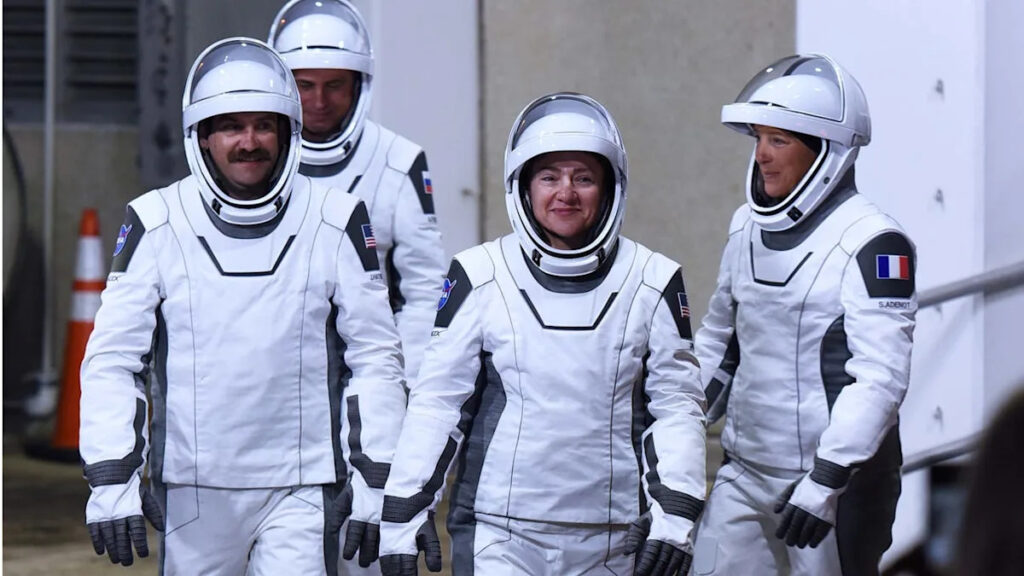
The astronauts launched from Cape Canaveral Friday via SpaceX to bring the station back up to full capacity after several astronauts bailed last month because of health concerns.
Astronauts at ISS
The backstory
Last month’s medical evacuation was NASA’s first in 65 years of human spaceflight. One of four astronauts launched by SpaceX last summer suffered what officials described as a serious health issue, prompting their hasty return. That left only three crew members to keep the place running — one American and two Russians — prompting NASA to pause spacewalks and trim research.
NASA has refused to divulge the identity of the astronaut who fell ill in orbit on Jan. 7 or explain what happened, citing medical privacy. NASA has said it did not alter its preflight medical checks for their replacements.
RELATED: Musk says SpaceX shifting focus to ‘self-growing city’ on moon before Mars push
Presently
Two American, one French and one Russian astronauts joined the fellow three — bringing the station back to full strength and allowing for spacewalks and further research:
Andrei Fedyaev (Russia)
Christopher Williams (NASA)
Sergey Kud-Sverchkov (Russia)
Sergei Mikayev (Russia)
Timeline
They are expected to remain on board for eight to nine months.
How long does it take to get to ISS?
Big picture view
Meir, Hathaway, Adenot and Fedyaev reached the ISS about one day after launching from Cape Canaveral.
By the numbers
The International Space Station has been in orbit for 25 years, with more than 280 visiting astronauts.
ISS tracker
Big picture view
The International Space Station orbits the Earth once every 90 minutes, allowing for 16 orbits each day. However, the space station is not bright enough to see during the day.
Viewing opportunities can range from one a month to several a week as the light from the sun reflects off the station as it passes overhead at dawn and dusk at the user’s preferred location, according to NASA.
The station can be tracked on a special app, Spot the Station.
The Source
Information in this article was taken from NASA and The Associated Press. This story was reported from Detroit.