
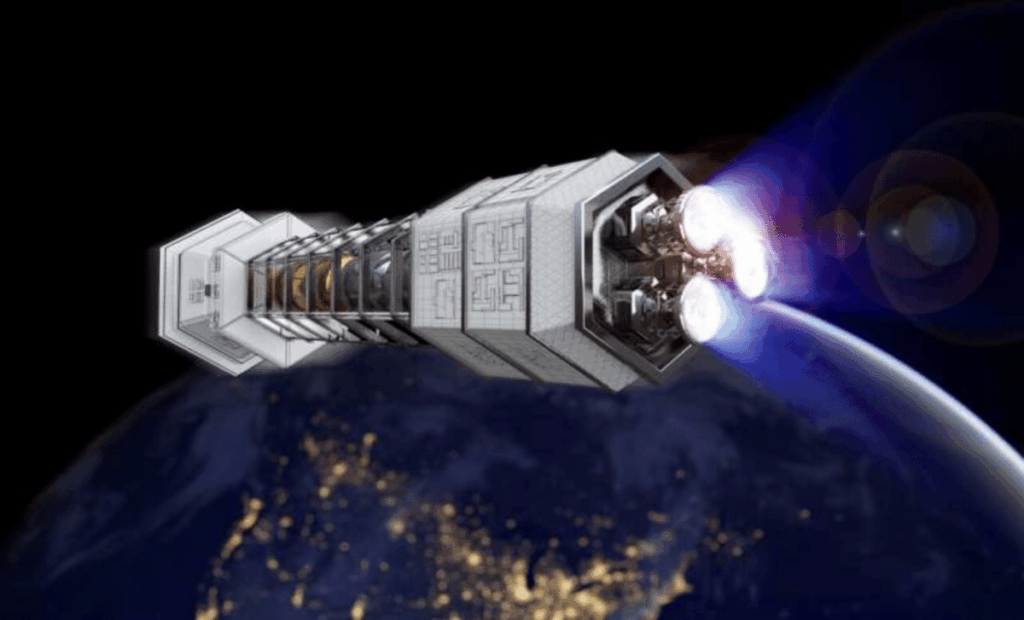
Energy is critical in every domain of human life, and in space exploration, it is even more essential for survival. The U.S. is working towards achieving energy dominance in space with the development of nuclear reactors that can power future missions, including lunar and Mars expeditions. A recent study published by Idaho National Laboratory outlines the path for the United States to lead in space nuclear technology, exploring the potential of nuclear reactors to power long-term space missions and boost human capabilities in deep space exploration.
The Push for Nuclear Power in Space
The necessity for reliable energy in space has long been a challenge for explorers venturing into the unknown. Without access to Earth’s resources, astronauts need autonomous and consistent power sources to sustain their life-support systems, equipment, and communication with mission control. Historically, radioisotope power systems have been the go-to solution for deep space missions, such as those used by NASA’s Voyager and Mars rovers. These systems, however, are limited in power output and have a finite lifespan. To address these constraints, the U.S. is now turning to fission reactors as a promising solution for the future of space exploration.
Fission reactors, which utilize controlled nuclear reactions to produce energy, hold the potential to offer significantly higher power output compared to existing systems. This would not only enhance the capabilities of space missions but could also lay the foundation for future human settlements on the Moon and Mars. As Sebastian Corbisiero, national technical director of the Department of Energy’s Space Reactor Initiative, states,
“It might sound like science fiction, but it’s not. It is very realistic and can significantly boost what humans can do in space because fission reactors provide a step increase in the amount of available power. What we need now is a clear path forward.”
The Challenges of Developing Space Nuclear Reactors
Developing nuclear reactors for space applications presents unique challenges compared to terrestrial reactors. One of the most critical factors is mass, every kilogram must be carefully considered, as every component must be launched from Earth via rocket. This means that space reactors need to be lightweight without sacrificing safety, power output, or durability. Additionally, the extreme conditions of space add further complexity. Space-bound reactors must operate in environments that are far harsher than what terrestrial reactors encounter, requiring robust materials capable of withstanding intense radiation, fluctuating temperatures, and microgravity.
Furthermore, while terrestrial nuclear reactors are typically refueled and maintained every 18–24 months, space reactors must be designed to operate continuously for up to 10 years without maintenance. This makes durability a key focus for developers. The design of space reactors must ensure that all components, from the reactor core to the electronics, are resilient enough to endure the vast challenges of space for extended periods. As Corbisiero points out,
“We’re potentially on the cusp of a major step forward regarding nuclear power for space applications. To be a part of an effort like this—that is as exciting as it gets. That’s something you tell your grandkids.”
The Role of Idaho National Laboratory in Space Nuclear Power Development
Idaho National Laboratory (INL) plays a pivotal role in advancing the U.S. space nuclear strategy. As the lead national laboratory for space reactor efforts, INL is central to developing, testing, and refining the technologies necessary for these missions. The laboratory’s expertise in nuclear power systems, combined with state-of-the-art facilities like the Transient Reactor Test Facility, makes it a crucial hub for space nuclear innovation.
The report from INL, “Weighing the Future: Strategic Options for U.S. Space Nuclear Leadership,” outlines several pathways to establish the U.S. as a leader in space nuclear technology. With a focus on collaboration between federal agencies, private companies, and national laboratories, INL is working on designing reactors that will power lunar and Mars missions. Its specialized staff and resources provide the technical expertise needed to bring these ambitious goals to fruition. As Corbisiero highlights, INL’s efforts could lead to groundbreaking advancements:
“That’s something you tell your grandkids”—referring to the exciting possibilities that these technologies could unlock for the future of space exploration.