
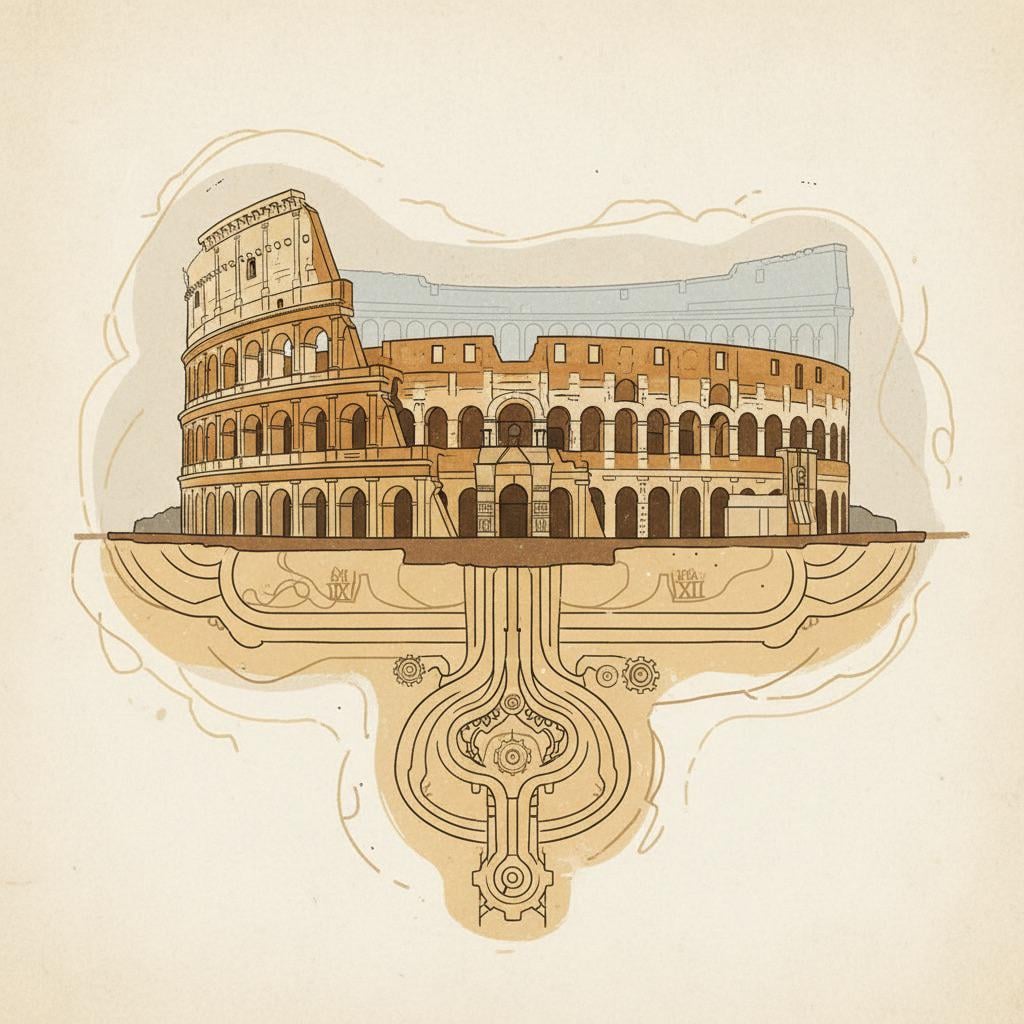
The Flavian Amphitheatre, known today as the Colosseum, stands as the ultimate symbol of Roman power and architectural genius. Completed in 80 AD, it was commissioned by Emperor Vespasian as a gift to the Roman people. This massive structure was built on the site of a private lake owned by the previous emperor, Nero. By returning this land to the public, the new dynasty signaled a shift from personal greed to civic duty. It could hold over 50,000 spectators who gathered to watch spectacles that defined Roman identity.
The building's success relied on revolutionary engineering techniques that are still used in modern stadiums. Romans perfected the use of concrete and the vaulted arch to support the immense weight of the stone tiers. This allowed for a complex network of corridors and stairs that could empty the entire arena in minutes. Beneath the wooden floor lay the hypogeum, a two level subterranean network of tunnels and cages. Here, gladiators and wild animals waited in the dark before being hoisted into the sunlight by manual elevators. These mechanical lifts created a sense of magic and surprise for the audience above. The arena even featured a massive retractable awning called the velarium to protect fans from the Mediterranean sun.
Beyond the blood and sand, the Colosseum served a vital political function in managing a diverse empire. It was a physical manifestation of the "bread and circuses" policy used to keep the urban poor from rioting. By providing free entertainment and food, emperors maintained social stability and reinforced their legitimacy. The games also showcased the extent of Rome's reach by featuring animals and captives from distant lands like Numidia and Gaul. This reminded every citizen that they were part of a global superpower that had conquered the known world. While we often focus on the violence, the Colosseum was primarily a tool for communication between the ruler and the ruled.
Today, the Colosseum remains a blueprint for how we design public spaces and manage large crowds. Its influence is visible in every modern sports arena from Los Angeles to Tokyo. It stands as a reminder of how architecture can be used to project authority and shape cultural values. Even in its ruined state, it continues to tell the story of a civilization that valued both technical precision and public spectacle.
sourced: https://thoughtframe.org/article/iaSXHV9atvb1mSfBu2bH
by thoughtframeorg
1 Comment
Known today as, or was always?