
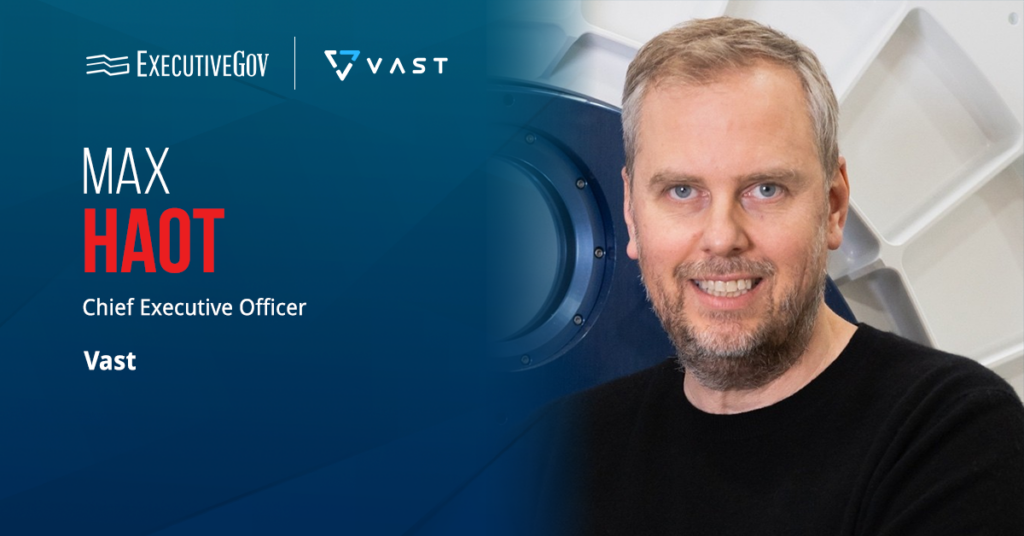
NASA has signed an order with California-headquartered aerospace company Vast to send a team of four astronauts to the International Space Station.
The space agency said Thursday that Vast will propose crew members for the sixth private astronaut mission to the orbiting laboratory. Each crew member will undergo NASA review and training before launch, which is expected to take place in mid-2027.
NASA is in contract with SpaceX to bring the private astronaut mission to orbit and back to Earth.
Why Is NASA Sending Private Astronauts to Orbit?
According to NASA, all missions to the ISS contribute to advancing scientific knowledge and driving innovation of technologies that could support the agency’s long-term plans for low Earth orbit and future deep space exploration.
“The International Space Station plays an essential role in shaping the future of low Earth orbit,” Dana Weigel, ISS program manager at NASA’s Johnson Space Center in Houston, Texas, stated. “By hosting private astronaut missions, the station helps accelerate innovation, opens new commercial pathways, and advances research strengthening the foundation of a thriving space economy.”
The private astronaut team will spend 14 days on the ISS. As part of the agreement, Vast will purchase mission services from NASA, including crew consumables and cargo delivery. Meanwhile, NASA will purchase from Vast the capability to return scientific samples to Earth.
“Leveraging the remaining life of the space station with science and research-led commercial crewed missions is a critical part of the transition to commercial space stations and fully unlocking the orbital economy,” Max Haot, CEO of Vast, commented.
Which Companies Have Launched Private Astronaut Missions to the ISS?
Before the agreement with Vast, Axiom Space was the only company bidding for and had won NASA orders for private astronaut missions. The upcoming private astronaut mission marks the first time that Vast has been selected for the program.
Axiom secured an order for the agency’s first private astronaut mission to the ISS in 2021, Payload reported. Axiom’s next private astronaut mission will launch no earlier than January 2027 from the agency’s Kennedy Space Center in Florida.
 DOE Unveils 26 Science & Technology Challenges Under Genesis Mission
The Department of Energy has announced 26 science and technology challenges intended to advance the Genesis Mission and accelerate artificial intelligence-enabled innovation across energy, discovery science and national security programs. DOE’s newly announced Genesis Mission challenges highlight the growing role of AI in advancing federal science, energy and national security priorities. As agencies continue exploring how AI can improve mission outcomes, government and industry leaders will gather at the 2026 Artificial Intelligence Summit on March 18. Save your spot now! DOE said Thursday the challenges align with executive orders issued by President Donald Trump focused on launching the Genesis Mission
 Air Force Integrates A-GRA Across Multiple CCA Platforms
The U.S. Air Force is integrating and testing its Autonomy Government Reference Architecture, or A-GRA, across multiple vendor platforms as part of the Collaborative Combat Aircraft, or CCA, program. As the Air Force advances open architecture and autonomy initiatives, such developments continue to shape the evolving national security environment. Sign up now for the 2026 Air and Space Summit on July 30 to join government and industry leaders as they discuss the latest technologies, priorities, challenges and opportunities shaping the air and space enterprise. The Air Force said Thursday the effort supports the National Defense Strategy and marks a key
 JHTO, NSWC Select Leidos, Kratos, 4 Others for S2MARTS Hypersonic Development
The Department of War’s Joint Hypersonics Transition Office and the Naval Surface Warfare Center Crane Division have awarded other transaction agreements to six companies under the Strategic & Spectrum Missions Advanced Resilient Trusted Systems, or S2MARTS, initiative to advance the development of hypersonic capabilities. The National Security Technology Accelerator, which manages S2MARTS, said Thursday that the awardees will focus on JHTO science and technology priorities, including pilot-to-target capabilities, aerodynamic and propulsion system improvements, enhanced mission effectiveness and mission planning tools. The companies will utilize modeling and simulation and relevant ground and flight experimentations to speed development. Learn about emerging technologies