
When you buy through links on our articles, Future and its syndication partners may earn a commission.
Credit: CCTV
China just took another step toward landing astronauts on the moon.
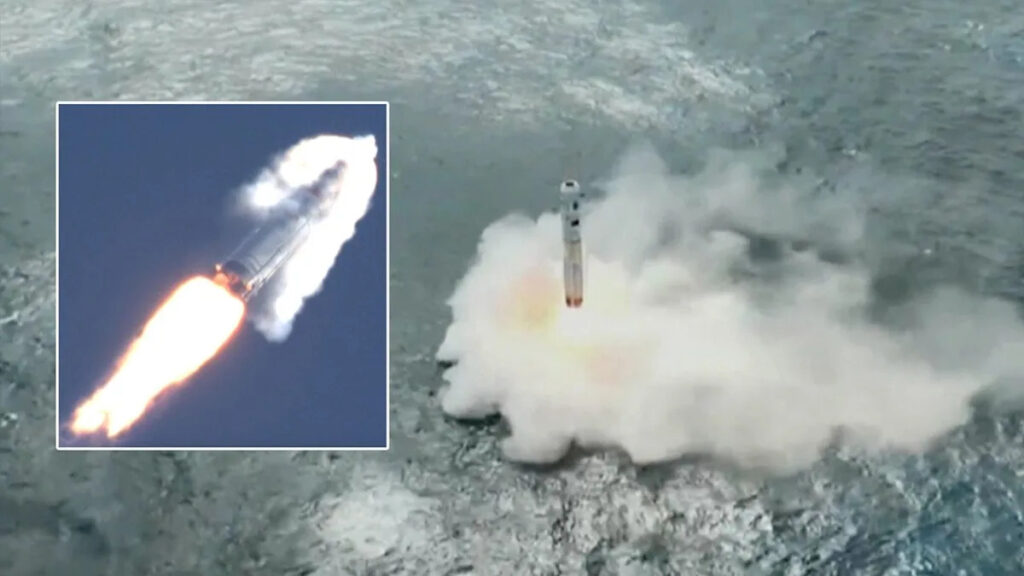
On Wednesday (Feb. 11) local time, the nation conducted a low-altitude abort test of its next-gen Mengzhou (“Dream Vessel”) capsule, which could carry crews to the moon as soon as 2030.
Mengzhou performed as designed during the test, which lifted off from the Wenchang Space Launch Site on Hainan Island. The capsule successfully maneuvered itself away from its Long March 10 rocket and splashed down in the ocean under parachutes, showcasing capabilities that would be needed in the event of a launch emergency.
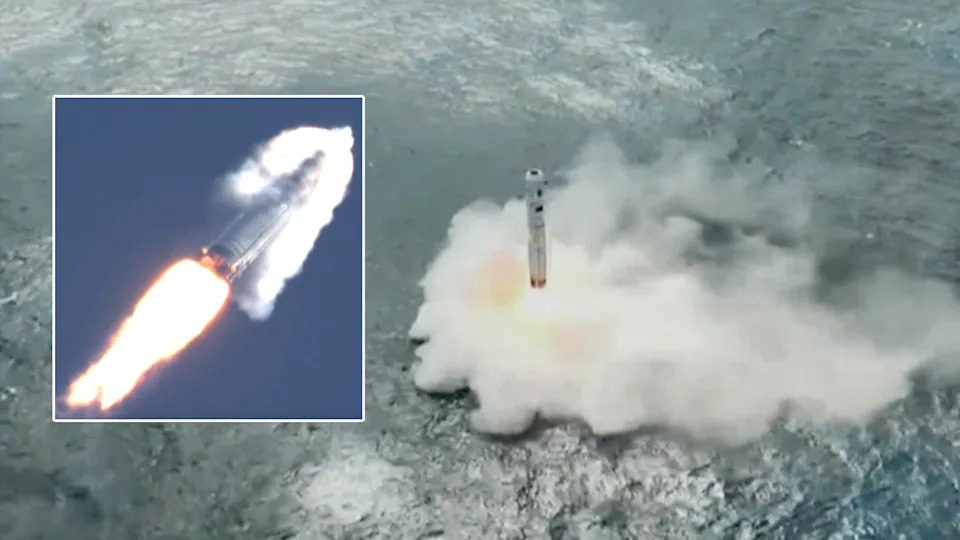
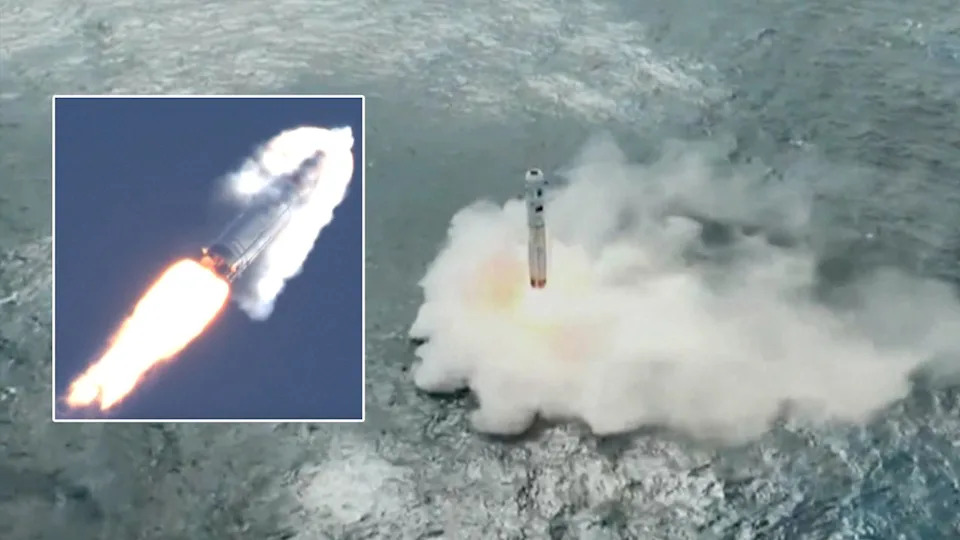
China’s Mengzhou crew capsule aced a key abort test on Feb. 10, 2026. The Long March 10 rocket that launched the test successfully steered itself to an ocean splashdown as well. | Credit: CCTV
The Long March 10 is a key piece of China’s moon plans as well: It’s a new heavy lifter that will launch the nation’s astronauts to Earth’s nearest neighbor. And the rocket aced an important trial of its own on Wednesday.
The Long March 10’s first stage is designed to be reusable, like that of SpaceX‘s workhorse Falcon 9 rocket. On Wednesday, the booster guided itself to a powered, vertical splashdown in the ocean after Mengzhou went its separate way.
The Long March 10 is still in development, and Wednesday’s flight did not come close to reaching orbit. But the rocket‘s splashdown success was still a major milestone on the road to recovery and reuse.
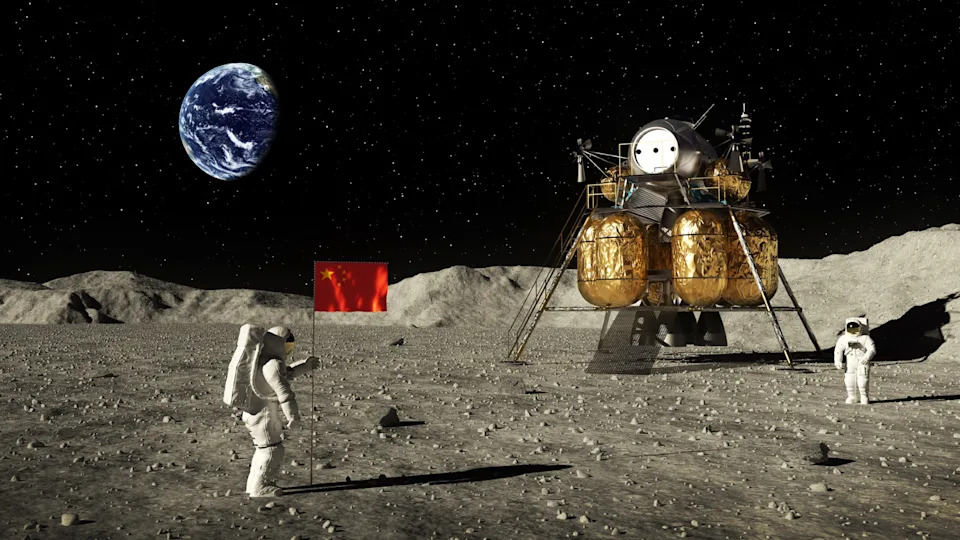
Artist’s illustration of astronauts on the moon planting a Chinese flag. | Credit: 3DSculptori/Stock/Getty Images
China has also made progress recently with its crewed lunar lander, a vehicle named Lanyue. As a result, many space experts give the nation a real chance of winning the crewed race back to the lunar surface.
NASA aims to put boots on the moon in 2028 on the Artemis 3 mission, which will use a modified version of SpaceX’s Starship vehicle as its lander. But it’s unclear if the mission will be able to meet that timeline.
A lot depends, for example, on the success of Artemis 2, a crewed trip around the moon that could launch as soon as next month. Artemis 2 will employ NASA’s Space Launch System rocket and Orion capsule but will not incorporate Starship.