
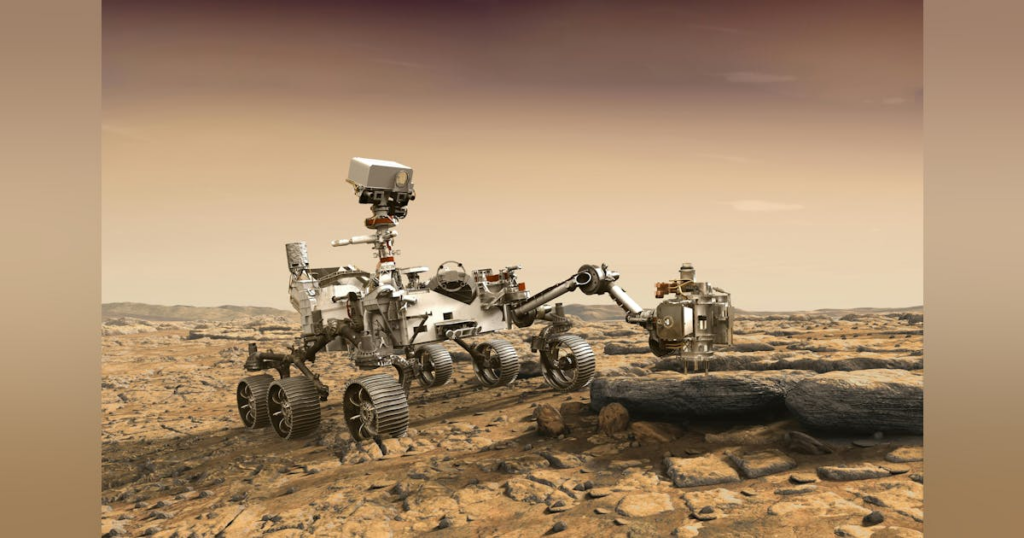
MOFFETT FIELD, Calif. – U.S. space agency experts are surveying industry for autonomous surface mobility, sensors, and space computing for future moon and Mars surface-exploration missions.
Officials of the National Aeronautics and Space Administration (NASA) Ames Research Center at Moffett Field, Calif., issued a request for information (80ARC026HRM) on Thursday for the High-Rate Mobility project.
NASA space exploration experts are looking for enabling technologies for high-speed machine autonomy to drive fast and far and with little need for human operator intervention.
Space agency experts want to take advantage of new flight-worthy sensors like rover-capable light detection and ranging (LIDAR) systems and a new generation of high-performance space computing to go beyond the navigation algorithms of today’s moon and Mars rovers and adapt cutting-edge technologies surface mobility on other planets.
To date, moon and Mars rovers have used slow computers, stereo imaging cameras, relied heavily on teams of operators, and only at rates measured in meters per hour, NASA officials explain.
Long-distance fast rovers
New technology will enable moon and Mars rovers to move faster, cover significantly longer distances, and reduce the need for human operator control. Systems with these capabilities will enable completely new missions with greater scientific discoveries at reduced cost, experts say.
From industry, NASA experts want information about the navigation capabilities of potential planetary rover providers. Companies interested should fill out a form online no later than 28 Feb. 2026 at https://docs.google.com/forms/d/e/1FAIpQLSfTcRXkHQG8ljO7gW3AWwan20dZI-sv9kwB6KecZ-GEab5EvA/viewform.
Email questions or concerns to NASA’s Rosalinda Deleon at [email protected] with “High-Rate Mobility RFI” in the subject line. More information is online at https://sam.gov/workspace/contract/opp/a96e7b7e1f664cb39094f74e8afcc2d4/view.