
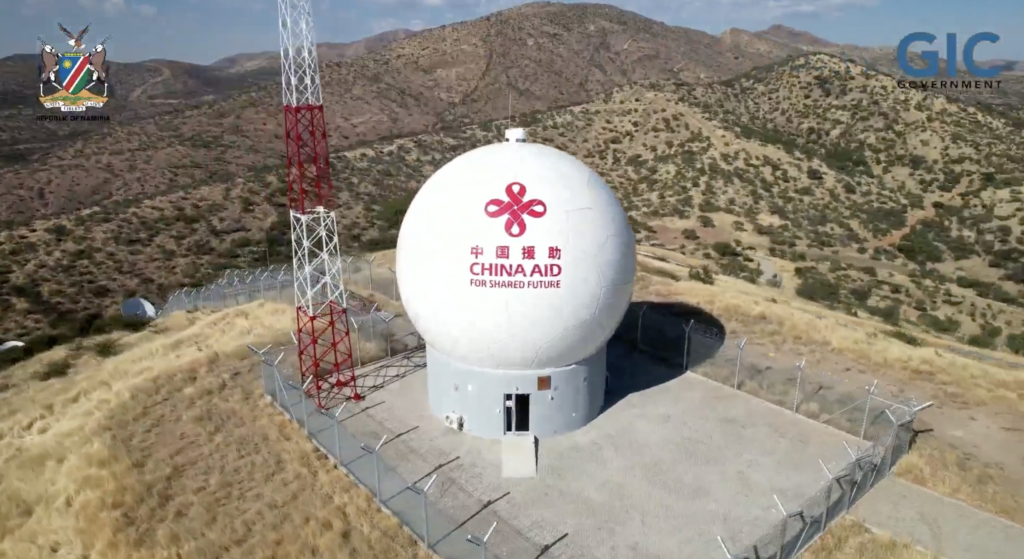

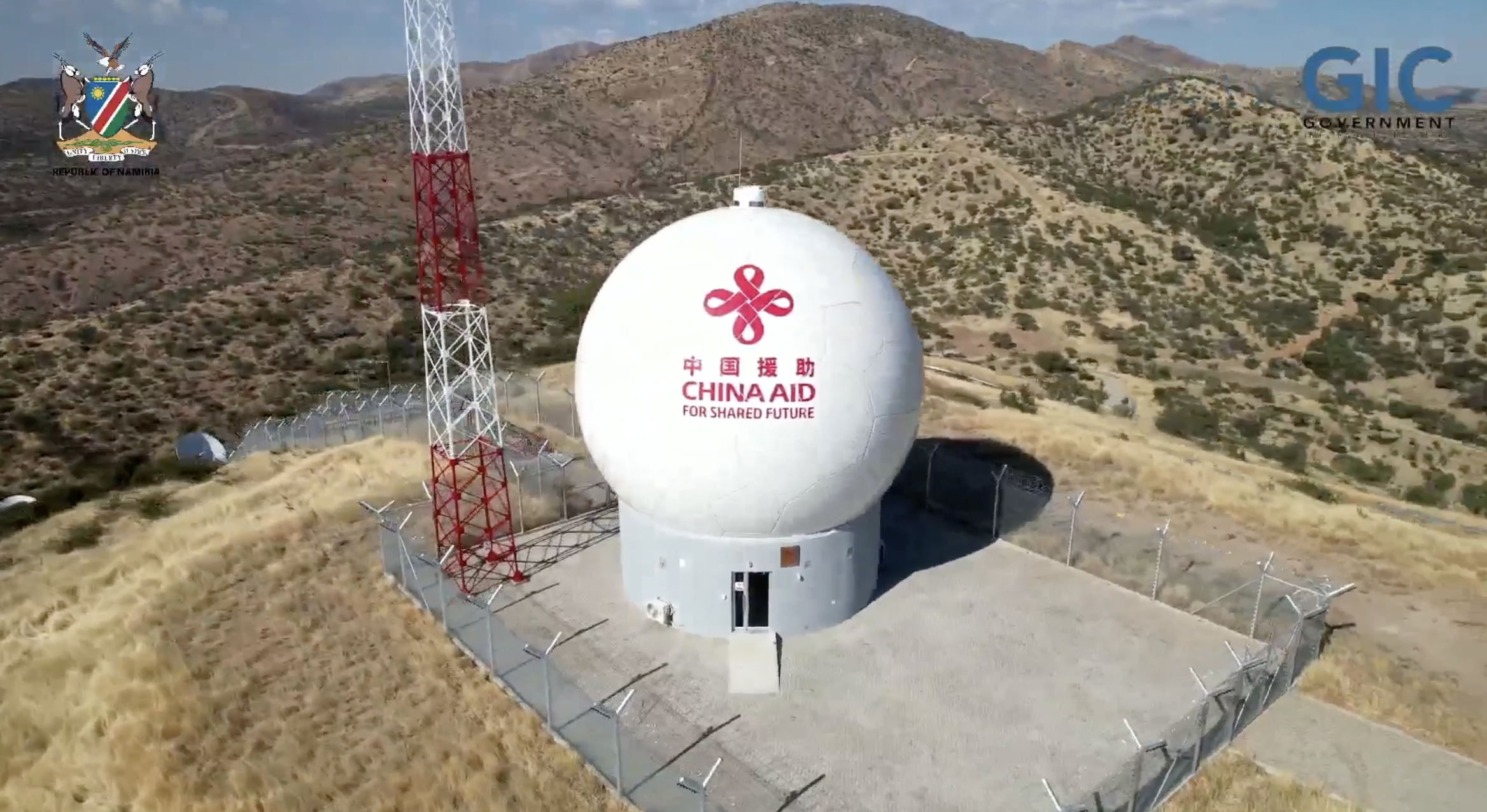
President Netumbo Nandi-Ndaitwah has accepted the keys to Namibia’s first Satellite Ground Data Receiving Station (SGDRS), cementing a 26-year journey that positions the southern African nation among the continent’s space-capable countries. The handover at the Telecom Earth Station is a dividend of a strategic partnership with China that began in 2000 and has now delivered infrastructure capable of receiving, processing, and distributing real-time satellite data across Namibia’s economy.
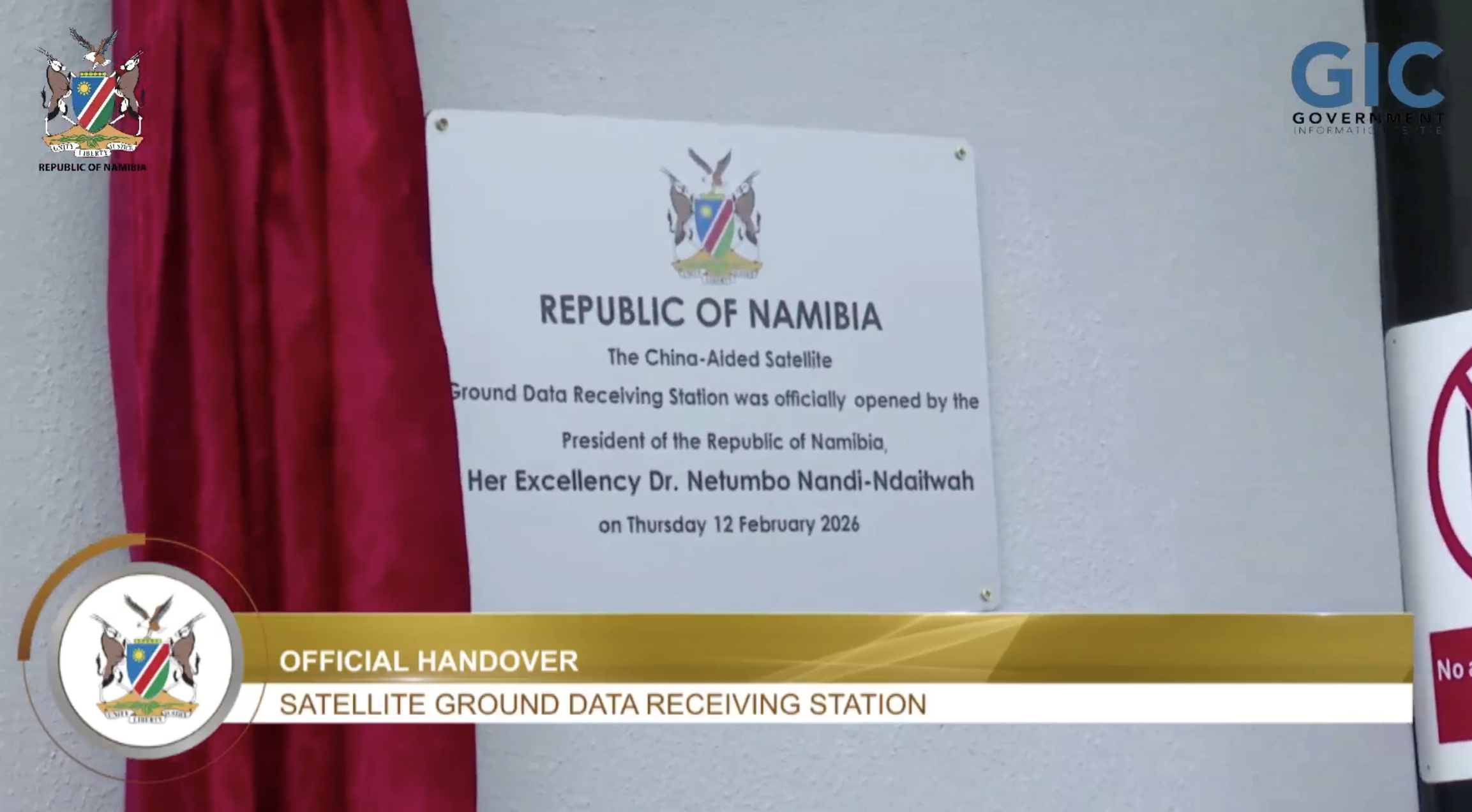
The SGDRS embodies Namibia’s commitment to leveraging space technology as a practical engine for national development, advancing the country’s Vision 2030 objectives and strengthening one of Africa’s most significant bilateral technological partnerships.
A National Facility for Sustainable Development
The newly operational facility will serve as a critical national asset supporting multiple strategic sectors. Furthermore, the station’s capabilities extend across natural resource management, agricultural productivity enhancement, disaster risk management, climate change mitigation and adaptation, anti-poaching initiatives, and peacekeeping operations. This multi-sectoral approach reflects the comprehensive planning that has positioned the SGDRS as a cornerstone of Namibia’s knowledge-based economy.
The ceremony brought together Namibia’s senior leadership, showing the project’s national importance. In attendance were Right Honourable Prime Minister Dr Tjitunga Elijah Ngurare, representing President Nandi-Ndaitwah; Minister of Education, Arts and Culture Hon. Dr Sanet L. Steenkamp; Hon. Indileni Daniel, Minister of Environment, Forestry and Tourism; Zhao Weiping, Chinese Ambassador to Namibia; Dr Lisho Mundia, Deputy Executive Director: Higher Education Training, Research, and Innovation at MEIYSAC; and board directors from the National Commission on Research, Science and Technology (NCRST). Representatives from the ministries of environment, agriculture, and defence were also present, reflecting the cross-governmental commitment to the initiative.
Click here to rewatch the handover ceremony.
A Quarter-Century of Strategic Partnership
The SGDRS project dates back to October 11, 2000, when Namibia and China signed an agreement to establish the China Space Tracking Telemetry and Command Station in Swakopmund. That initial 15-year agreement, which included renewal provisions, was extended in March 2018, establishing the foundation for China to provide both technical and financial support for the development of the SGDRS.
Mr Mumba Erastus Haitengela, Executive Director of the Ministry of Sport, Youth, and National Service, delivered the welcome remarks, emphasising that the facility represents “a product of a longstanding agreement between Namibia and the People’s Republic of China, first entered into in 2000 and then renewed in 2018.” He noted that Namibia has set clear, ambitious targets in space and Earth observation under Vision 2030 and described the project as “a testament to that vision and a step forward to ensure that the country can achieve these objectives.”
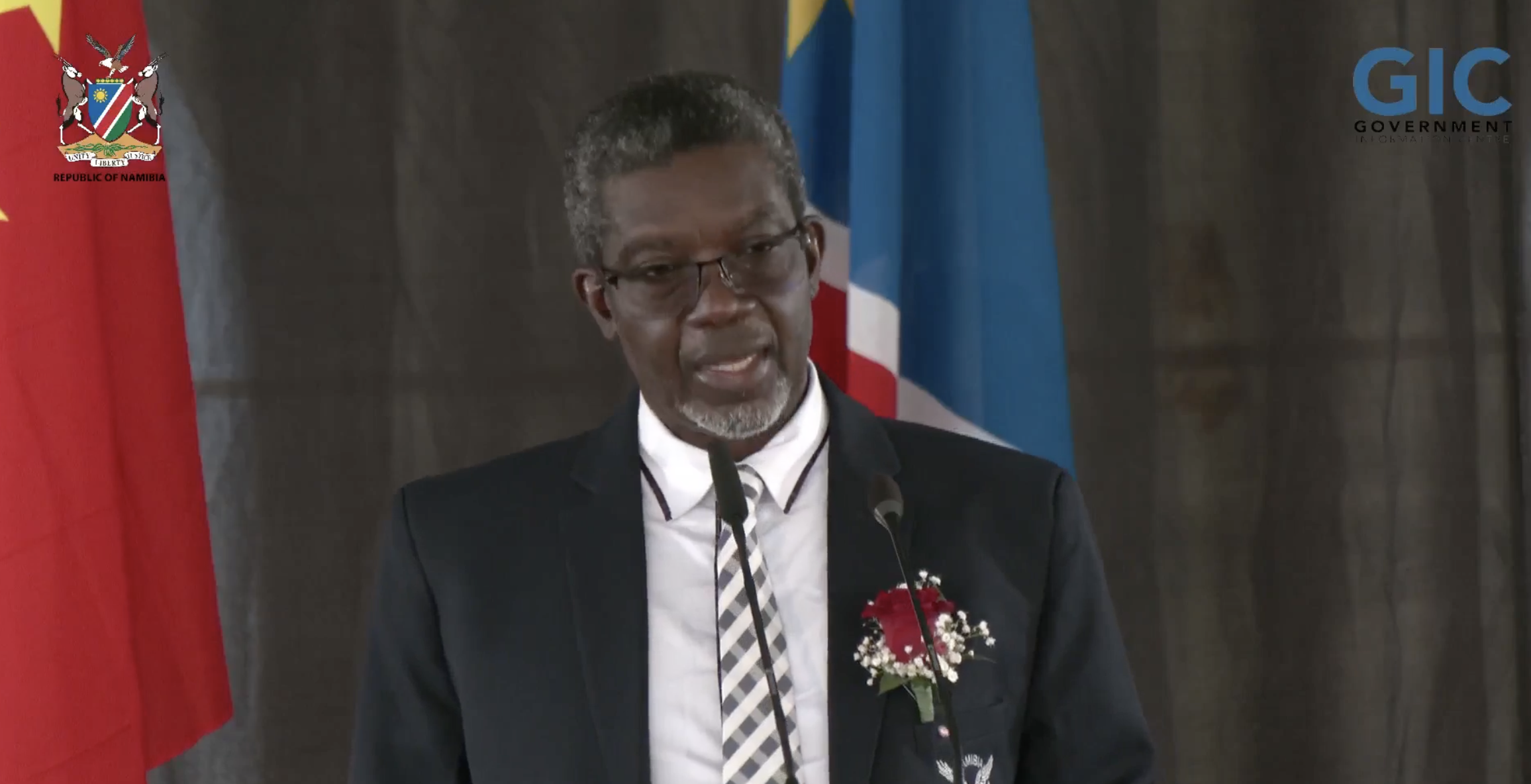 Mr Mumba Erastus Haitengela, Executive Director of the Ministry of Sport, Youth, and National Service, delivering the welcoming address
The partnership has been structured in two distinct phases. Phase I, completed in 2024, included construction of the data-receiving station, establishment of the data-processing system, and comprehensive training for Namibian technicians. The implementing authorities signed the Certificate of Completion of Civil Engineering Works and the Technical Acceptance Minutes in mid-2025, formally concluding the initial phase.
Through this partnership, China provided both the technical expertise and financial resources necessary to construct the station while ensuring that 14 Namibian personnel received specialised training to operate and maintain the facility independently.
Technical Capabilities and Infrastructure
Dr Lisho Mundia provided technical insights into the station’s capabilities in his address. The SGDRS is a specialised terrestrial space-based facility designed to track satellites, establish communications, and receive, record, and process data, including imagery, telemetry, and other specialised information.
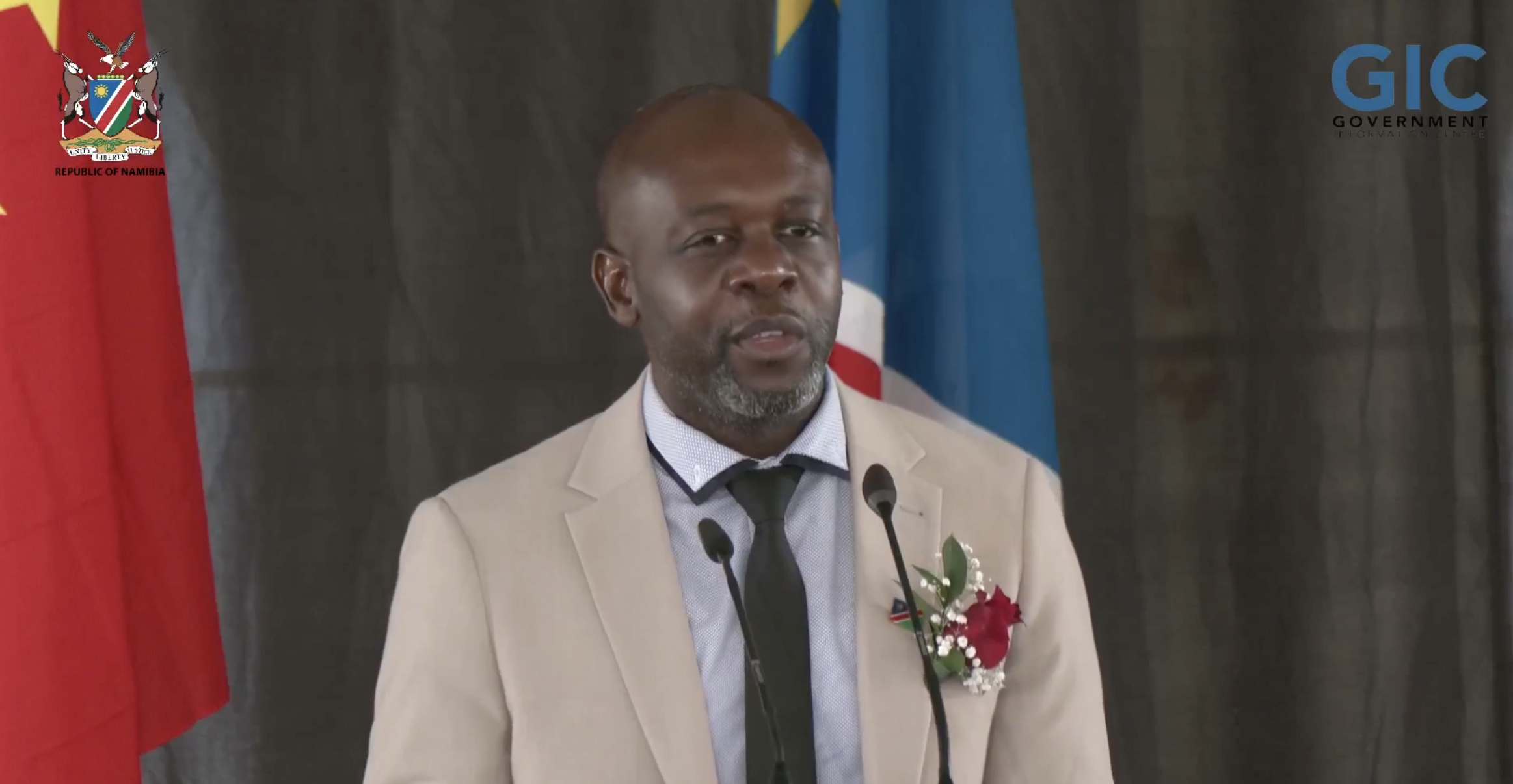 Dr Lisho Mundia, Deputy Executive Director: Higher Education Training, Research, and Innovation at MEIYSAC, delivering his address
Currently, the station receives data from the CBERS-4 satellite whenever it passes over Namibian territory, providing regular and reliable access to Earth observation data. The facility’s core infrastructure includes a sophisticated antenna system and a dedicated data processing room, referred to as the operational room, where incoming satellite data is refined and prepared for sectoral applications.
Phase II, currently underway, focuses on expanding the station’s software capabilities. This phase involves the development of eight specialised software applications designed to receive and refine Earth observation data across critical sectors:
Mineral exploration and exploitation
Disaster risk management
Fisheries and marine ecological monitoring
Forestry and livestock management
Land use planning and management
Agricultural management and monitoring
Water resource management and monitoring
Coastline and border monitoring
The breadth of these applications demonstrates the extensive inter-ministerial collaboration that has characterised the project. The involvement of multiple Ministries, Departments, and Agencies (MDAs) ensures the station is utilised to its full potential by all relevant state actors, maximising the return on this strategic investment.
Sovereignty and Capacity Building
A critical aspect of the SGDRS project has been the emphasis on national sovereignty and local capacity. All 14 Namibian technicians trained to manage the facility have received comprehensive instruction, ensuring complete national oversight of all programs emanating from this infrastructure. This approach directly addresses sovereignty concerns while aligning with the government’s directive of building a knowledge-based economy.
Mr Haitengela emphasised this point in his remarks, noting that Namibians have been trained to manage the facility wholly, “putting to rest sovereignty concerns and ensuring national sovereignty and oversight on all programmes from this infrastructure.”
The capacity-building component extends beyond initial training. Ambassador Zhao Weiping of the People’s Republic of China reaffirmed China’s commitment to continued support in his address. He noted that the training provided has equipped Namibian personnel with adequate knowledge to operate the station independently, while emphasising that “China remains committed to future training and assistance that might be needed.”
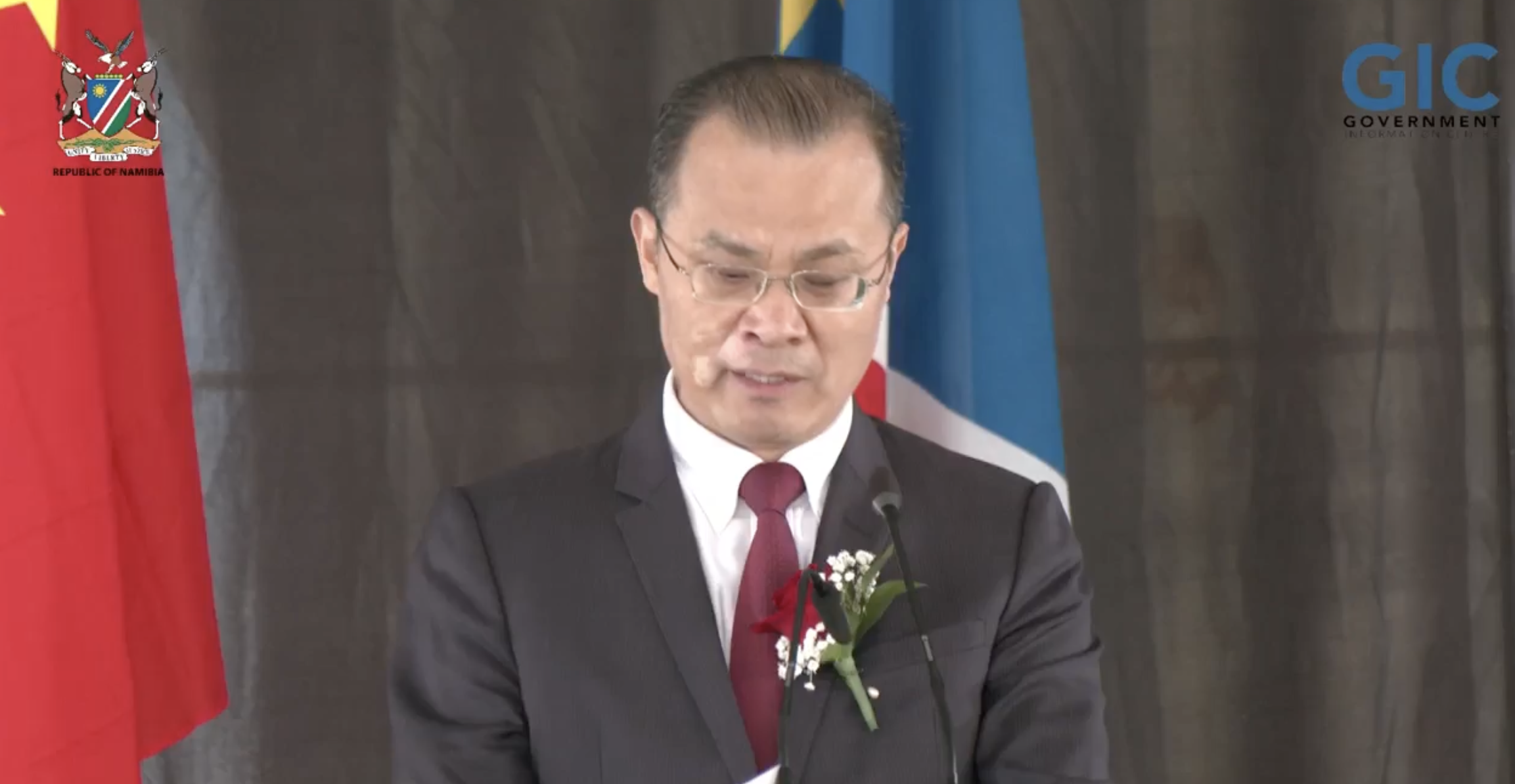 Zhao Weiping, Chinese Ambassador to Namibia, delivering his address
Expanding Regional Capabilities
With the SGDRS now operational, Namibia can enter into satellite data-sharing agreements with other countries, potentially positioning the nation as a regional hub for Earth observation data. This development places Namibia among a select group of African countries with real-time data-receiving capabilities, enhancing the continent’s space infrastructure.
The practical applications are already being planned across multiple sectors. For maritime security, the facility will enable the detection of illegal fishing vessels along Namibia’s coastline. For border security, it will enhance monitoring capabilities and provide oversight support to security agencies. For environmental management, it will provide critical data for forest monitoring, wildlife protection, and climate change adaptation.
Legislative Framework and Future Development
The Ministry of Education, Arts and Culture is drafting legislation to establish a comprehensive regulatory framework for space activities. The Space Science and Technology Bill is undergoing approval and will establish legal and institutional frameworks to regulate space activities and ensure compliance with international standards.
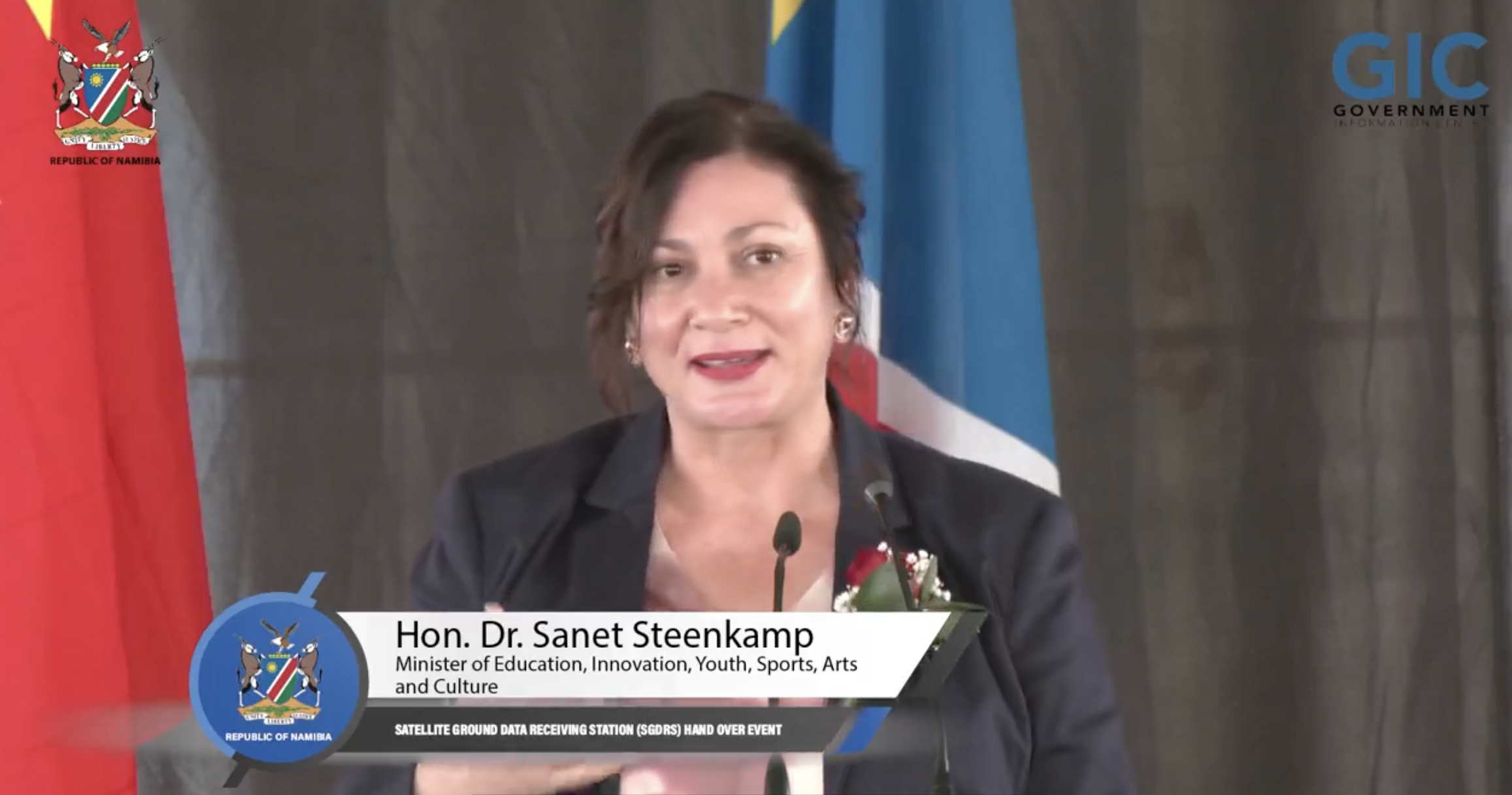
Hon Dr Sanet L. Steenkamp, Minister of Education, Arts and Culture, highlighted the significance of this legislative development in her address. As the ministry responsible for science, technology, and innovation, she emphasised that the SGDRS represents a critical investment in Namibia’s human capital and technological advancement. “This facility is not merely about receiving satellite data,” she noted. “It represents our commitment to building indigenous capacity in cutting-edge technology, preparing our youth for careers in space science, and ensuring that Namibia can participate fully in the global knowledge economy.” She further stressed that the legislative framework being developed would ensure that space activities in Namibia are conducted responsibly, transparently, and in accordance with international best practices.
Right Honourable Prime Minister Dr Tjitunga Elijah Ngurare, in his address, characterised the handover as “a major milestone in the advancement of science and technology and innovation as key enablers of national development.” He positioned the facility within Namibia’s broader development agenda, stating that it represents a concrete step in actualising the country’s long-term industrialisation mandate.
“Through the line minister of The Ministry of Education, Innovation, Youth, Sports, Arts and Culture (MEIYSAC), the Cabinet has approved the drafting of the Space Science and Technology Bill to establish a legal and institutional framework to regulate space activities and ensure compliance with global standards,” Dr Ngurare announced.
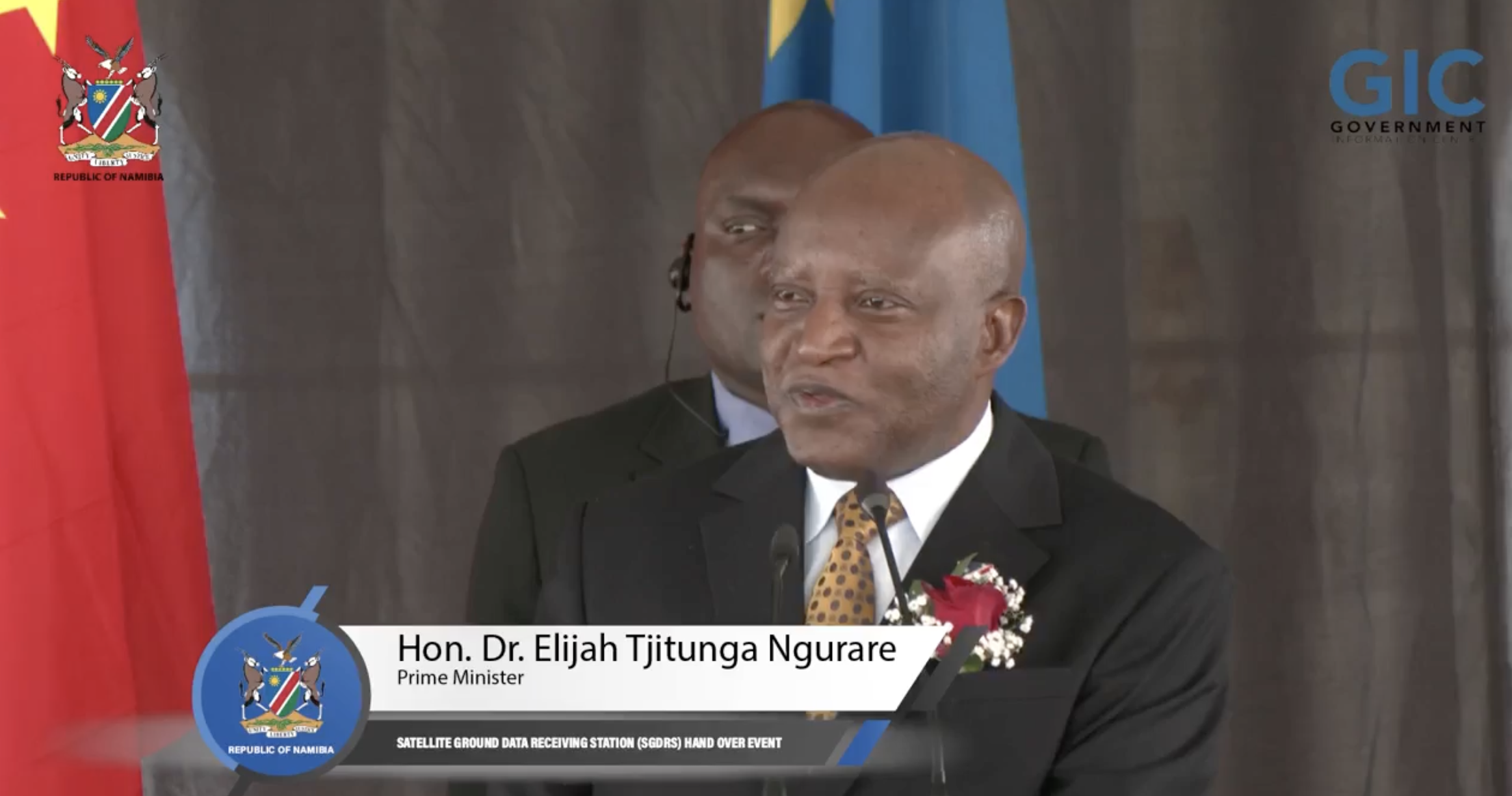
He emphasised that under the National Development Plan 6, Namibia has recognised space technology as a practical engine for development, moving beyond theoretical appreciation to practical implementation. The Prime Minister also noted that the handover “solidifies the enduring friendship and bilateral relationship between both countries,” expressing satisfaction that Namibia has joined the select group of African countries with real-time data receiving capabilities.
Implications for African Space Development
Namibia’s acquisition of the SGDRS has broader implications for African space development. As more African nations develop satellite data reception and processing capabilities, the continent’s collective capacity to address challenges through space-based solutions increases significantly.
The facility positions Namibia to contribute to regional initiatives in climate monitoring, disaster response, and resource management. It also creates opportunities for South-South collaboration, as Namibia can share its expertise and data with neighbouring countries, promoting regional capacity building.
With Phase II ongoing and the Space Science and Technology Bill under development, Namibia’s space programme is poised for continued growth, ensuring that this investment in space infrastructure translates into tangible benefits across agriculture, environment, security, and economic development, fulfilling the promise of Vision 2030 and positioning Namibia as a leader in African space technology.