
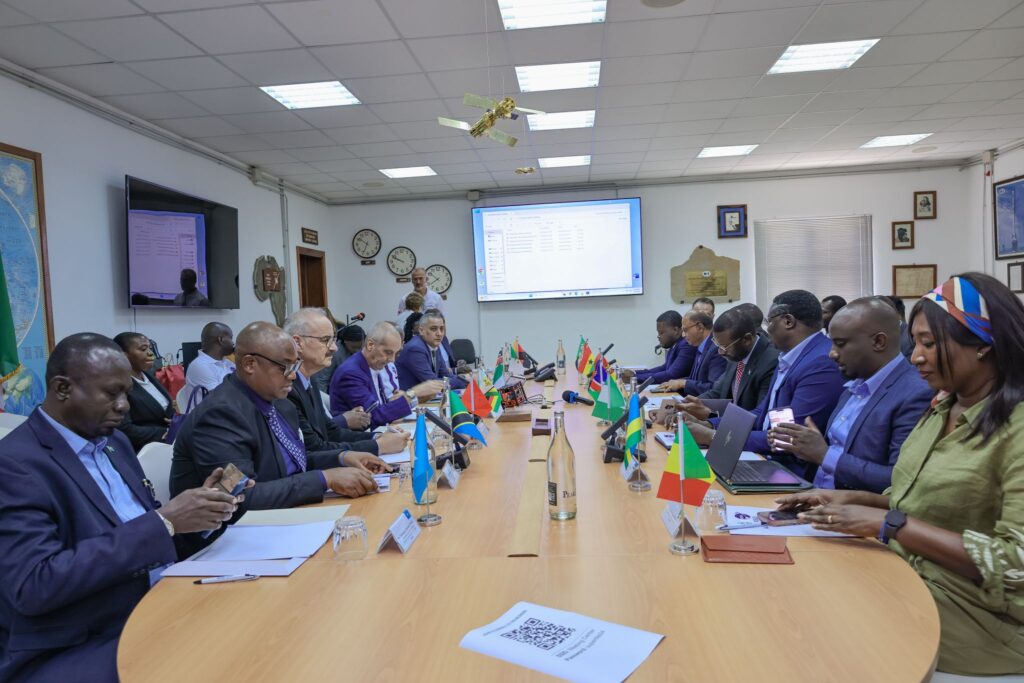
NAIROBI, Kenya Feb 10 – Africa is set to play a more prominent role in shaping global space governance following the Third Italy–Africa Space Leaders Meeting held in Malindi, Kenya.
The meeting, co-hosted by the Kenya Space Agency and the Italian Space Agency at the Luigi Broglio Space Centre, brought together over 30 leaders from the African space sector representing 17 countries.
In a statement, KSA said the forum aimed to strengthen cooperation between Italy and Africa in space science, technology, and policy, particularly as Italy prepares to assume the presidency of the United Nations Committee on the Peaceful Uses of Outer Space (COPUOS) for 2026–2027.
Discussions aligned with Italy’s Mattei Plan, which promotes deeper collaboration with Africa, and explored ways to enhance knowledge sharing, infrastructure development, and policy alignment among African nations.
The meeting brought together space agency leaders from across the continent, including representatives from Algeria, Angola, Côte d’Ivoire, Egypt, Ethiopia, Ghana, Kenya, Mauritius, Mozambique, Namibia, Nigeria, Rwanda, Senegal, Somalia, Tanzania, Tunisia and Zimbabwe.
Leaders underscored the growing importance of space-based technologies in addressing development challenges, including food security, climate resilience, education, communication systems, and disaster response.
Participants at the meeting resolved on the need for sustained partnerships, emphasizing Africa’s strategic role in the future of global space activities and governance
KSA noted that holding the event at the Luigi Broglio-Malindi Space Centre is a testament of Kenya’s determination to be a leader in space exploration and exploitation in Africa, while leveraging partnerships with global institutions to deliver benefits for the country and the continent.
The Italian run centre was created as part of the San Marco Project and used between 1967 and 1988 to launch scientific satellites using American Scout launch vehicles, the centre has continued to perform support functions over the years, particularly in receiving telemetry and collecting Earth observation data