
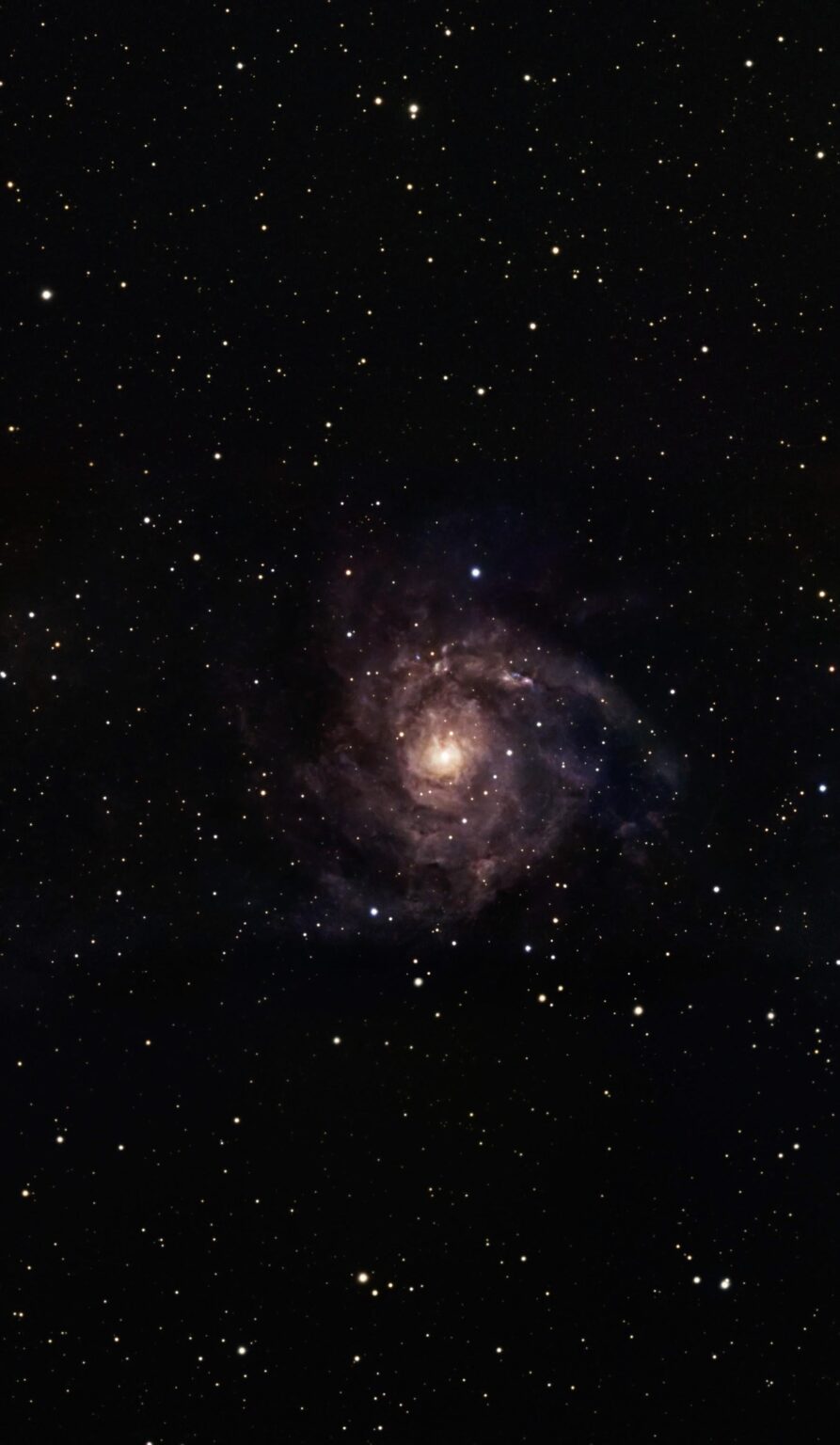
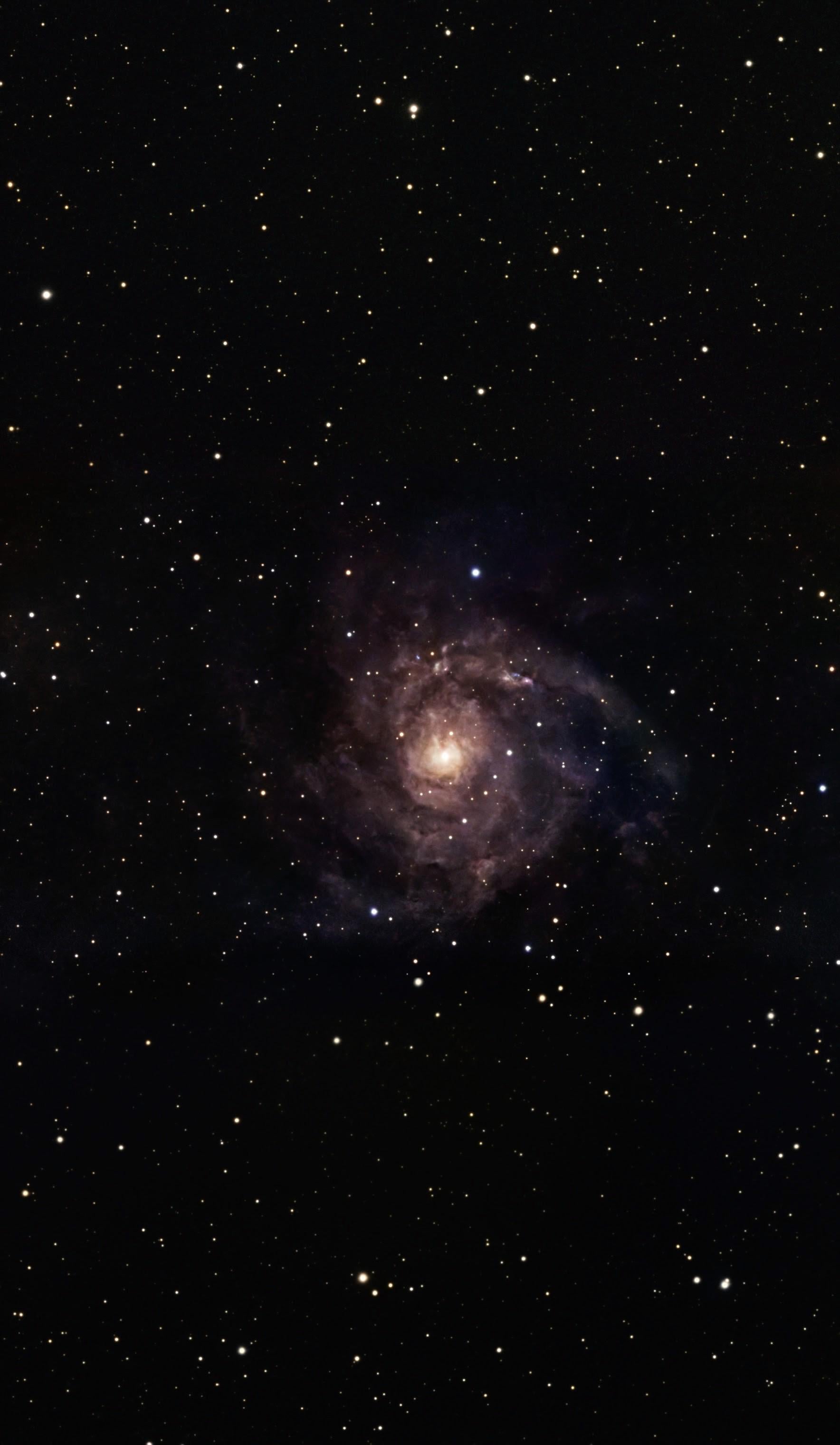
This one is not an easy target, especially with my Seestar S50 and with a mixture of Bortle 7 and Bortle 9 datasets: I had a huge gradient because of street lights right in front of my balcony, you can still see it but that's the best I could get…
Roughly 15 hours of acquisition. About 1/3 of my data was taken with an Optolong L-Pro filter (I know there are mixed feelings about this one and broadband targets, but I saw somebody using it from a Bortle 9 location for a galaxy and decided to give it a try). All in all, not so bad!
Equipment and acquisition:
– Seestar S50, UV/IR filter (about 2/3 of my dataset); Optolong L-Pro for the other 1/3. 30 sec subs, EQ mode.
– Mixture of bortle 7 and bortle 9 locations, with heavy light pollution
Processing (PI and Siril)
– WBPP, 2x drizzle
– BlurX (correct only), Veralux Nox with manual mask, SetiAstro Auto DBE
– StarX
– Starless: SetiAstro statistical stretch; manual curves with different range masks to bring out faint details and trying to control the leftover gradient/background (I experimented with several masks covering only parts of the image to remove residual gradient)
– Stars: SetiAstro star stretch; star recomposition and star reduction in Siril
– Final curves transformations, noiseX and color retouches in LightRoom
by Techno-Scientist