
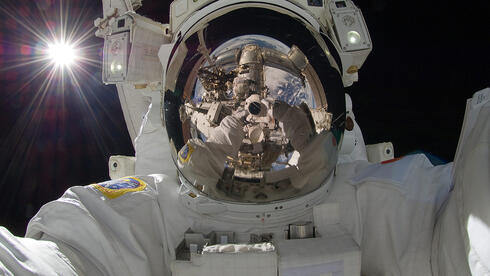
While the world has grown accustomed to stunning images of Earth and the depths of the universe captured through the lenses of complex telescopes and bulky DSLR cameras, the next revolution in space photography is set to come from astronauts’ pockets.NASA announced over the weekend a dramatic policy shift: For the first time, the agency’s astronauts will be allowed to carry personal, commercially available smartphones, beginning with the Crew-12 mission to the International Space Station and the historic Artemis 2 mission, which will orbit the moon.
The collapse of the bureaucracy
The decision, announced by NASA’s new administrator, Jared Isaacman, marks the collapse of a multiyear bureaucracy that left technological progress stuck on the ground. Until now, flight hardware approval processes, which include stringent radiation testing, vacuum resilience and battery safety checks, took so long that equipment reaching space was often a decade out of date. For example, the official cameras planned for the upcoming Artemis 2 mission were Nikon models from 2016 alongside aging GoPro cameras.
Under the new policy, astronauts will be able to document the journey to the moon using up-to-date iPhone and Galaxy devices, offering image processing and video capabilities that far surpass the older equipment.
NASA astronauts will soon fly with the latest smartphones, beginning with Crew-12 and Artemis II. We are giving our crews the tools to capture special moments for their families and share inspiring images and video with the world. Just as important, we challenged long-standing…
— NASA Administrator Jared Isaacman (@NASAAdmin) February 5, 2026
NASA may be leading the headlines, but it is not alone. China’s space agency, known by its English acronym CNSA, has already integrated consumer hardware aboard its Tiangong space station. Chinese astronauts have been seen in live broadcasts using Huawei smartphones and Lenovo tablets connected to an internal Wi-Fi network at fifth-generation, or 5G, speeds.
In Europe, the European Space Agency has taken a more systemic approach. Rather than sending only smartphones, ESA engineers are developing space-grade processors based on 7-nanometer manufacturing architecture, similar to those found in the most advanced smartphones. The goal is to give satellites the processing power needed for real-time artificial intelligence without relying on constant communication with Earth.
Civilian communications in space
The use of consumer technology in space is not entirely new, but it has taken intriguing forms. In 2013, NASA launched the PhoneSat project, in which tiny satellites known as CubeSats were built around Google Nexus smartphones. The aim was to prove that a standard smartphone contains everything a satellite needs: a fast processor, accelerometers, a compass and a camera, all at a fraction of the cost of traditional systems.
Isaacman’s current move focuses on improving astronauts’ quality of life and psychological well-being. The ability to message family, shoot a spontaneous video or use familiar apps is seen as critical to maintaining mental resilience during long-duration missions to the moon and Mars.
2 View gallery
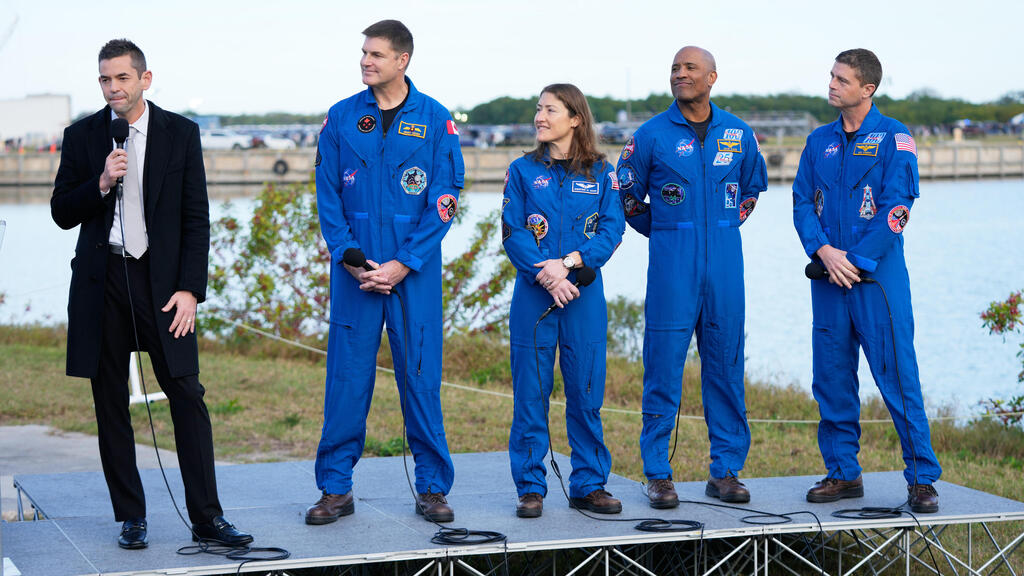
NASA chief with Artemis 2 crew
(Photo: AP Photo/John Raoux)
A closer look at the data highlights an additional advantage. DSLR cameras approved for space use are equipped with massive lenses and high-end optics, but they require significant technical expertise and specific lighting conditions. Modern smartphones, by contrast, rely on computational photography, using algorithms that automatically correct overexposure, digital noise and camera shake. In space, where the contrast between the absolute black of the universe and the glare of the sun is extreme, this capability may produce images that appear more natural and readable to audiences on Earth.
Isaacman described the move as “a small step in the right direction.” The goal is not merely a selfie with the moon in the background, but a broader shift in mindset: rapid adoption of innovation from the private sector. When the iPhone 17 or the next Galaxy device is launched beyond the atmosphere, it will not just be a communication tool, but a testament to the ability of consumer technology to close the gap with deep-space exploration.
For now, it remains to be seen who will be the first astronaut to post a TikTok video from the far side of the moon.