
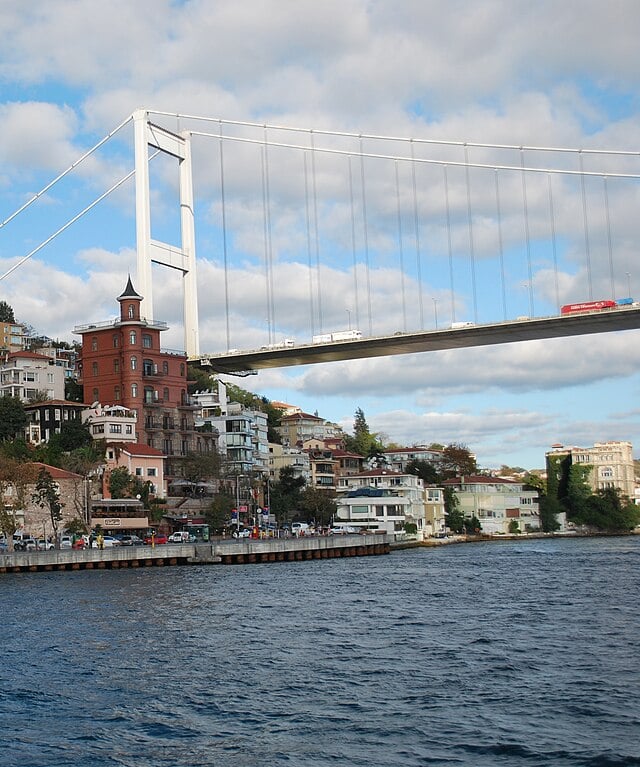
The Yusuf Ziya Pasha Mansion is easily one of the most unsettling landmarks in Istanbul. Locally known as "Perili Köşk" (The Haunted Mansion), its history is a disturbing mix of extreme obsession and a literal death wish.
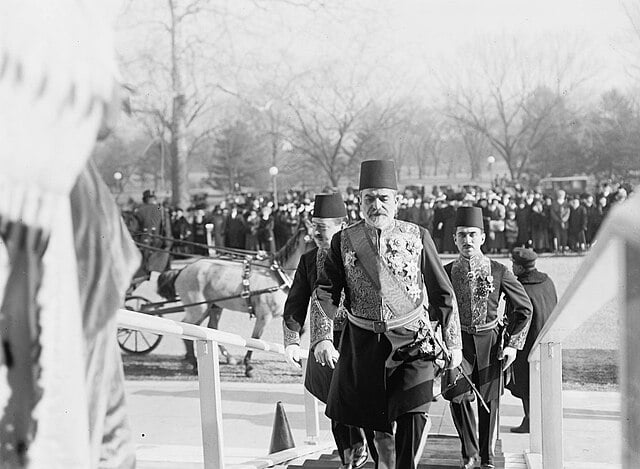
The construction began in 1910 by a high-ranking official named Yusuf Ziya Pasha. The legend says he was pathologically jealous of his young, beautiful wife and built this 9-story mansion as a "golden cage" to hide her from the world. He was so consumed by this obsession that he intentionally left the construction incomplete to keep her isolated within the tower.
When WWI broke out, the Pasha lost his fortune and fled to Egypt. His wife eventually left him there, but the story doesn't end with their separation. Before he died in 1926, his final wish was chilling: He demanded that his tomb be built using the actual red bricks from the mansion’s tower—the very place where he had kept his wife secluded. To this day, he remains buried in Egypt, encased in the stones of his own obsession.
For nearly 80 years, the mansion stood as an empty, red-brick skeleton on the Bosphorus. Locals constantly reported seeing a woman with long hair wandering the unfinished, hollow floors at night. During the 1990s restoration, the paranormal reports became even more frequent. Workers claimed to see a woman in old-fashioned clothing staring at them from mirrors in empty rooms, and several people walked off the job after hearing phantom piano music echoing through the concrete walls.
During the final stages of the restoration, they even discovered three secret floors hidden deep underground that were never part of the original public plans. Today, the building serves as an office and an art museum, but the "vibe" remains notoriously heavy. People still claim that if you look up at the tower windows from a boat at night, you can still see a reflection waiting for a husband who has been dead for a century.
Being buried in the bricks of the house used to imprison a spouse is a level of darkness that few other "haunted" locations can match.
Image Credits & Licensing:
- Image 1 (Yusuf Ziya Pasha): Public Domain. (Ottoman Ambassador in Washington, 1913. Source: Wikimedia Commons).
- Image 2 (Mansion and Bridge): Photographed by Helge Høifødt. Licensed underCreative Commons Attribution-Share Alike 3.0.
by bortakci34