
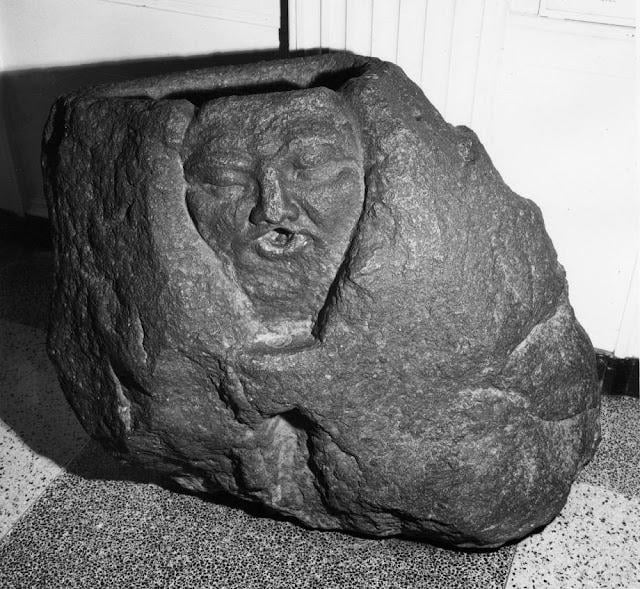
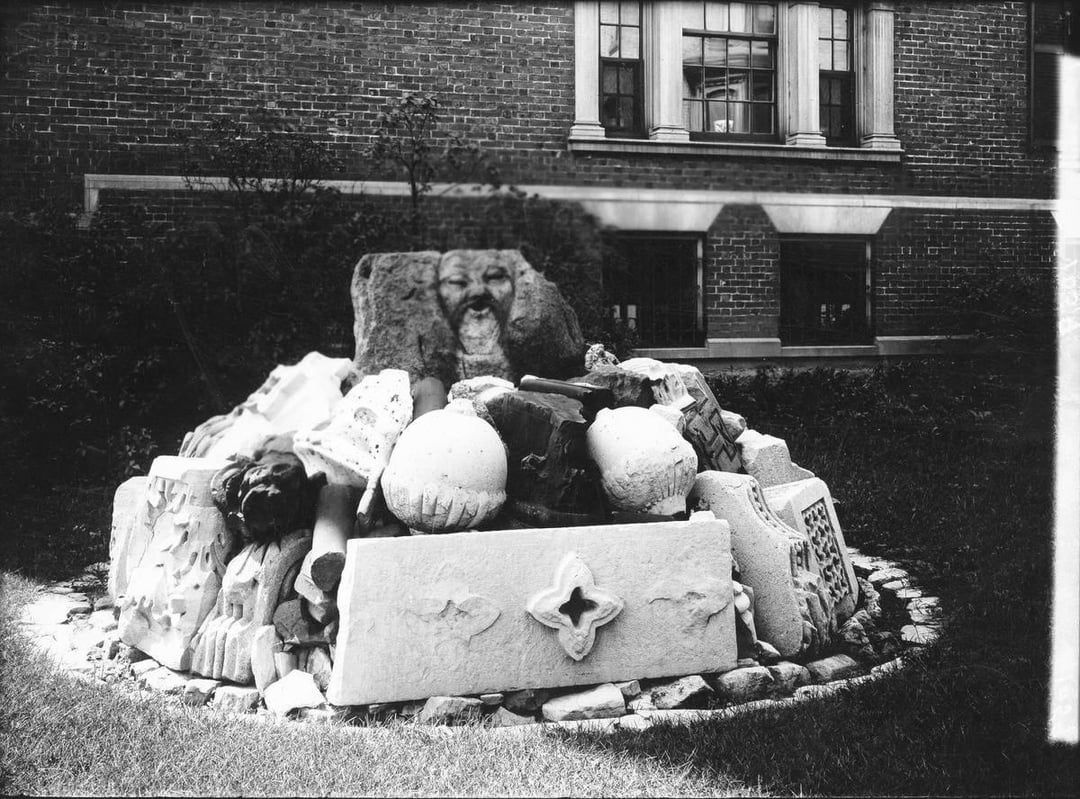
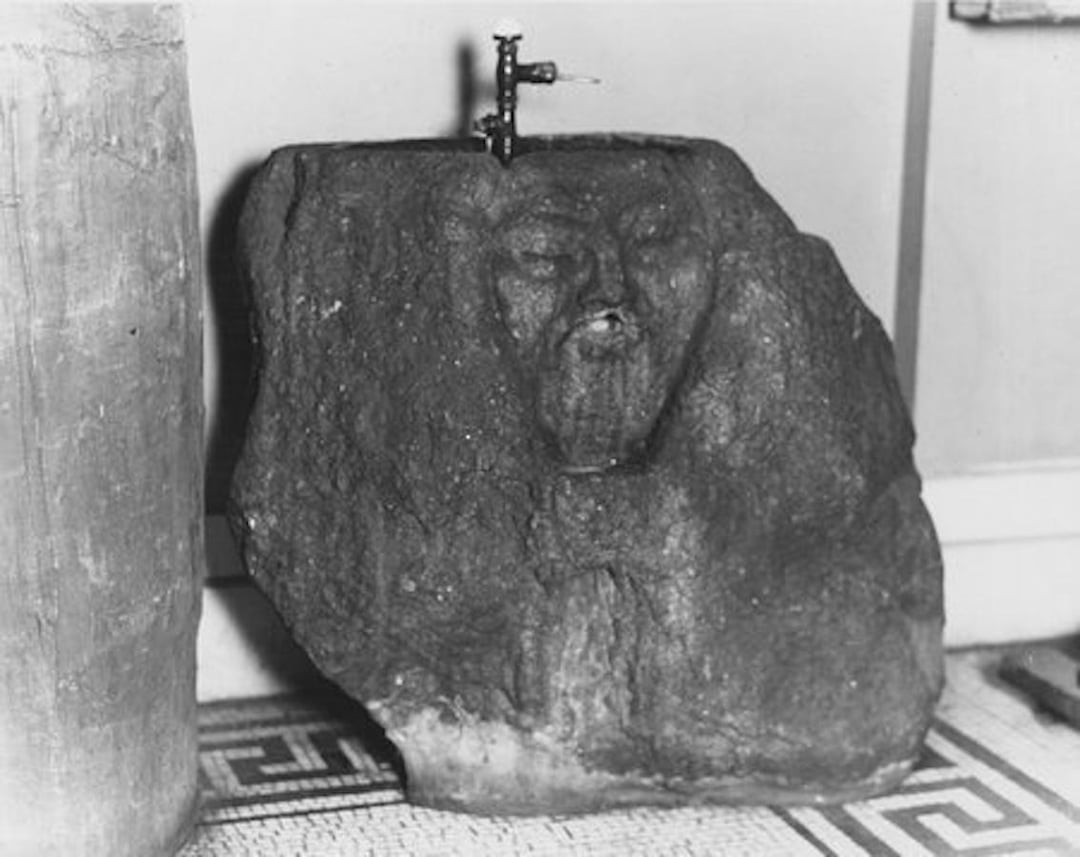
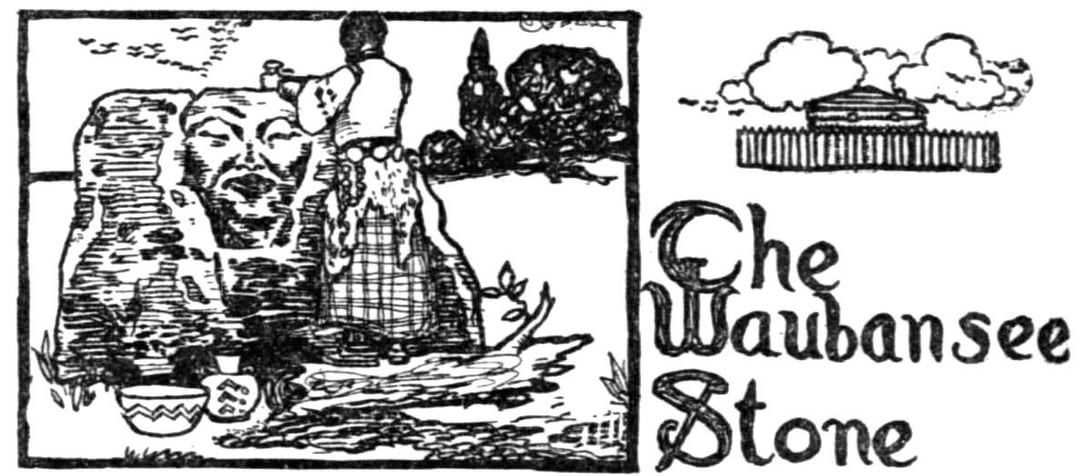
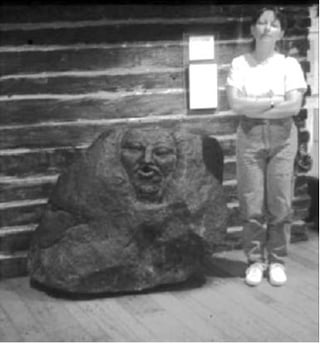
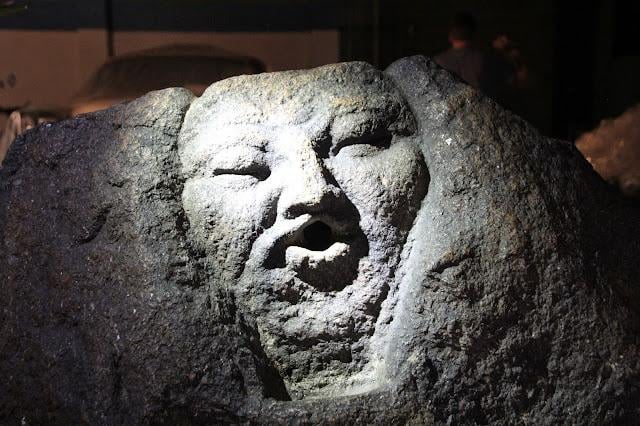
The 3000-pound boulder is hidden inside the Chicago History Museum’s secret storage location. The Waubansee Stone is known as the city’s oldest piece of art featuring the face of a man. Some think it was an homage to a local Native American chief, but others believe the stone may have had a more sinister purpose hundred of years earlier; perhaps used by the Mayans or even the Phoenicians. The Waubansee Stone is a huge, glacial, erratic granite boulder with a larger-than-life head sculpted upon its upper surface. The expertly fashioned relief carving shows the face of a man with a chin beard, depicted with his mouth open and eyes closed. On the top of the stone, just above the head, is a large drop-shaped bowl that once emptied through the head and out of the mouth, over the lower lip, to another drainage spout below the man's goatee. There are also two connecting holes on either side of the boulder, presumably used as a line anchorage for a sea vessel.
All holes and drainage spouts are plugged with putty or other additions, suggesting no interest in a modern restoration. The mysterious face carving and associated cavities have given rise to speculation about its origins, including one theory that the stone was carved by prehistoric Mediterranean seafarers who used the 3,000-pound boulder as a mooring stone.
All historians agree that the Mississippian Culture performed animal and human sacrifices high atop their platform mounds, but where this practice originated is unknown. The Aztec or Toltec people from Mexico may have influenced them, or perhaps an earlier seafaring people notorious for infant sacrifices were responsible. It is well known that the Phoenicians (and their Celtic allies) travelled across the ocean to “the Farthest Land” known as Antilla. The precise location of Antilla was a closely guarded secret because it contained the most valuable commodity to the Bronze Age people—copper.
by PristineHearing5955
1 Comment
It’s not a big secret any more. It was Michigan.