
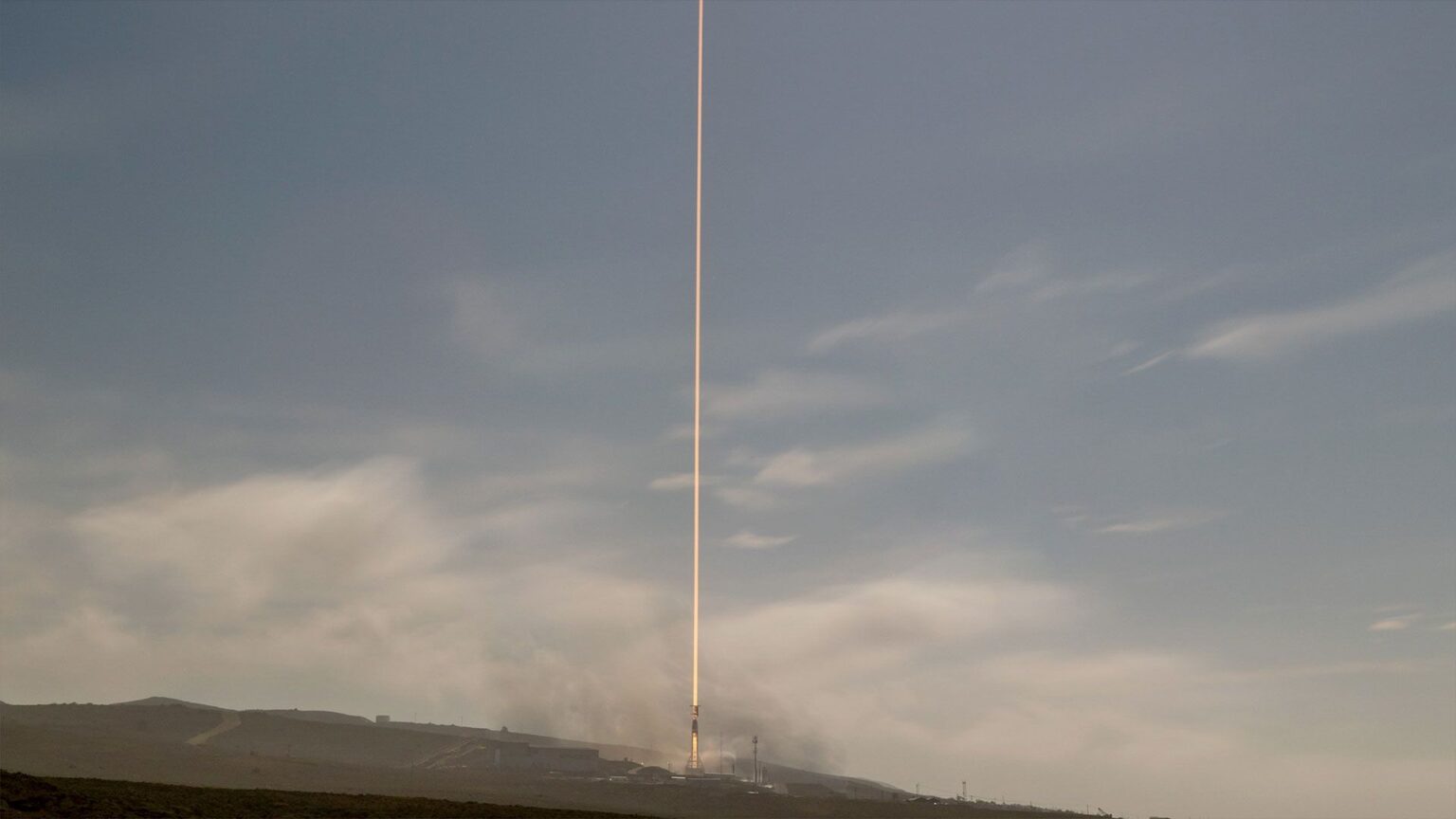
SpaceX successfully sent another batch of Starlink satellites into low Earth orbit on Saturday (Feb. 7), just five days after standing down in the wake of an anomaly during its prior launch.
A Falcon 9 rocket carrying the 25 Starlink satellites lifted off at 3:58 p.m. EDT (2058 GMT or 12:58 p.m. PDT local time) from Space Launch Complex 4 East from Vandenberg Space Force Base in California. About an hour later, SpaceX confirmed the satellites (Group 17-33) had been deployed as planned.
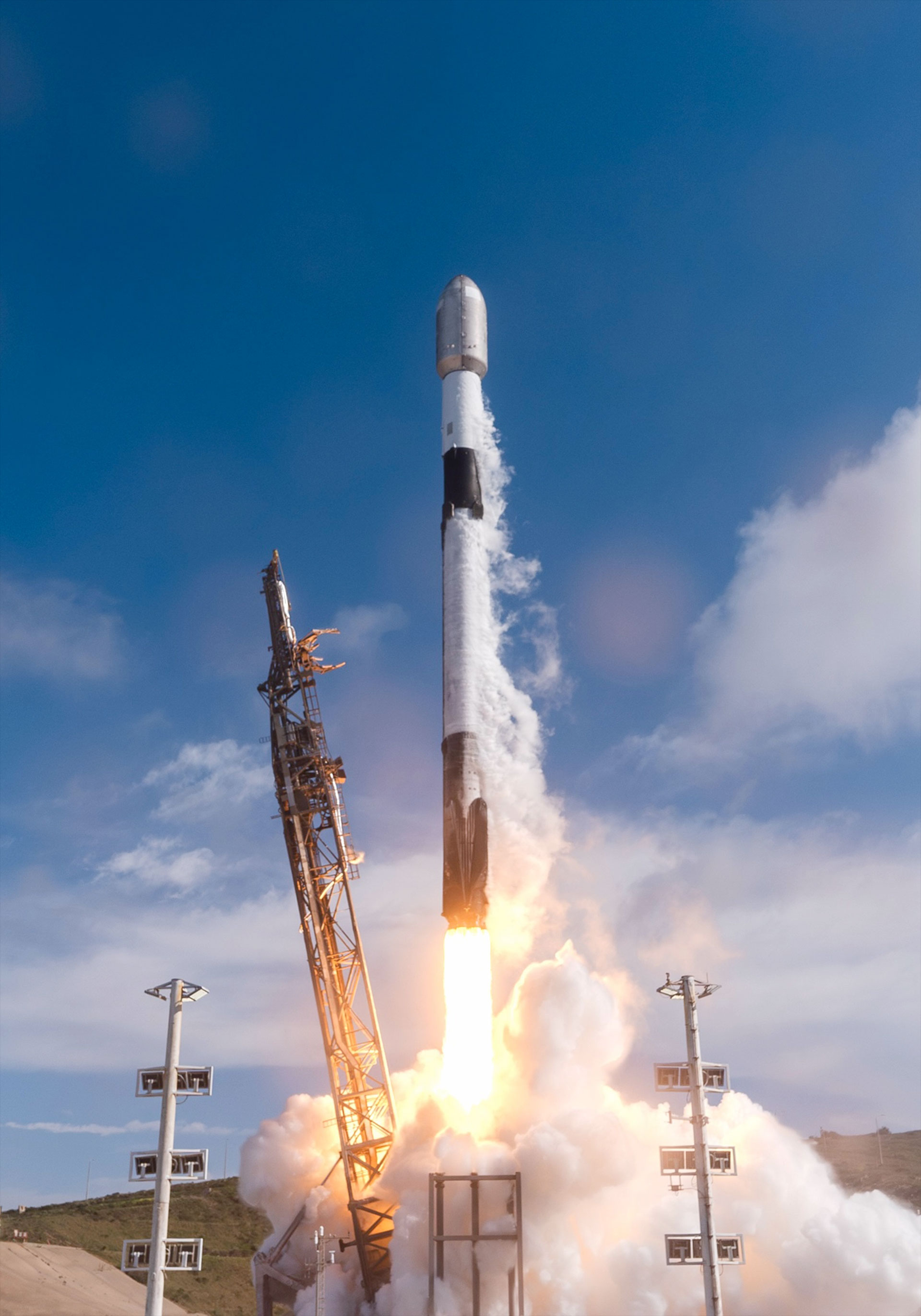
A SpaceX Falcon 9 rocket carrying 25 Starlink satellites launches from Vandenberg Space Force Base in California on Saturday, Feb. 7, 2025. (Image credit: SpaceX)
Previous Booster 1088 missions
The Falcon 9 rocket’s first stage (Booster 1088) completed its 13th flight by touching down on the drone ship “Of Course I Still Love You” positioned in the Pacific Ocean.
You may like
The rocket’s upper stage also performed as expected. On Feb. 2, after SpaceX deployed its previous batch of Starlink satellites that mission’s upper stage “experienced an off-nominal condition.”
The second stage failed to re-ignite “due to a gas bubble in the transfer tube ahead of the planned deorbit burn,” SpaceX officials described on the company’s website. “The vehicle then performed as designed to successfully passivate the stage, which reentered Earth’s atmosphere approximately 10.5 hours later over the Southern Indian Ocean.”
SpaceX submitted a report to the FAA (Federal Aviation Administration), including what the company thought was the likely cause and the associated corrective actions it took leading up to Saturday’s launch. Earlier this week, the FAA cleared the company to resume launches.
The Starlink megaconstellation now numbers more than 9,600 active satellites, according to tracker Jonathan McDowell.
Saturday’s launch was SpaceX’s 15th of the year.