
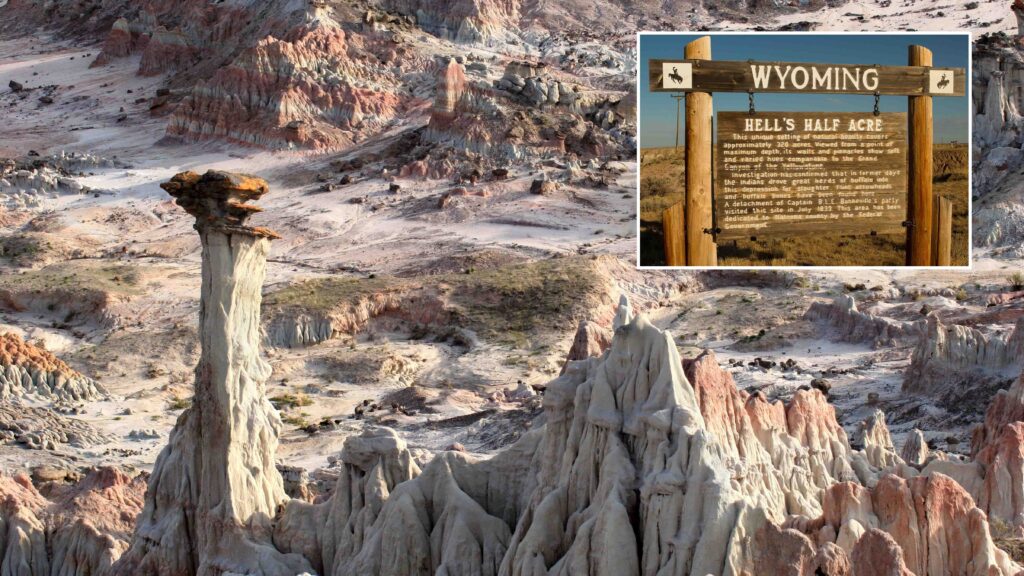
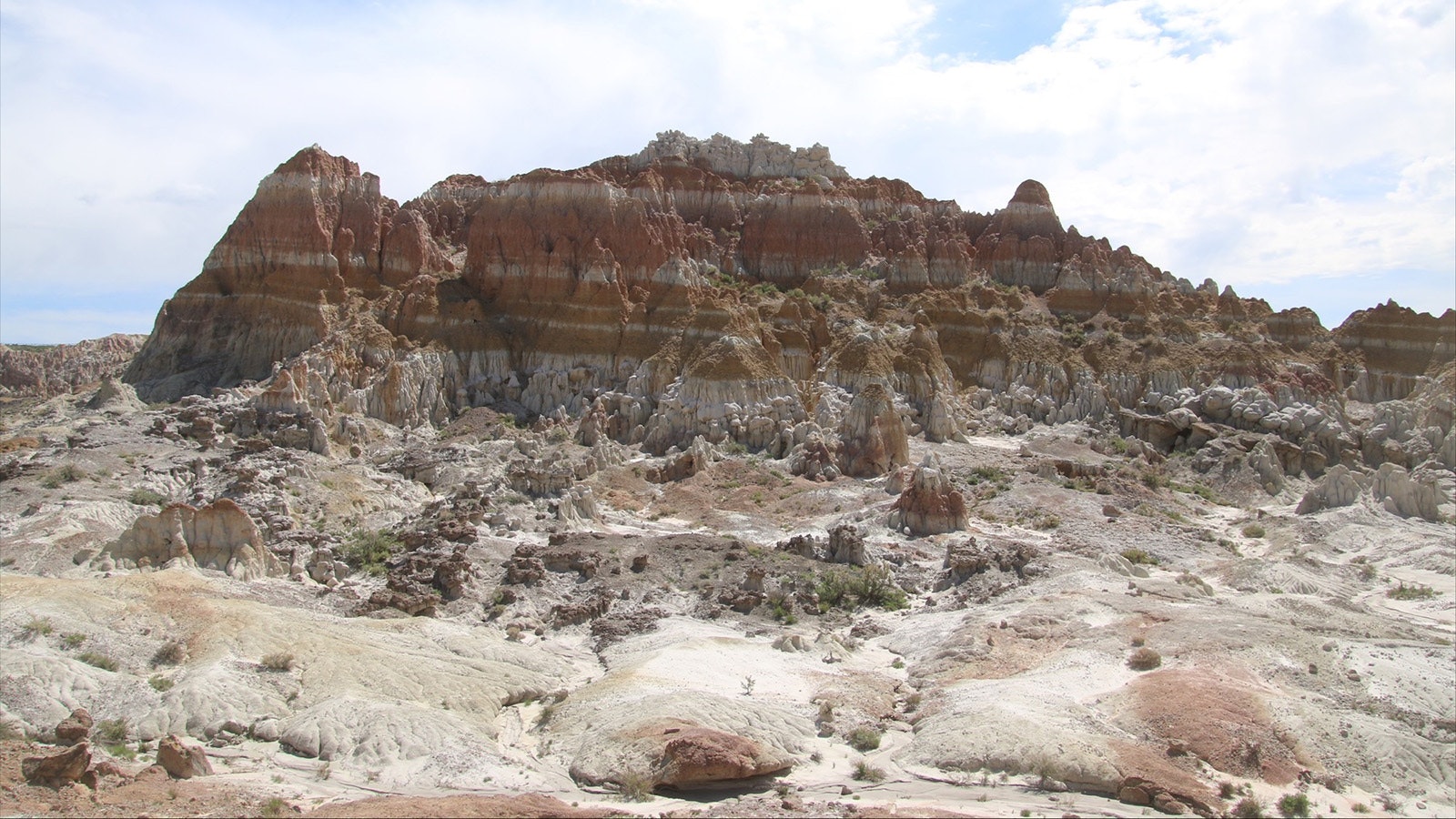
Relentless water and wind have carved Hell’s Half Acre into an other-worldly marvel in Wyoming, one that looks so much like an alien planet, it has actually played one in a movie.
Hell’s Half Acre had a pivotal role as the planet Klendathu in the 1997 cult classic sci-fi film “Starship Troopers.”
But the true history of Hell’s Half Acre is actually stranger than that particular fiction. That strange and wonderful legacy will be highlighted once the site officially fully reopens to the public in May.
There will be a new observation deck complete with picnic tables and new interpretive signage to tell its story, which begins millions of years ago, when rivers and lakes once dotted this arid landscape.
Wyoming was a tropical hothouse at the time, and its rivers left behind soft mudstones and silt, which over millions of years, built up what’s known as the Wind River formation.
Eventually, the weather changed, and the riverbeds in Hell’s Half Acre dried up.
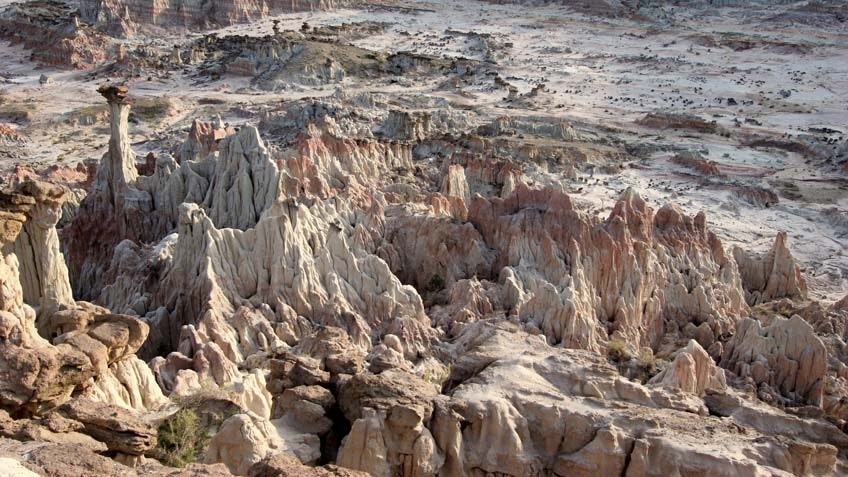
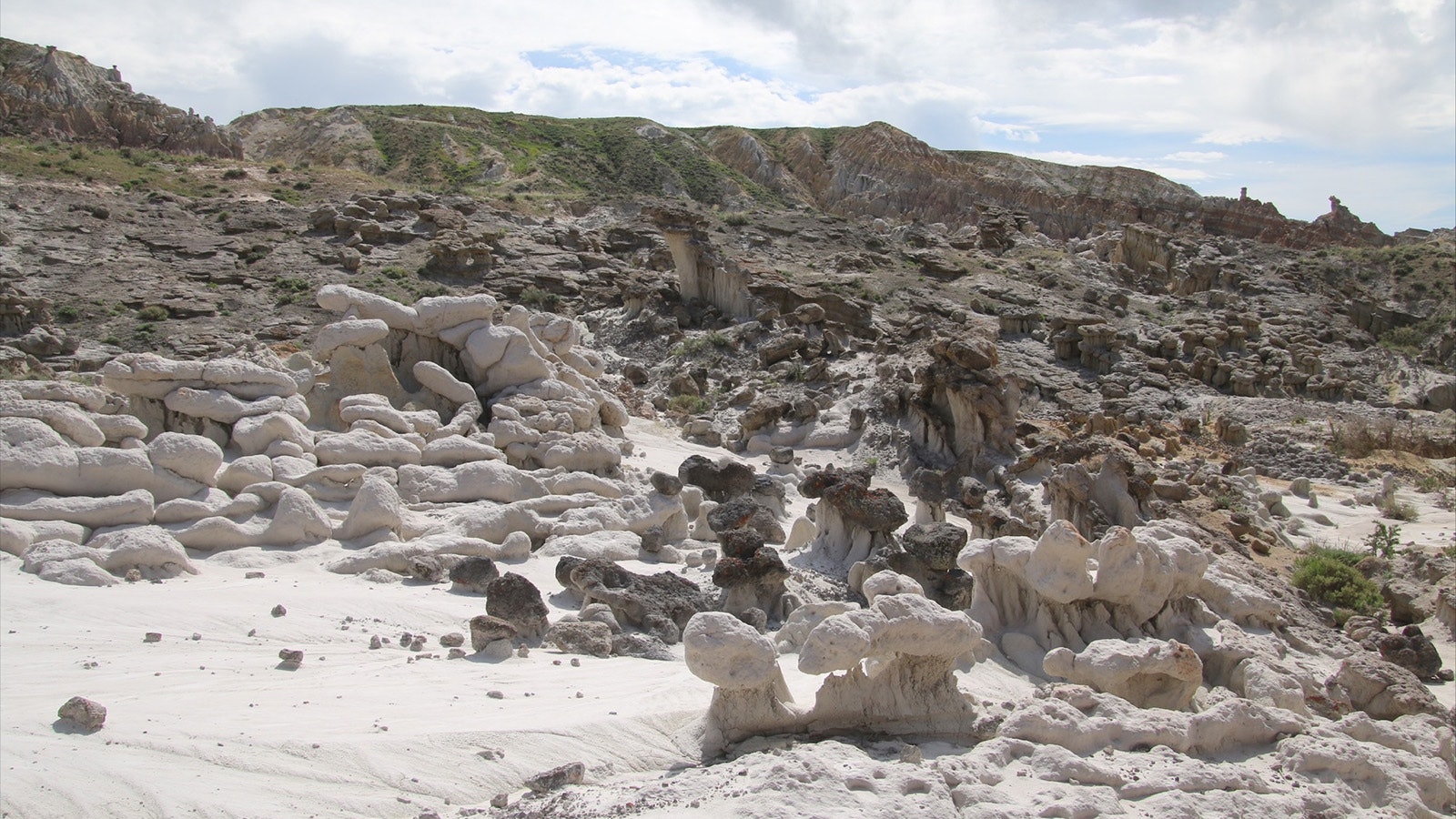
Then came wind and rain and time, shaving away the soft rocks a few millimeters at a time, like a patient sculptor, creating a landscape so other-worldly, it looks like someone dropped a section of Mars onto Wyoming.
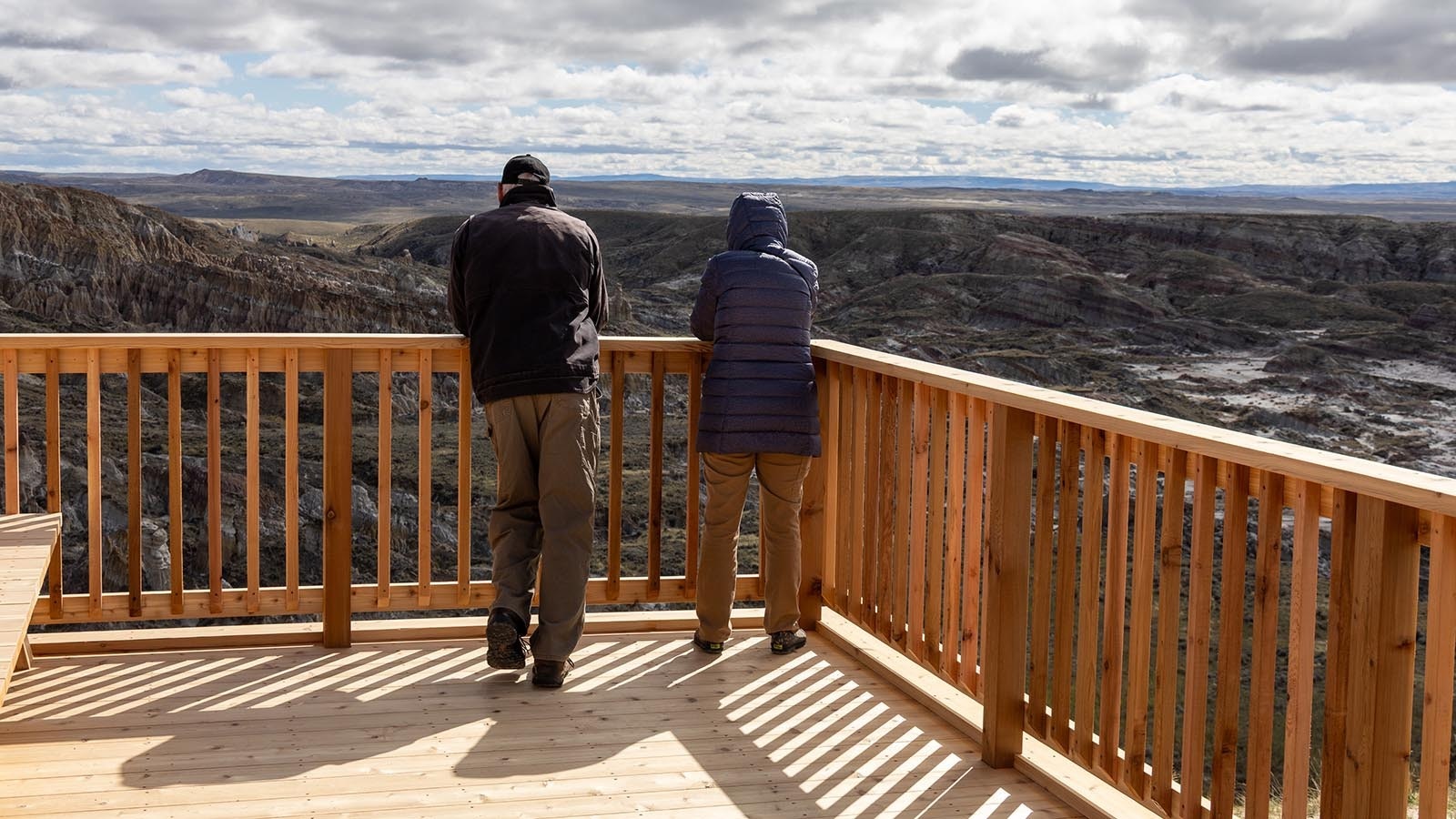 Two people look out at Hell’s Half Acre from its new observation deck. (Courtesy Photo)
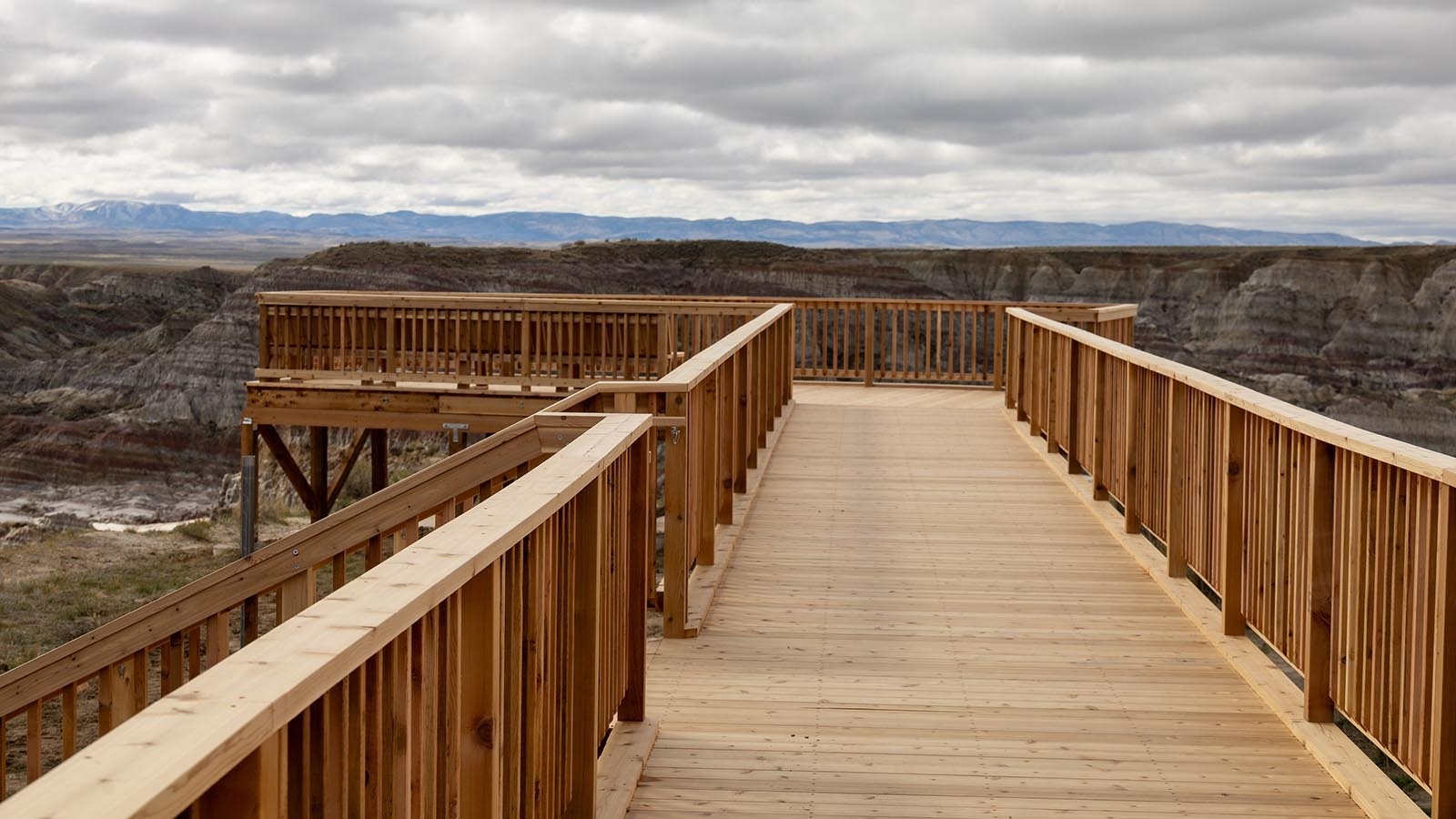 Hell’s Half Acre has a new obervation deck and is officially opening to the public in May. (Courtesy Photo)
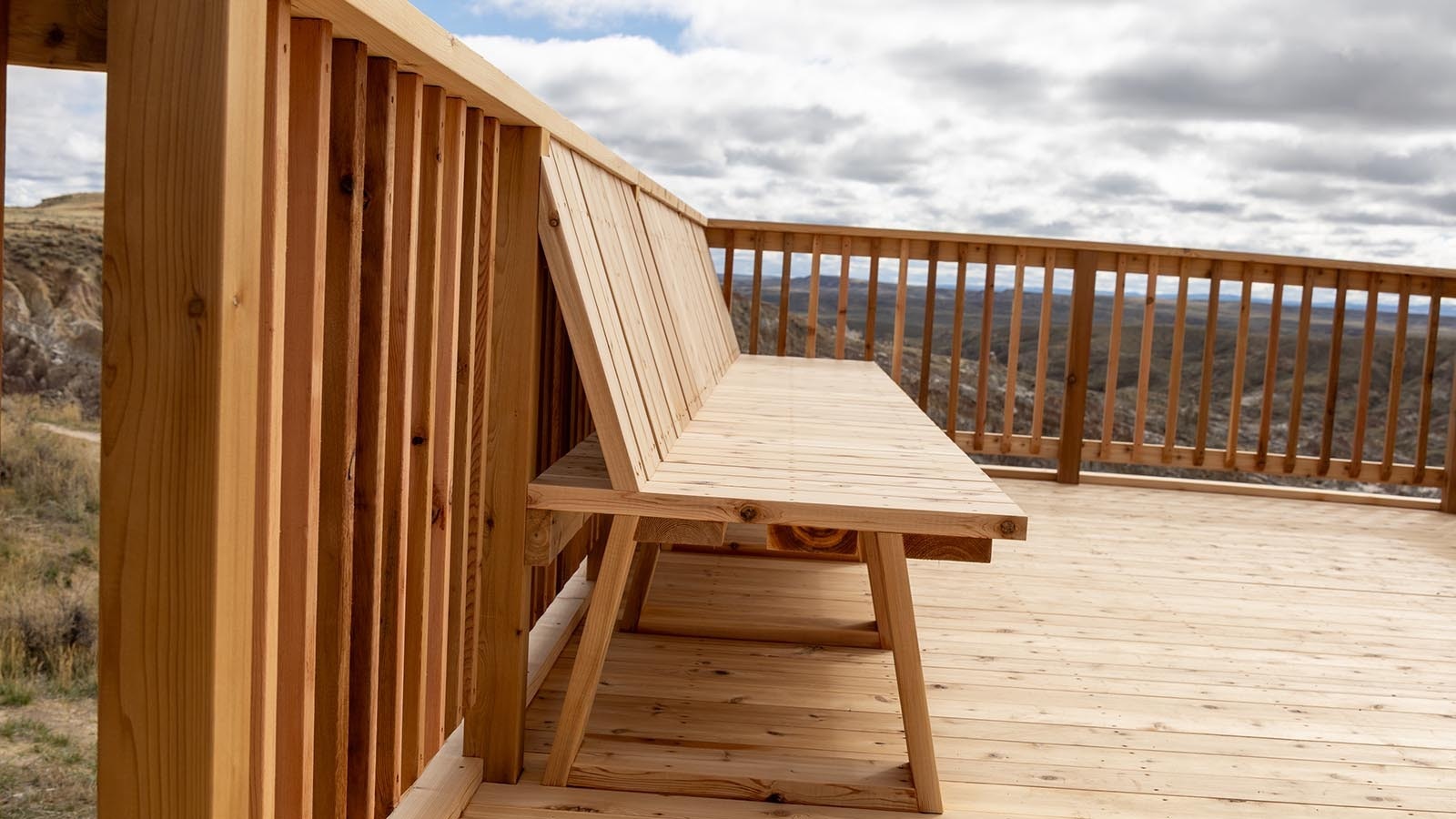 Hell’s Half Acre has a new observation deck and seating. (Courtesy Photo)
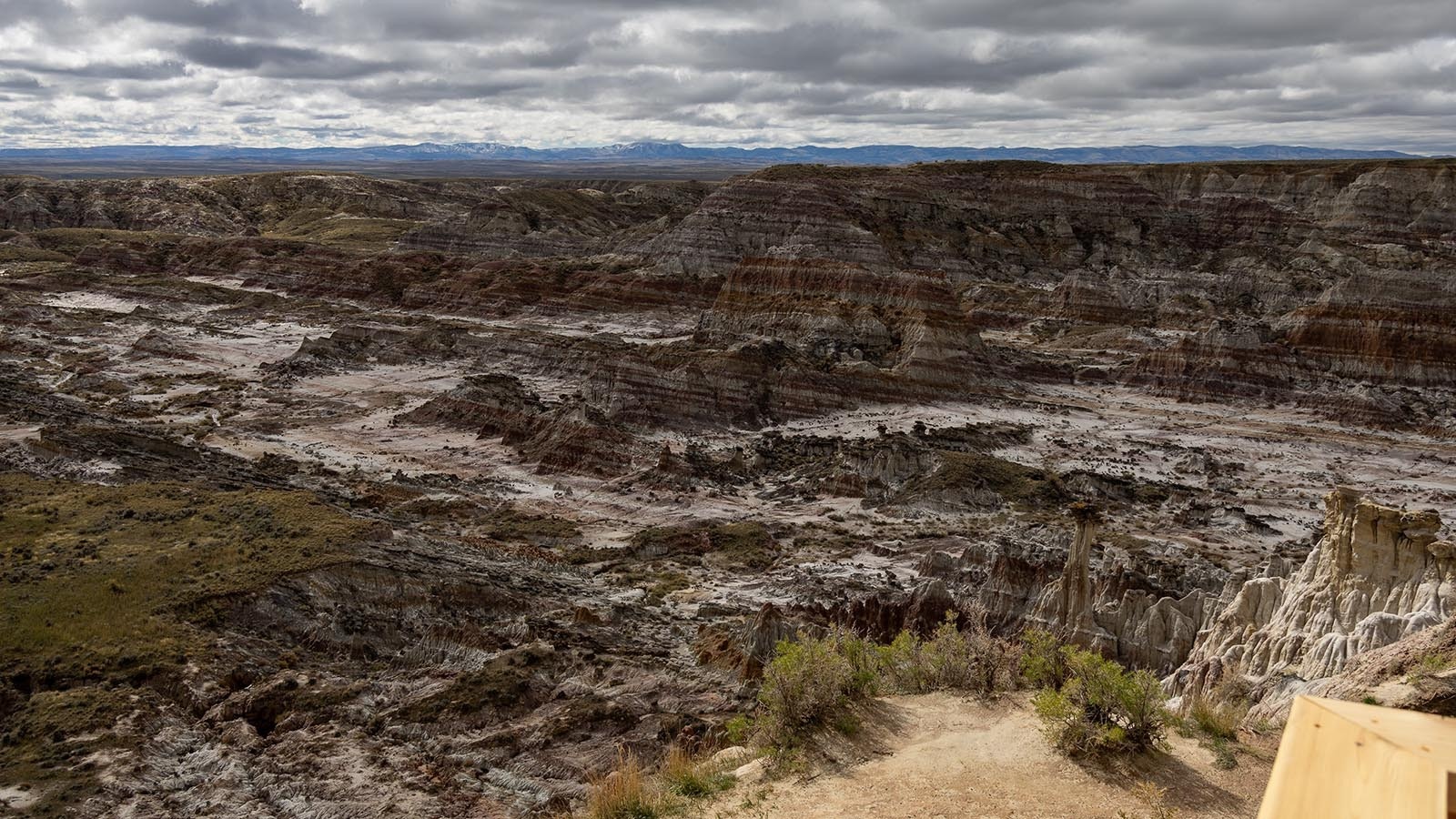 Hell’s Half Acre looks so otherworldly it played an alien planet in the movie “Starship Troopers.” (Courtesy Photo)Arrow leftArrow rightTravel To The Eocene
A time traveler visiting the Eocene wouldn’t find any alien arachnids like those in the “Starship Troopers” movie, but they would encounter some pretty interesting creatures, many of them completely alien to today’s world.
These creatures were so interesting in fact, that VisitCasper CEO Annette Pitts at first thought some kind of mistake had to have been made when she was being told about them.
“They were talking about some kind of wild camels,” Pitts recalled. “I was like, ‘Can this be real?’”
The “camels” were actually a miniature horse-like creature, about the size of a domestic cat, which once freely roamed the North American continent, eating up all the tasty shrubs it could find.
“So, we have some crazy stories to tell that are actually real and we’re going to take a tiny little bite of that through interpretive signage,” Pitts said. “And we’ll let the experts maybe do some tours or something like that in the future, to really tell the deeper stories.”
Still Popular Despite Closure
Hell’s Half Acre, which sits about 40 miles west of Casper, was closed in 2005, when its leaseholders, who operated a motel and restaurant on site, decided to retire.
The structures were torn down, and barbed wire was added to the fence to discourage people from entering the area.
But the site was still popular, and people cut holes into the fence to go hiking anyway. Numerous TripAdvisor reviews even inform people how they can get into the location.
In October, VisitCasper put out a survey to gauge interest in reopening the site, and applied for grants from the Wyoming Office of Tourism, Wyoming Department of Parks and Cultural Resources and Natrona County Parks to reopen Hell’s Half Acre as an interpretive site.
“Hell’s Half Acre is a wildly unique, crazy, cool destination,” Pitts said. “As someone who’s only been here just over a year, I can’t believe we have something like this right in our backyard.”
Pitts said they have been keeping tabs on who visits the area, and she’s seen people coming from all over the world to check this ethereal location out.
“I don’t know what the future may hold in terms of what the county would like to do,” Pitts said. “But from VisitCasper’s standpoint, we just want to make it inviting and easy for people to take cool photos and just get a sense of this crazy geological and historical phenomenon outside of just Starship Troopers. The cultural history is just incredible.”
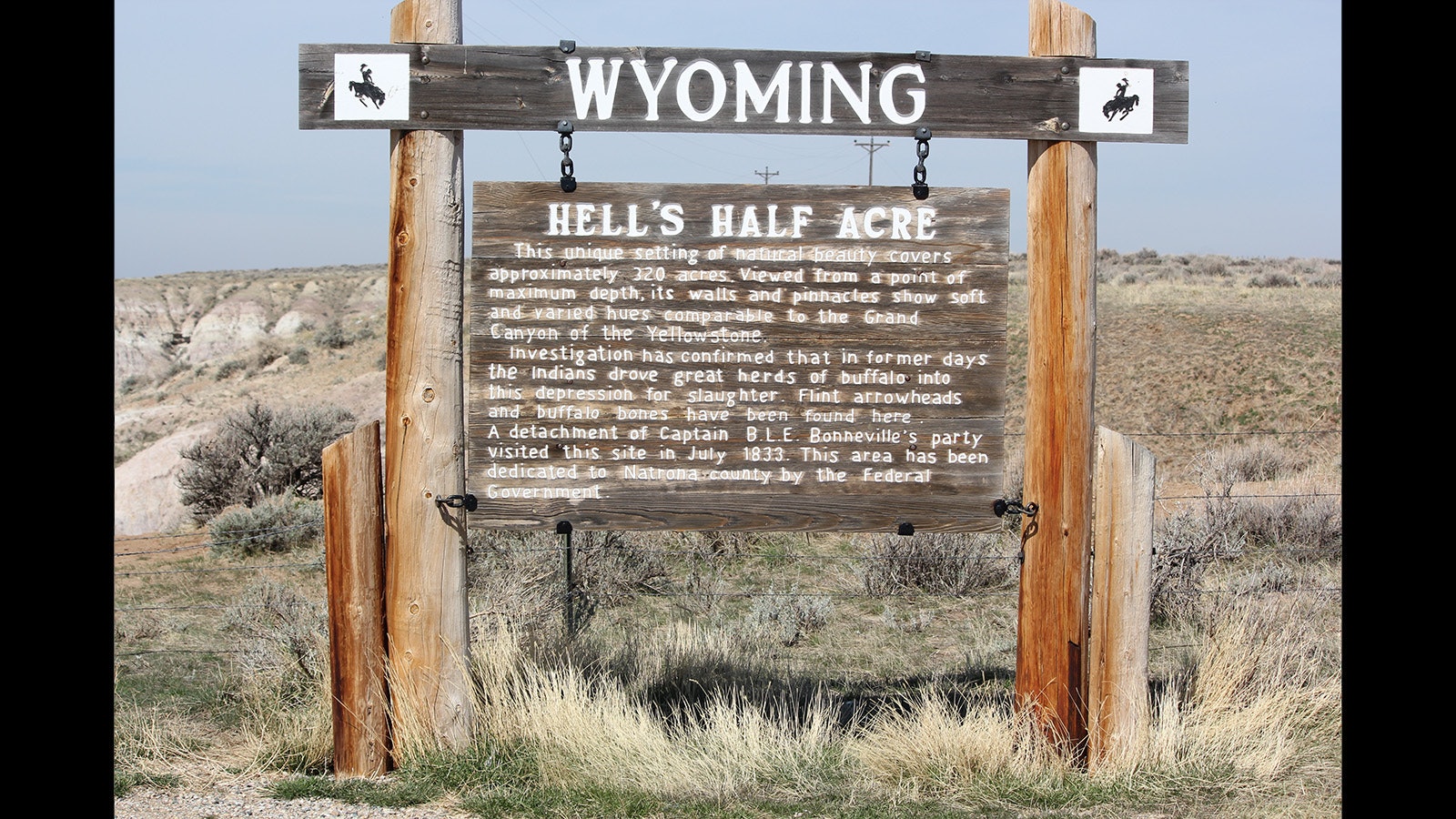
As part of that mission, a new viewing deck and boardwalk have been completed at Hell’s Half Acre site, and there are now picnic tables awaiting guests who might want to stop along the way for an unusual roadside adventure.
The fencing is still being worked on, new pit toilets are on order, and interpretive signs are being created.
“I think the county is going to be putting some new garbage cans out in April,” Pitts said. “And our interpretive signage should be ready for the official ribbon cutting in May.”
The ribbon cutting ceremony is set to take place the first week of May or so, Pitts added, depending on weather.
 (Cowboy State Daily Staff)
 (Cowboy State Daily Staff)
 (Cowboy State Daily Staff)
 (Cowboy State Daily Staff)Arrow leftArrow rightMeet The True Aliens Of Hell’s Half Acre
While today, Hell’s Half Acre seems inhospitable and dry, it was once lush with green shrubs, running rivers, and even swampy areas, which supported aquatic creatures ranging from ancient turtles and fish to a hippopotamus-like creature called Coryphodon.
The miniature horses that Pitts mentioned are called Eohippus, or the dawn horse, and once ranged freely over North America. Eohippus stood about 12 to 14 inches tall at the shoulder. Unlike horses of today, it had three functional toes, each ending in a hoof, rather than just one large hoof.
Wyoming specimens of Eohippus have been found near Kemmerer in the Green River Formation, also referred to as Fossil Lake. One of them, found by fossil hunter Jim Tynsky, is displayed in the Smithsonian.
Coryphodon, meanwhile, was the world’s first large grazing mammal. This very large and slow creature enjoyed a semi-aquatic lifestyle.
Small primates similar to lemurs called Tetonius and Shoshonius also inhabited the Hell’s Half Acre area during the Eocene, when Wyoming was a tropical paradise with plenty of water and lots of strange creatures.
Humanity Takes A Hand
At some point, Hell’s Half Acre also had human occupants, who have their own story to tell.
Archaeologists, in 2006, found Paleoindian artifacts that date back to between 8,500 to 12,000 years ago. The artifacts included things like pottery shards, projectile points, scrapers and other tools used to shape materials like wood and bone.
There were also roasting pits as well as fire-cracked rocks, along with tools commonly used by Paleoindian man to process seeds, roots, and fruits.
Tipi rings, as well as pit houses, round out the picture of Paleoindian life at the site, giving the location yet another interesting story to tell.
Piles of bison and other animals bones have been found at the location in a manner that suggests this beautiful gorge, which is over 150-feet-deep, once served as a buffalo jump — a place where herds of bison, or other animals, could be driven over cliffs to their death.
This type of hunting was a team effort, to minimize danger to humans, while maximizing speed and efficiency ahead of winter. Some of the hunting party would wear wolf or buffalo calf hides to drive or lure the herd toward the cliffs.
Other members of the tribe would assist in driving the herd toward the cliff, while still other members of the tribe waited below, to finish off any animals that didn’t die after the fall.
The Naming
History tells two different legends about how Hell’s Half Acre got its name — though the name itself is a misnomer, given that the site is actually 960 acres in all. The part most often written about is the 320 exposed acres that look like an alien landscape.
European settlers came up with their own names for the area, ranging from the Devils Kitchen and the Pits of Hades to the Baby Grand Canyon.
The name that stuck, however, came from a cowhand who took one look at the alkali and bogs and rough badlands terrain, and declared that he had found Hell’s Half Acre.
A different legend suggests the name was a mistake printed on an advertising campaign that had sought to bring more tourists to the roadside attraction. Postcards had been ordered for the campaign, which were supposed to say “Devils Kitchen” on them. But when they arrived, they had the name Hell’s Half Acre instead.
Money was tight, so rather than toss the postcards, they were put to use.
Whichever story is true, Hell’s Half Acre is the name that endured, and what it’s called to this day.
The Endlessly Fascinating, Ever-Changing Selfie Magnet
Once upon a time, Hell’s Half Acre brought millions to the community in tourism money. With the popularity of film trails, it’s thought it could once again drive some tourism revenue in the Natrona County area, and the site is being added to various apps that help road trippers find film locations.
Today, the exposed layers of red, white, black and grey rocks at Hell’s Half Acre continue to look like an artist’s dream gone wild, a beautiful record of millions of years that have gone by, and all the different environments that once existed there.
It made the perfect setting for an alien world and is still a beautiful setting that’s changing with time as the wind and weather slowly carve away the soft stones.
Existing caves and pinnacles will disappear in time, thanks to the natural forces that break everything down, and new features will be revealed, making this an endlessly fascinating geologic wonderland with new secrets and new stories to tell.
Renée Jean can be reached at renee@cowboystatedaily.com.