
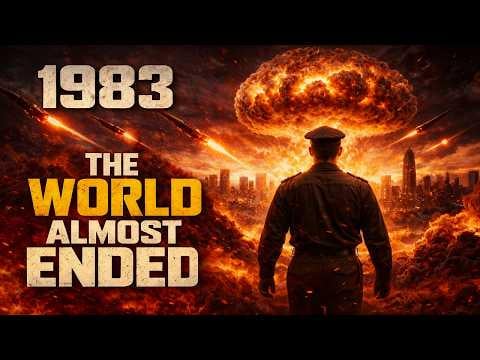
On 26 September 1983, Soviet early-warning systems reported that multiple U.S. nuclear missiles had been launched toward the USSR.
According to protocol, duty officer Stanislav Petrov was required to report the alert immediately, which could have triggered a retaliatory nuclear strike.
However, Petrov suspected the warning was a system error.
His reasoning included:
- Only a small number of missiles were detected (not consistent with a full U.S. first strike)
- Ground radar had not yet confirmed the launches
- The satellite system was newly deployed and untested
He chose to classify the alert as a false alarm.
The warning was later confirmed to have been caused by sunlight reflecting off high-altitude clouds, which confused the satellite sensors.
The incident is widely regarded as one of the closest moments the Cold War came to accidental nuclear war.
I also created a short documentary summarising the event: https://youtu.be/WK7ZBn1WONQ
Sources:
- Scott D. Sagan, The Limits of Safety (1993)
- David Hoffman, The Dead Hand (2009)
- National Security Archive (George Washington University)
- BBC News, “The Man Who Saved the World” (2013)
by Busy-Badger-361