
NASA has announced plans to build a nuclear reactor on the Moon – a milestone that could power future lunar bases and long-term missions. But it also raises some big questions.
How much will it cost? Will someone need to stay up there to operate it? And, for the doom-mongers among us, what happens if it fails?
A long history of nuclear power in space
This wouldn’t be the first time humans have sent nuclear material into space.
Beginning in the 1950s, NASA was developing and testing uranium-fuelled ‘SNAP’ (System for Nuclear Auxiliary Power) reactors for space applications.
In 1965, four years before Neil Armstrong even set foot on the Moon, the SNAP-10A became the first and only US nuclear-powered satellite, operating in Earth orbit for 43 days.
Since then, nuclear devices have powered deep-space missions like Voyager and even the Mars rover, Curiosity.
Some have been based on lower-power systems known as radioisotope thermoelectric generators (RTGs) – like astronaut Mark Watney’s ‘space battery’ in the 2015 film The Martian, which converted heat from radioactive decay into electricity.
There are also radioactive heaters in two Russian rovers left stranded on the Moon.
To generate more power for lunar bases, NASA has turned to small-scale fission systems: splitting the atom.
In 2018, it completed successful tests of its toilet roll-sized, uranium-powered reactor ‘Kilopower’, claiming that four of these devices could run an outpost on the Moon.
While ‘nuclear reactor on the Moon’ might sound risky, these designs prioritise safety: they use passive cooling and low-enrichment uranium, making catastrophic failure extremely unlikely.
Still, its demise is a fascinating hypothetical.
What if it blew up?
We’ve really no idea what a nuclear meltdown on the Moon would look like – and, with current plans, there’s no indication it would even be big enough to be considered a meltdown.
(One Kilopower reactor would only supply enough power for several Earth houses over about 10 years.)
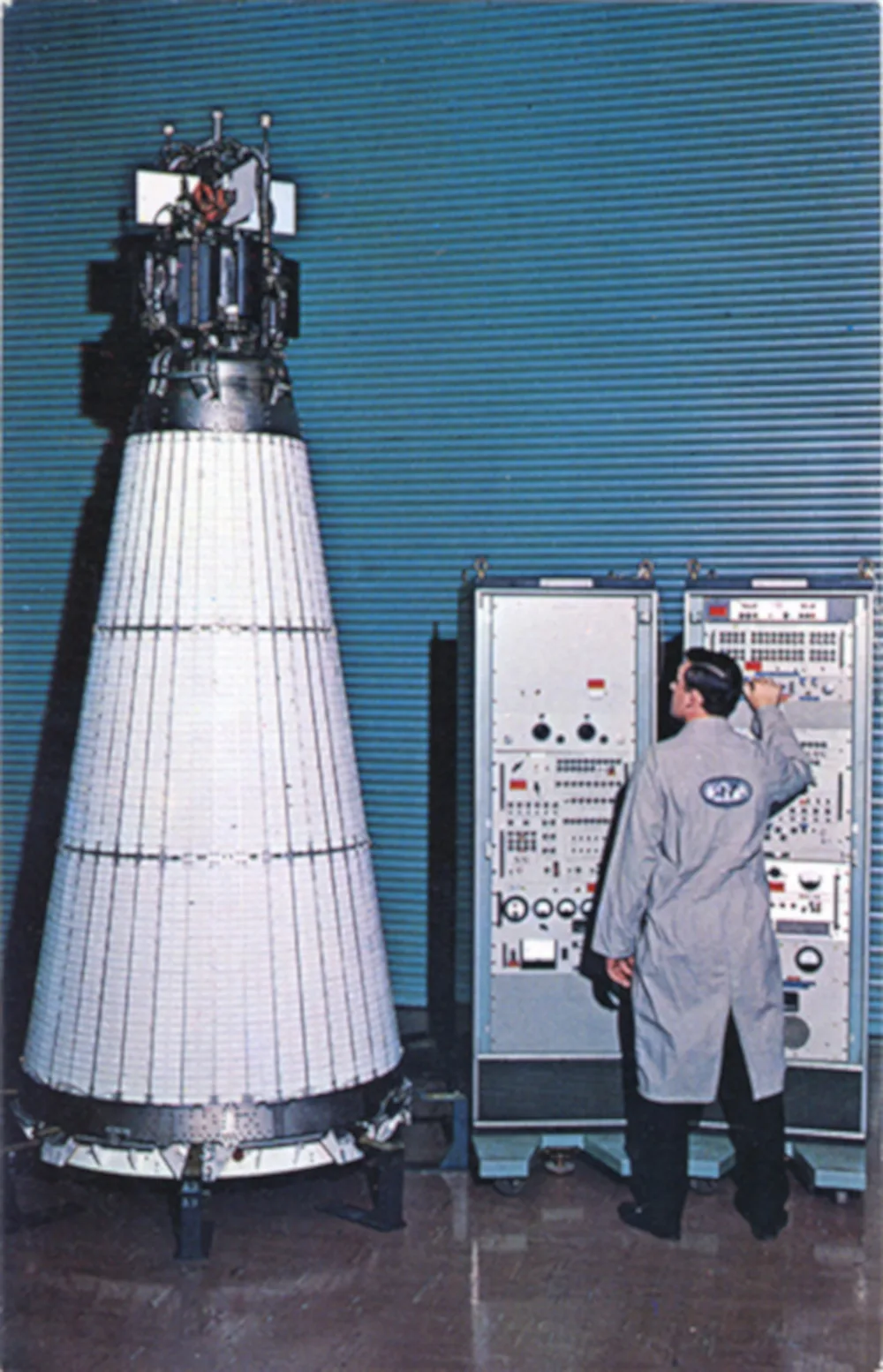 SNAP-10A, the first nuclear power system to operate in space, was launched into Earth orbit in 1965 – Image credit: Atomics International/Contractor to US Atomic Energy Commission
But we can speculate, of course. It’s not just the size of the reactor that determines what happens if it blows – it’s the environment.
A reactor accident on the Moon would unfold very differently to one on Earth.
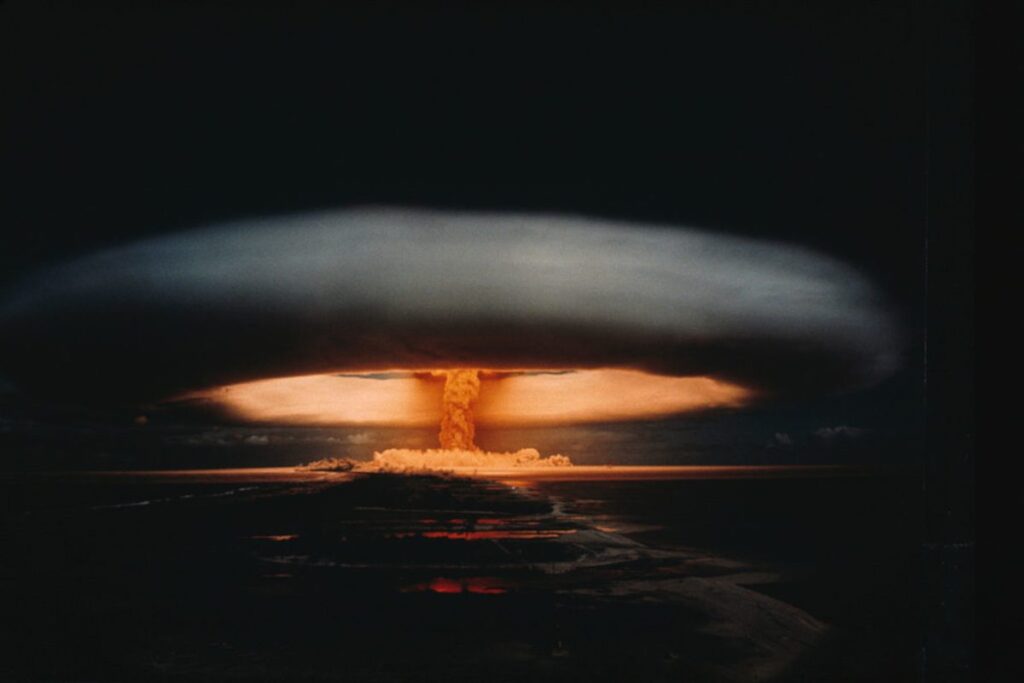
As the Moon has no atmosphere, no weather and one-sixth of Earth’s gravity, we might expect that instead of the explosion, mushroom cloud and aftershock (triggered by reactions with molecules in the Earth’s atmosphere) it would be something somewhat less dramatic.
Instead, the reactor might simply overheat, perhaps producing an initial flash, then a glowing pool of molten metal that cools and solidifies in silence.
That’s not to say that such an event wouldn’t be dangerous for anyone manning the station. They would still be exposed to a strong surge in radiation.
That radiation would still be dangerous nearby, but without air or wind to carry radioactive dust, fallout would remain largely local.
A near miss
Thankfully, we don’t have a better answer to the question, though we might have done if certain US scientists had got their way back in the 1950s.
Project A119 was a secret plan to drop a hydrogen bomb on the Moon as part of the escalating ‘space race’ between the US and the Soviet Union.
Fortunately, it never really got beyond the planning stage.
This article is an answer to the question (asked by David Martin, Worle) ‘What would a nuclear meltdown on the Moon be like?’
To submit your questions, email us at questions@sciencefocus.com, or message our Facebook, X, or Instagram pages (don’t forget to include your name and location).
Check out our ultimate fun facts page for more mind-blowing science
Read more: