
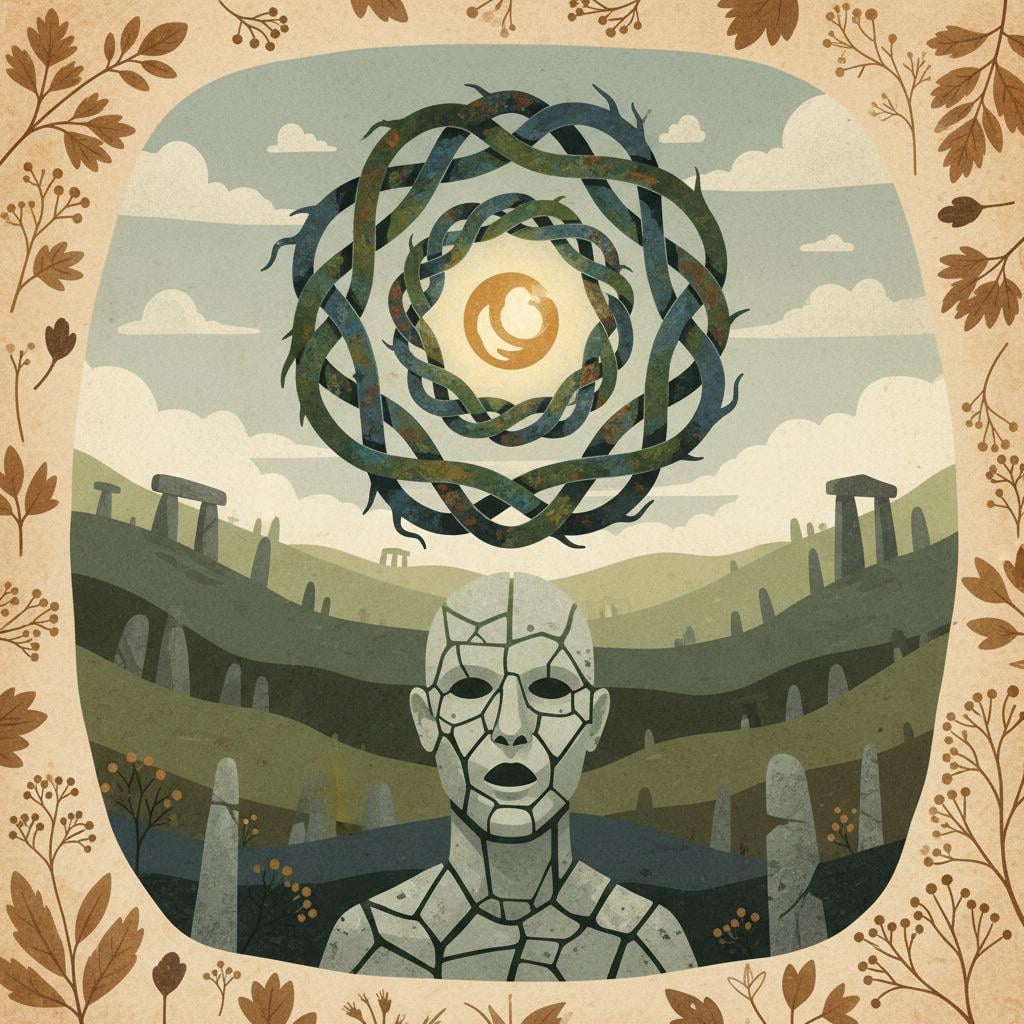
Long before the arrival of English common law, ancient Ireland operated under a sophisticated legal system known as the Brehon Laws. These statutes governed Gaelic society for over a thousand years and focused on social harmony rather than government mandated punishment. Unlike many neighboring civilizations that relied on execution or dungeons, the Irish had no professional police force and no prisons. Instead, they relied on a class of professional jurists called Brehons who memorized and interpreted complex oral traditions to settle disputes between families and individuals.
The core of this system was restorative justice through a concept called the eric fine. In this framework, almost every crime was treated as a civil matter that required financial compensation. If someone caused an injury or stole property, they were required to pay the victim a specific amount based on the severity of the act and the social standing of the victim. This payment, often measured in cattle or silver, was designed to restore the balance of honor and wealth between families. By focusing on restitution, the laws prevented the long running blood feuds that often plagued other tribal societies during the early medieval period.
This approach created a unique form of collective accountability. If an individual could not pay their fine, their entire family group became legally responsible for the debt. This meant that families had a strong incentive to monitor and correct the behavior of their own members to avoid financial ruin. While the system was highly hierarchical and favored those with higher status, its emphasis on healing the community rather than simply punishing the offender offers a fascinating historical parallel to modern restorative justice movements. Today, legal scholars look back at these ancient codes to understand how societies can maintain order through social pressure and compensation rather than incarceration.
by thoughtframeorg
2 Comments
What a terrible way to govern yourselves…
jesus christ. your brother murdered someone, or similar, and can’t pay. Now you and your wife as his only living relatives are responsible for giving restitution to the survivors/victims. Fair, family units were family *units* but that’s still a shit way to do it