
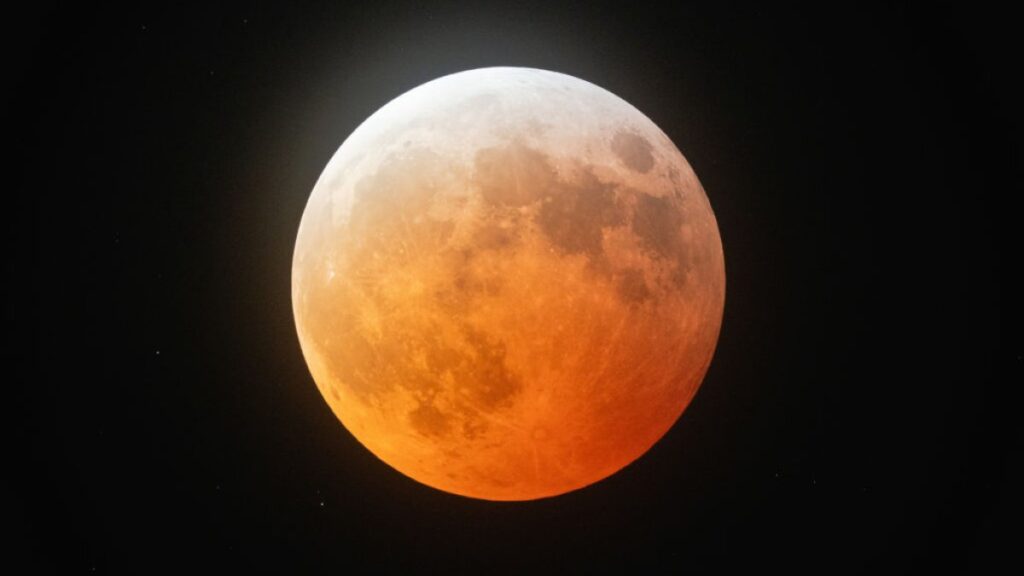
The next “blood moon”, or total lunar eclipse, could be visible from Chicago in less than a month if Mother Nature cooperates.
This one will be special for Chicago because the eclipse will still be happening while the moon sets in the west and the sun rises in the east on the morning of Tuesday, March 3.
Here’s what you should know about the event.
What is a lunar eclipse?
A lunar eclipse occurs when the Earth passes directly between the sun and the moon, casting its shadow over the moon.
A partial lunar eclipse is just what it sounds like, where only part of Earth’s shadow covers the moon.
A total lunar eclipse is when the moon moves completely into Earth’s shadow, which causes the moon to appear red in color. That is what we’ll see in a few weeks.
The red color is from sunlight shining and refracting through Earth’s atmosphere. The light gets scattered, much like in the sky during a pretty sunset, filtering out the other colors on the spectrum and leaving us with a red hue.
That light then bounces off the moon back down to Earth for us to see at night.
When is it?
The eclipse will unfold in the early morning of Tuesday, Mar. 3, 2026.
Partial eclipse begins: 3:50 a.m.
Total eclipse begins: 5:04 a.m.
Peak eclipse: 5:33 a.m.
Total eclipse ends: 6:02 a.m.
**moon sets at 6:24 a.m. (sunrise is 6:22 a.m.)**
Partial eclipse ends: 7:17 a.m.
How to best see it
The best part of lunar eclipses is you don’t need a telescope or special glasses. Instead, you just look up!
This eclipse will be low in the western sky, which is the best viewing because the optical illusion makes the moon look bigger than when it’s high in the sky.
The best viewing will be between 5am and 6am. We’ll still see about ¾ of the moon covered by earth’s shadow as it sets at 6:24 a.m.
When is the next eclipse visible from Chicago?
August 12, 2026: You’re going to read some headlines about a total solar eclipse that will be visible on August 12th this year. Chicago is technically in the partial path; but we’ll only see 0.12% of the sun blocked by earth’s shadow. We won’t even notice it, but you will need special solar eclipse glasses if you want to try and spot it around 12:30pm that day. The path of totality will move across eastern Greenland through Spain.
August 27, 2026: We will see a partial lunar eclipse two weeks later on the night of August 27th around 11pm. It may turn slightly red since most of the moon will be covered by Earth’s shadow, but it’s not a blood moon.
January 14, 2029: The next notable partial solar eclipse visible from Chicago.
June 25, 2029: The next total lunar eclipse visible from Chicago, reaching totality at approximately 10:30pm.