
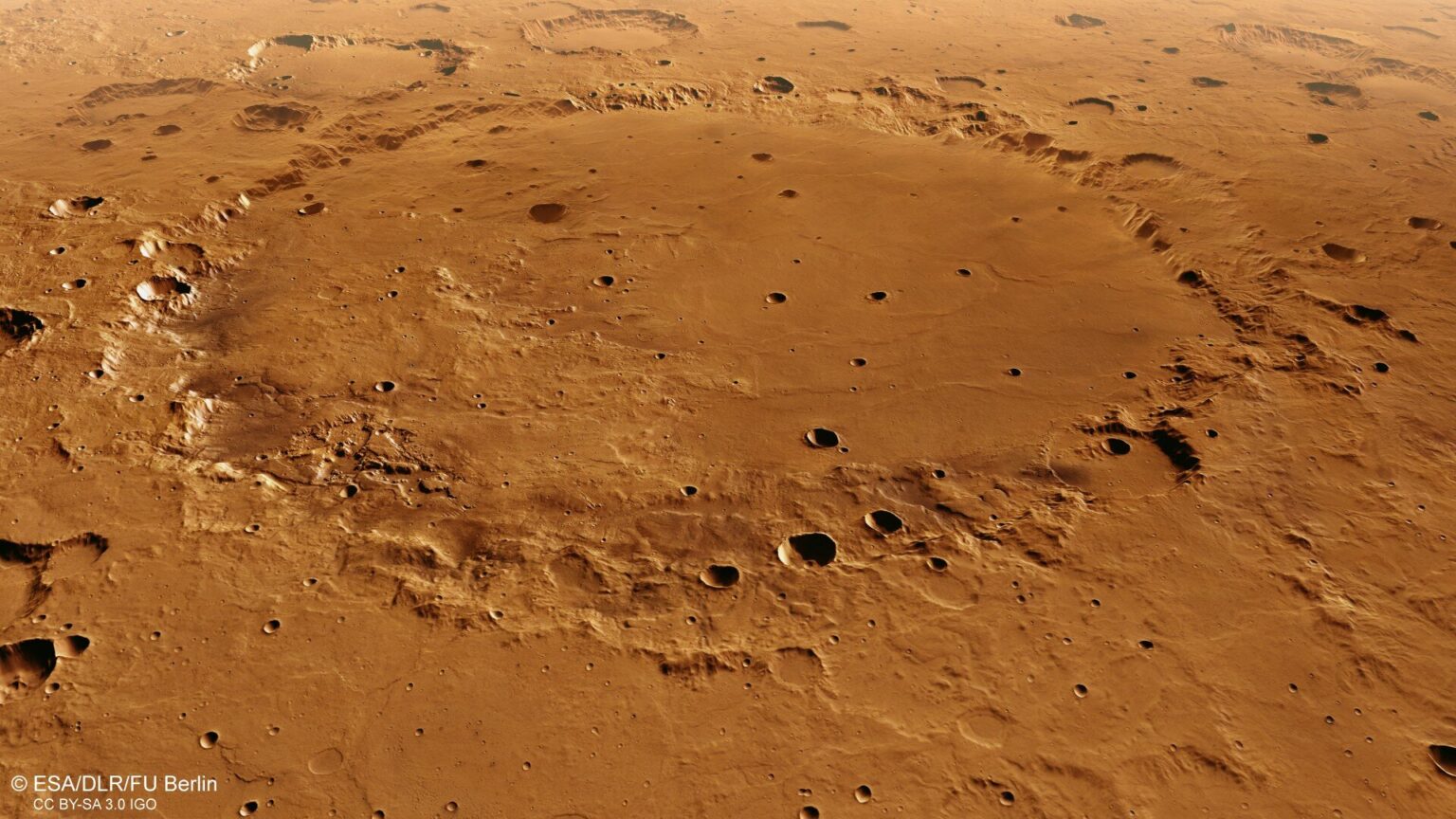
The European Space Agency has published a video based on data collected by the Mars Express mission. It shows a flight over the southern highlands of Mars to the Flaugergues Crater.
The video begins with an overview of a section of land surrounded by two steeply sloping and roughly parallel terraces (or slopes) called Scylla Scopulus and Charybdis Scopulus (on the left and right, respectively). This “path” on the surface is called a graben, formed as a result of the separation of tectonic plates. It is about 75 km wide and 1 km deep.
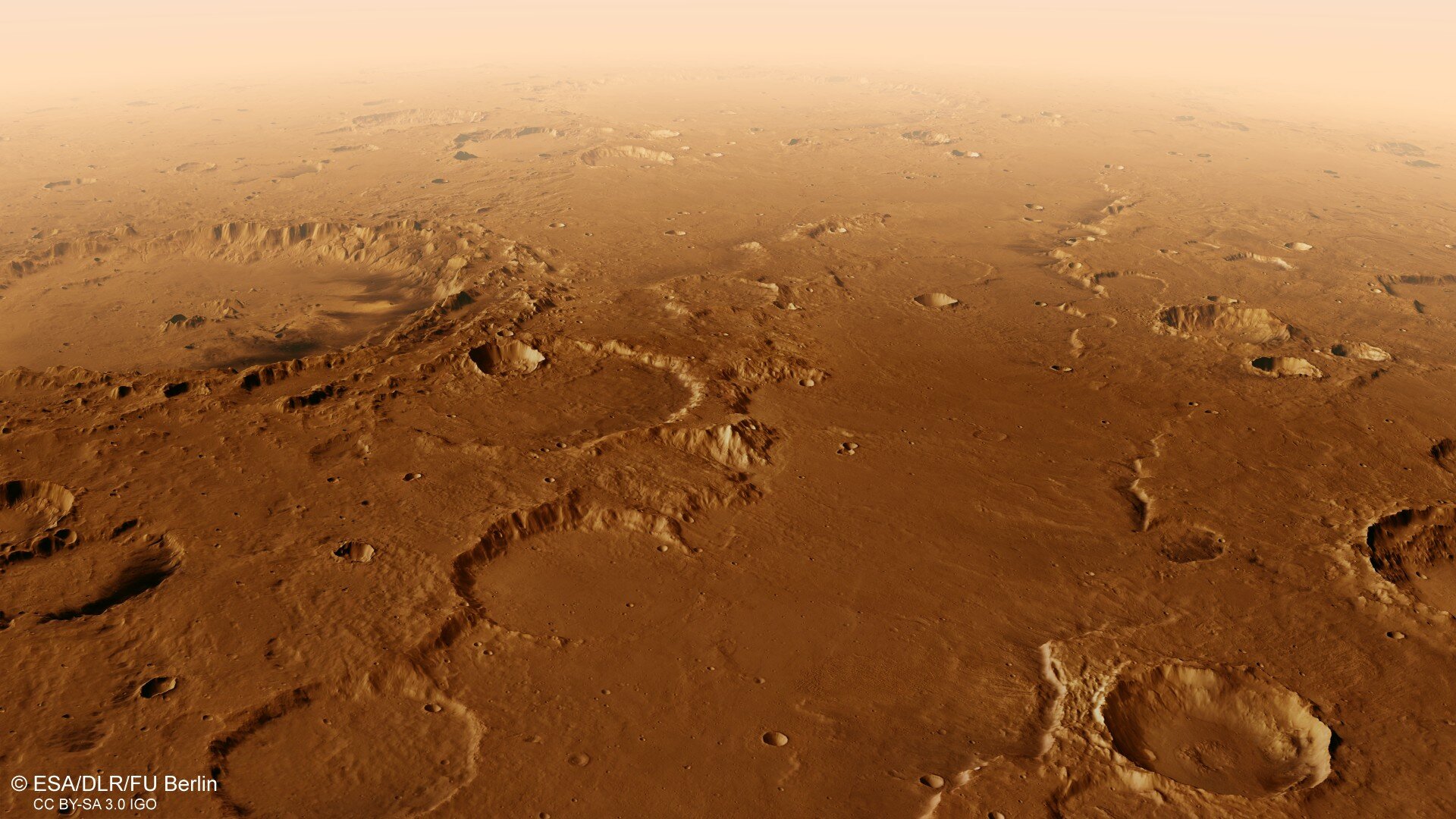 The southern highlands of Mars. Visualization based on data from the Mars Express mission. Source: ESA/DLR/FU Berlin
To the left of the graben, the Bakhuysen Crater is clearly visible. It may seem small, but in reality its diameter is 150 km, which is comparable to the distance from Kyiv to Zhytomyr.
As we move north, we approach the Flaugergues Crater. The virtual camera moves along the eastern side of the crater, then turns left and ends its movement at its western edge.
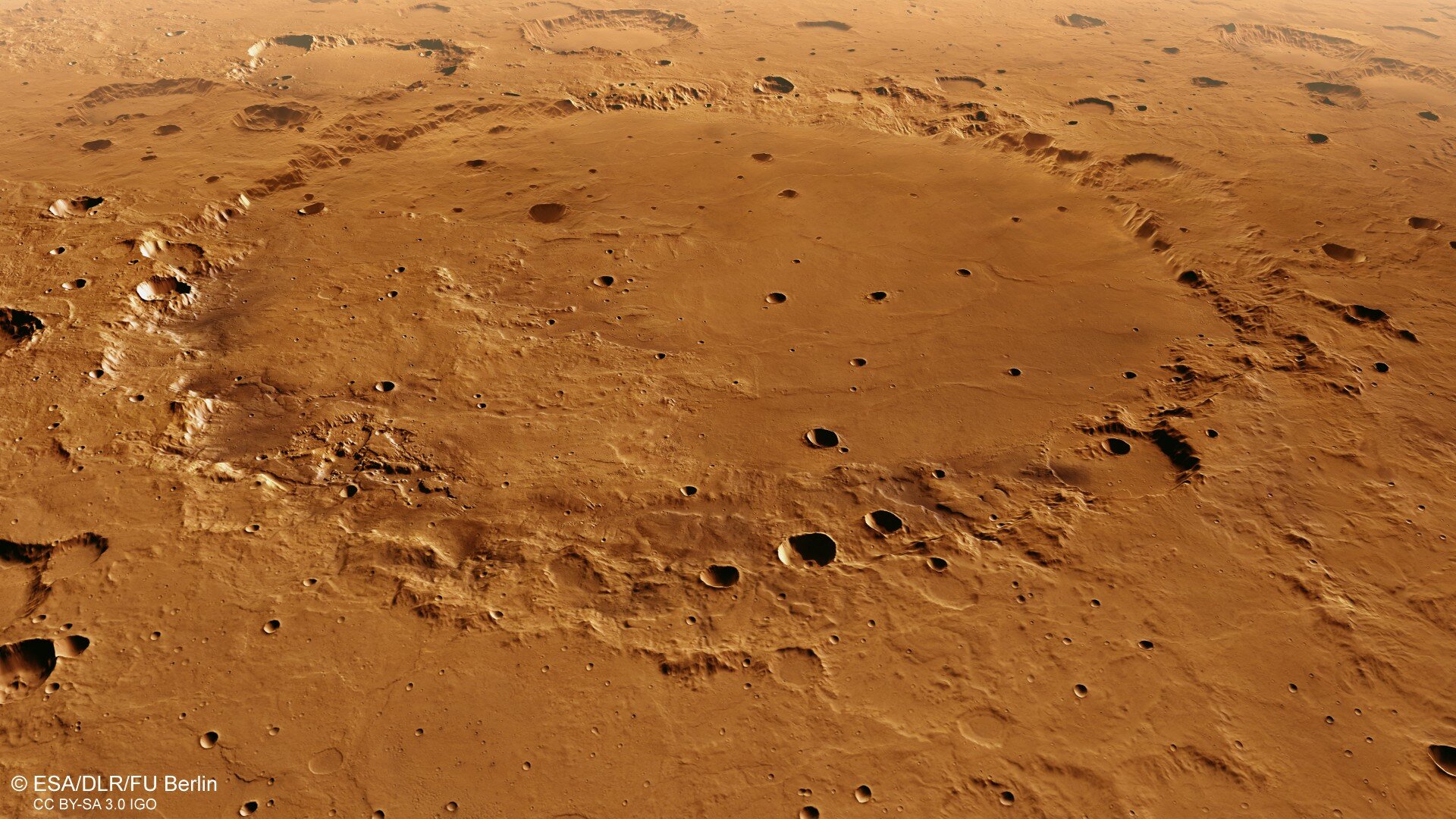 Flaugergues Crater. Visualization based on data from the Mars Express mission. Source: ESA/DLR/FU Berlin
Flaugergues Crater is a huge impact basin approximately 240 km wide. Its area is comparable to that of Estonia. Flaugergues is located in the southern highlands of Mars. They represent rugged terrain densely covered with ancient impact formations.
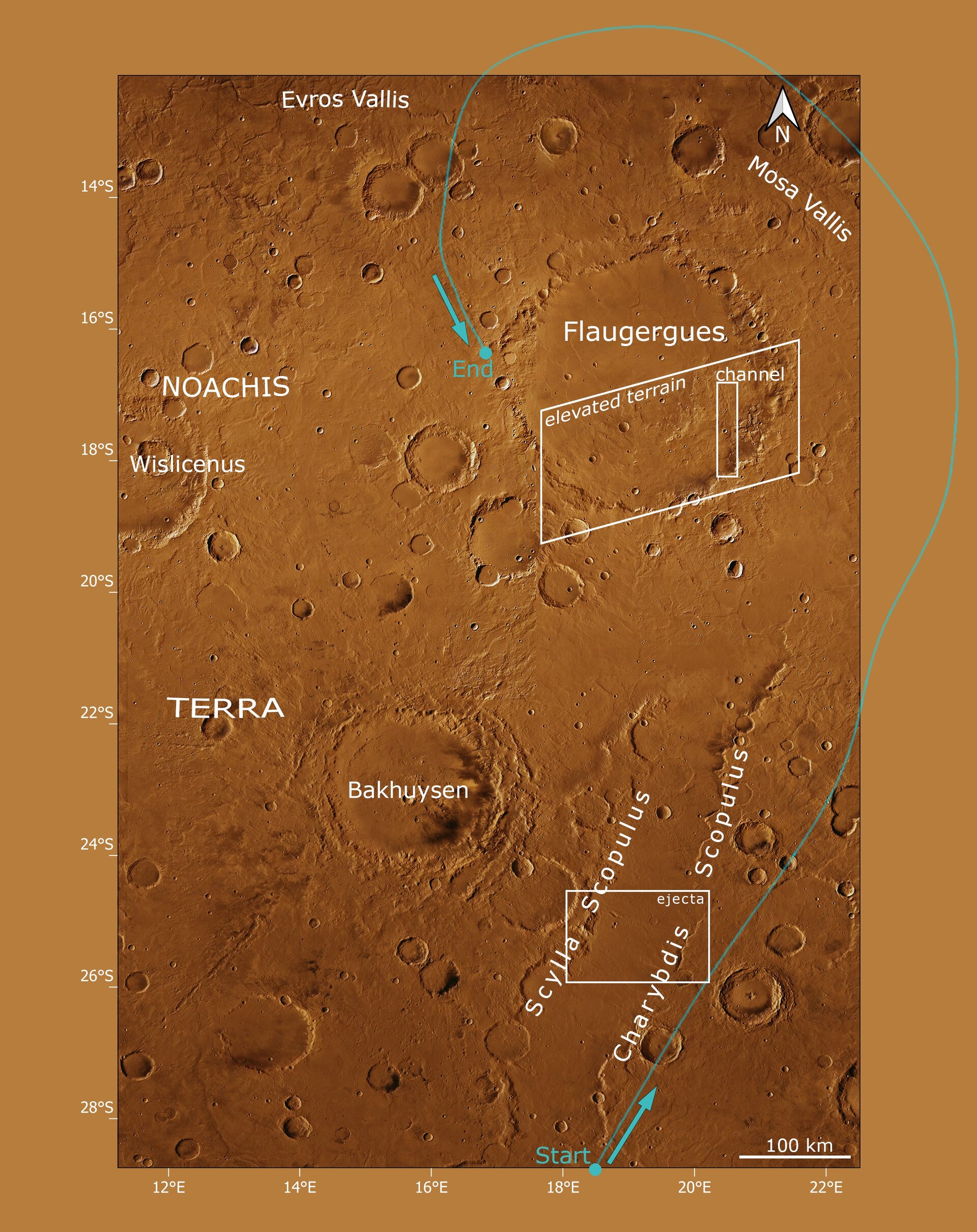 Map showing the flight path over the Flaugergues Crater. Source: ESA/DLR/FU Berlin & NASA/JPL-Caltech/MSSS
Half of the floor of the Flaugergues Crater has a rugged terrain, with elevations reaching up to 1 km. The video also shows a valley crossing this rocky area. It was probably formed by lava flows and wind erosion.
Earlier, we reported on how Mars Express photographed traces of the Martian ice age.
Part of the Universe Space Tech team since 2017. Focuses on interplanetary missions, the history of space exploration, rocket launches, and scientific discoveries in both near and deep space. Over the years, he has written dozens of materials — from fact-checked news to deep-dive analyses.
His fascination with space began in childhood and eventually became his professional direction. He joined Universe Space Tech to tell readers about modern space events in a clear and engaging way. His writing combines accuracy, structure, and deep respect for scientific knowledge.