
PORTLAND (WGME) — February has arrived, and the month is packed with celestial events worth watching.
February’s full moon has already come and gone, with impacts felt along the U.S. East Coast to start the month.
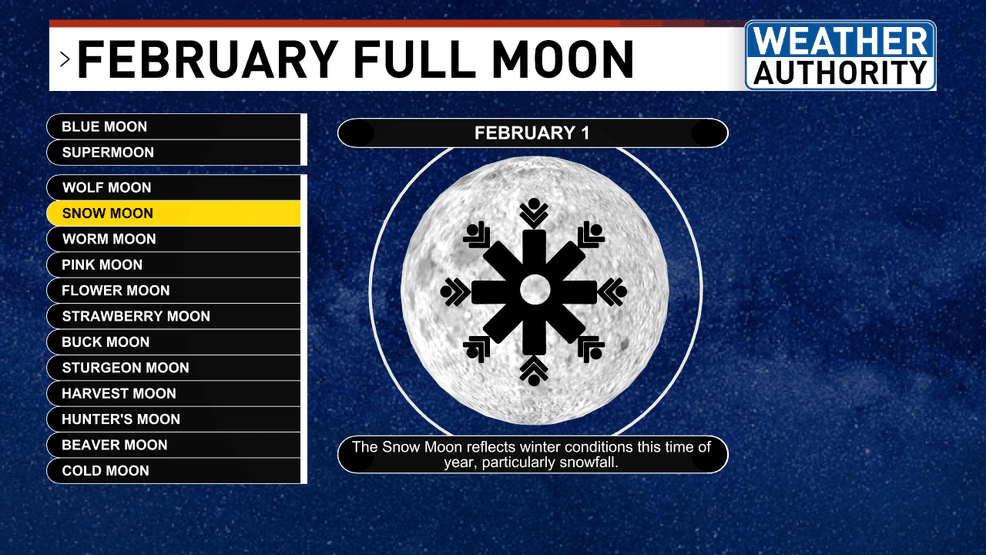
February Full Moon (WGME).
The snow moon on February 1 gets its name from snowy conditions seen around this time of year in the northern hemisphere.
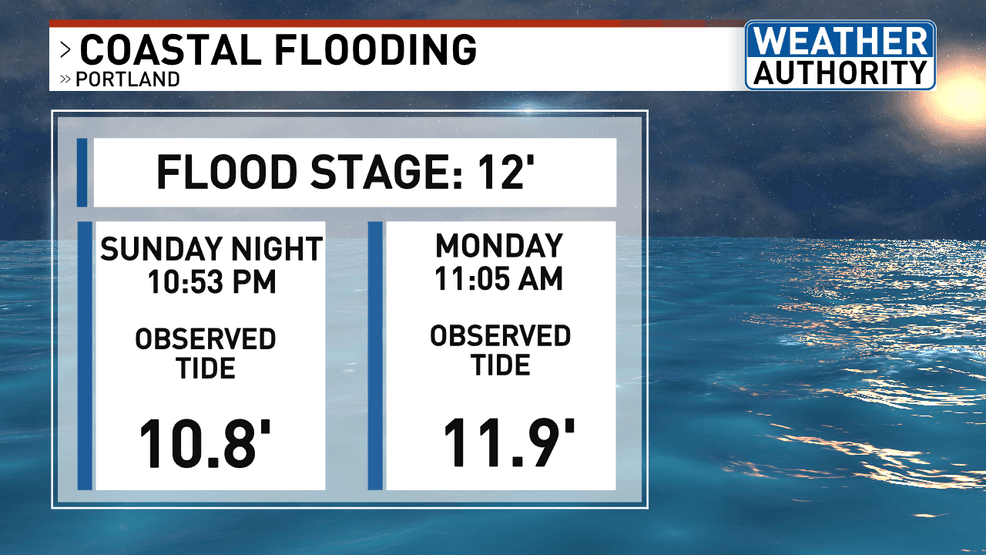
Observed Tides from Sunday Night & Monday (WGME).
Full moons bring astronomical high tides to coastal areas. The moon’s gravitational pull is strongest on earth’s oceans when it is fully aligned with the earth and sun.
During a full moon, the sun, earth, and moon line up, allowing their gravitational forces to combine and pull ocean water higher than normal.
Add a powerful ocean storm to the mix, like we saw to start the month, and you could have some coastal flooding. This is exactly what happened to the tides from Sunday night and Monday morning, as tides approached flood stage.
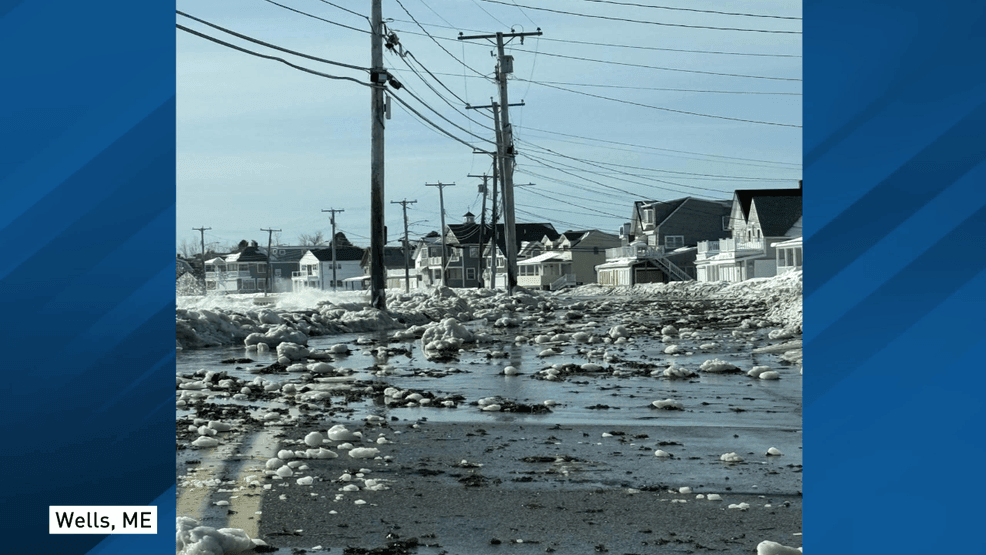
Wells, ME flood debris{ }(WGME).
A picture from Wells shows a road covered in seaweed and coastal debris from wave run-up Monday morning.
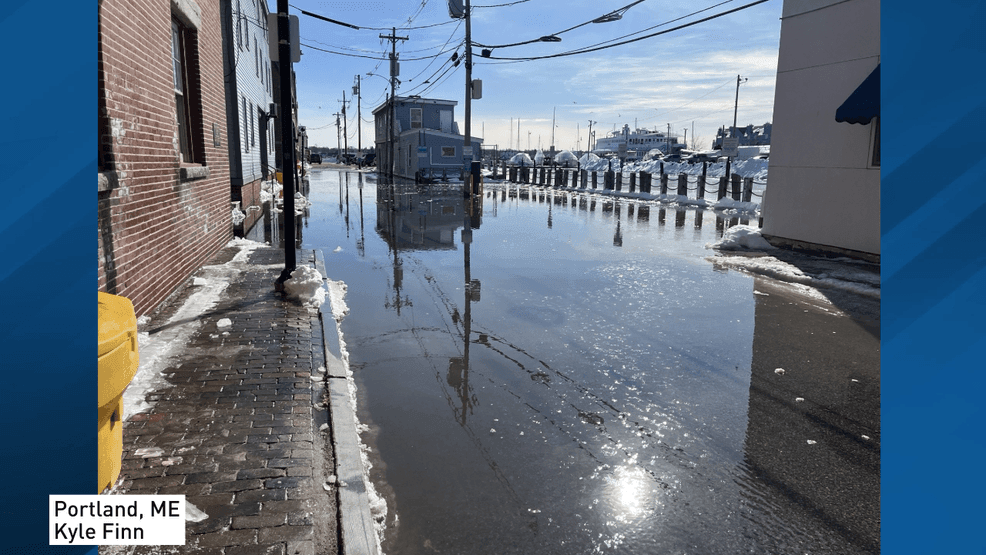
Portland, ME coastal flooding Monday morning (Kyle Finn).
Another image from Portland, ME shows minor coastal flooding from high tide Monday morning.
The coastal flooding and debris resulted from a combination of a powerful ocean storm and astronomical high tides.
Let’s move on to other celestial events in February.
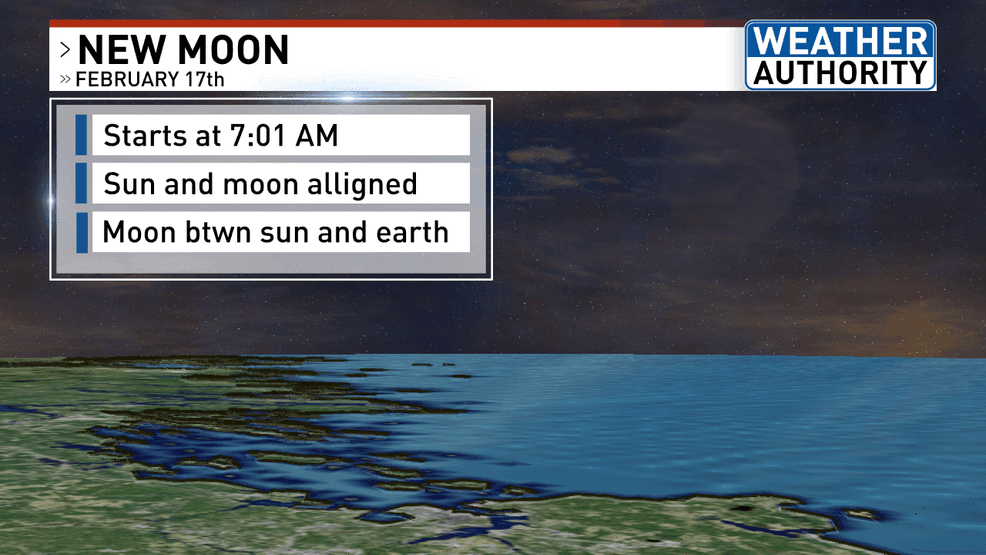
February new moon (WGME).
February’s new moon will start at 7:01 AM on February 17.
The sun and moon align during a new moon, where the moon will not illuminate and appears invisible.
In fact, the annular solar eclipse is also on February 17, but will only be visible to Southern Africa, South America, and Antarctica.
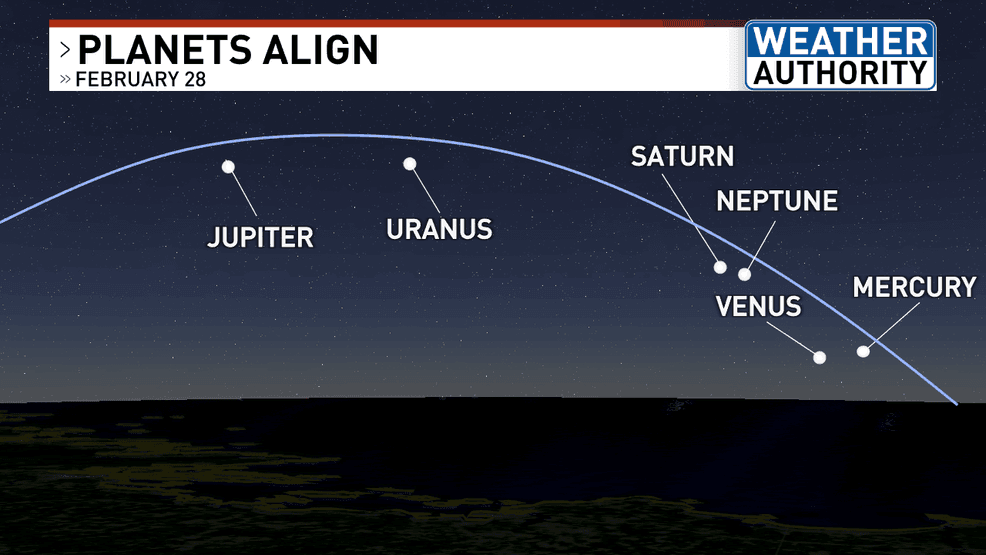
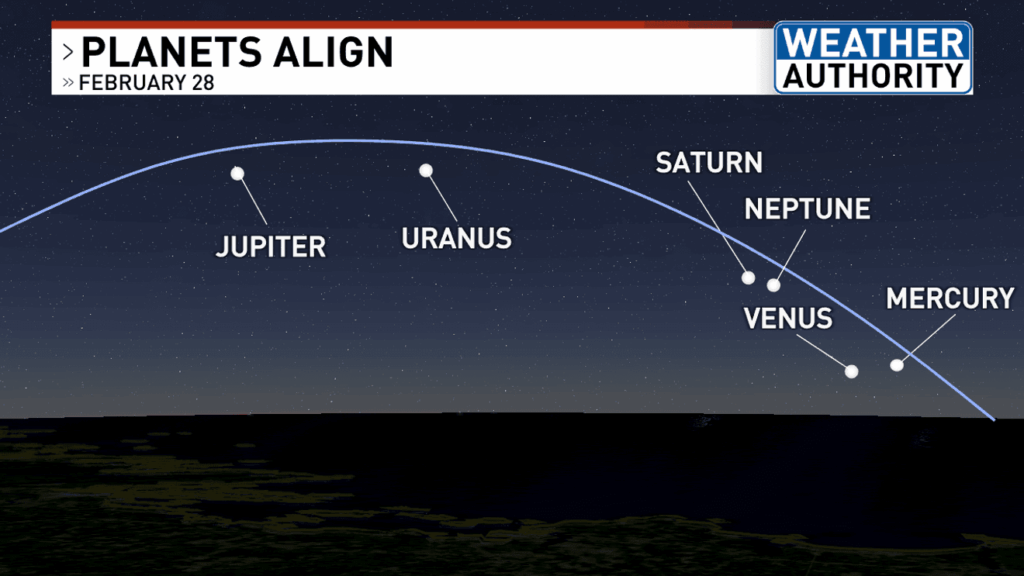
Planets Align February 28 (WGME).
On February 28, six planets will be visible shortly after sunset: Mercury, Venus, Jupiter, Saturn, Uranus, and Neptune.
These planets will line up and form an arc across the sky. Only four will be visible to the naked eye: Mercury, Venus, Jupiter and Saturn. Neptune and Uranus will require binoculars or a telescope to see.
The three inner planets can align as regularly as every few months, while the alignment of six planets is uncommon.