
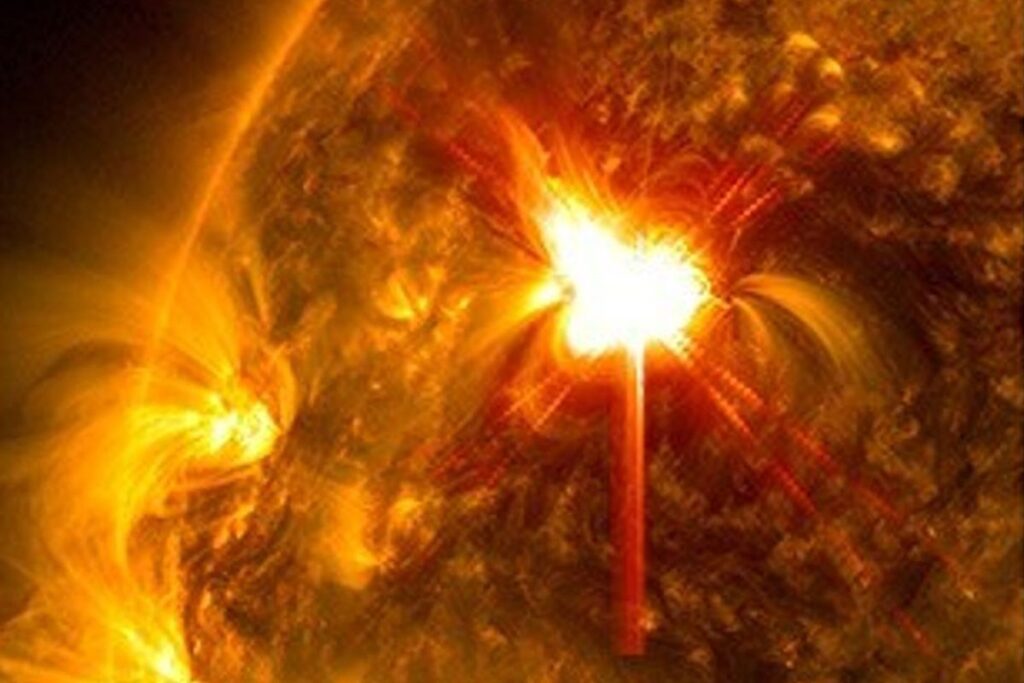
Four strong flares erupted from the Sun on 1 and 2 February 2026, meaning we could be in for increased aurora activity in the days leading up to 5 February.
NASA’s Solar Dynamics Observatory captured images of the events.
The solar flares are associated with a sunspot group that’s rotating around the Sun to face Earth, and which could lead to more solar activity as the week progresses.
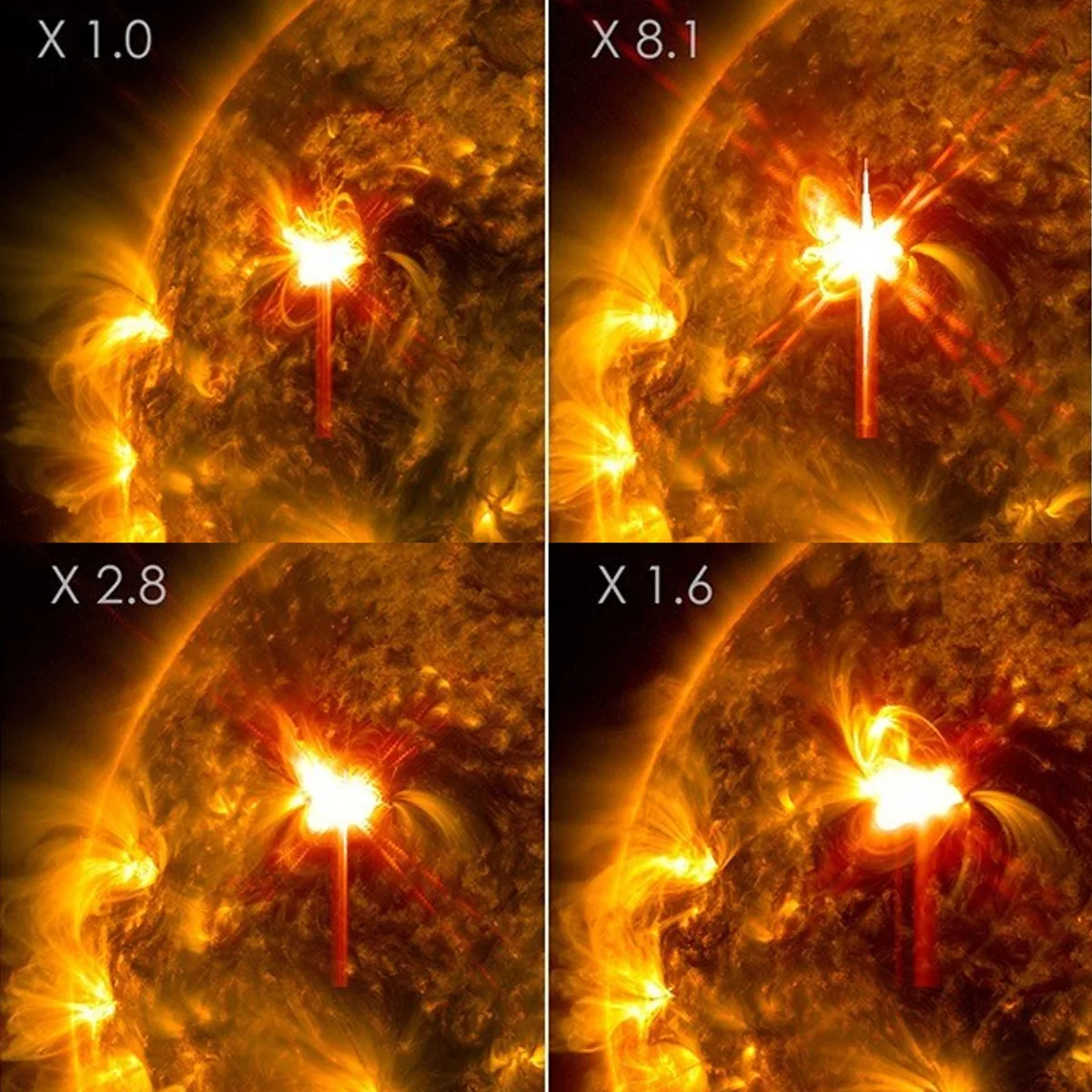 Images of solar flares on 1 and 2 February 2026 captured by NASA’s Solar Dynamics Observatory. Credit: NASA/SDO
Solar flares are powerful bursts of energy coming from the Sun and are associated with coronal mass ejections.
At times when the Sun is most active during its 11-year solar cycle, we can expect an increase in solar flares, coronal mass ejections, sunspots and other solar activity.
The Sun has just passed the peak of Solar Cycle 25, which is why there has been an increase in strength and frequency of the aurora in recent years, and why there is likely more to come.
Flares and solar eruptions can cause problems on Earth by affecting our radio communications, GPS, satellites, power grids and even spacecraft and astronauts.
But they can also generate beautiful aurora displays as streams of energetic particles from the Sun hit Earth’s upper atmosphere and collide with gases there.
Normally, aurora displays are confined to Earth’s poles, but during increased aurora displays, they may be seen much further south.
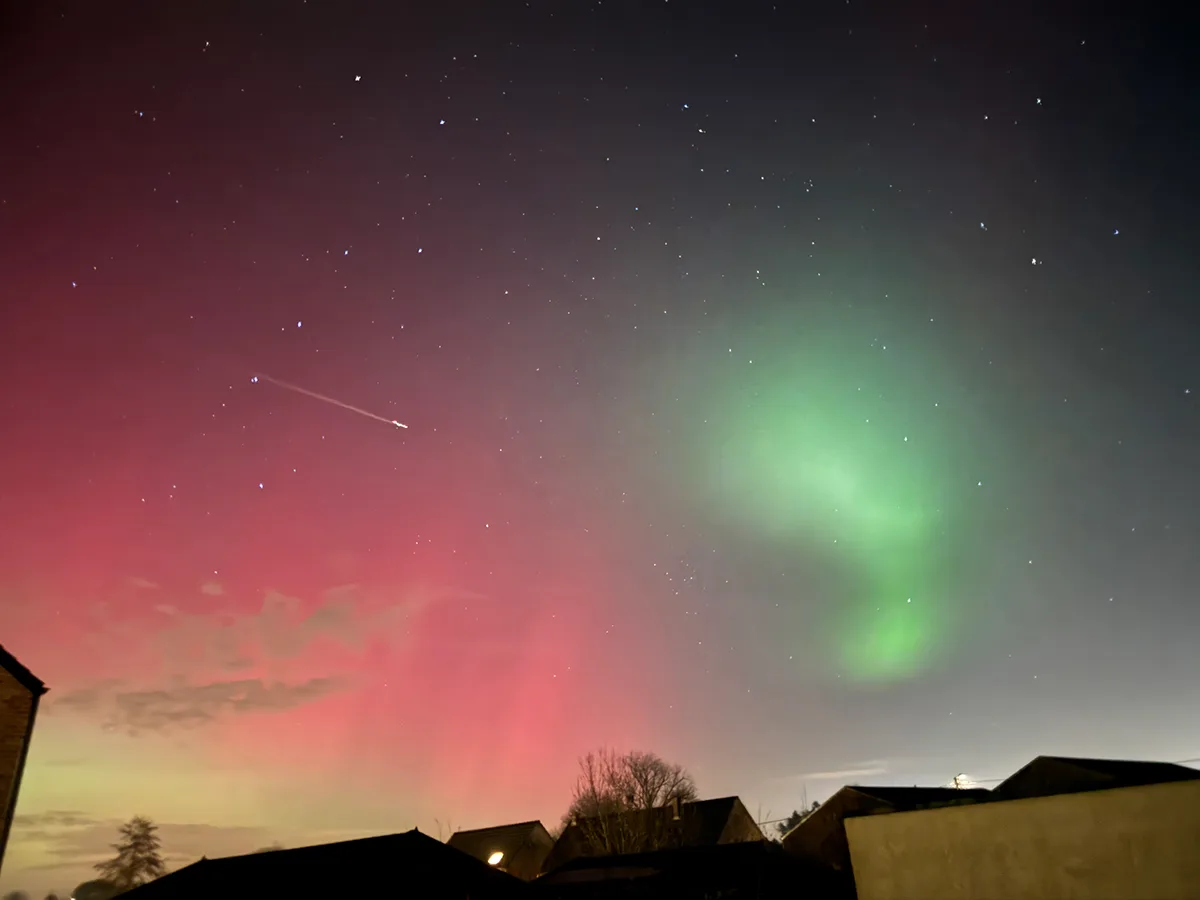 Aurora borealis captured by Julien Wilmotte, Thorembais-Saint-Trond, Belgium, 19 January 2026, 22:59 CET. Equipment: iPhone 15 Pro Max. Exposure: ISO 2500, 10 seconds
Aurora this week
The four flares that erupted from the Sun on 1 and 2 February are all classified ‘X’, which means they’re the strongest type of solar flare.
On 1 February, three flares erupted, an X1.0, then an X8.1 and an X2.8. The numbers after the ‘X’ provide more information about the type of flares.
On 2 February, a fourth flare erupted, this time an X1.6.
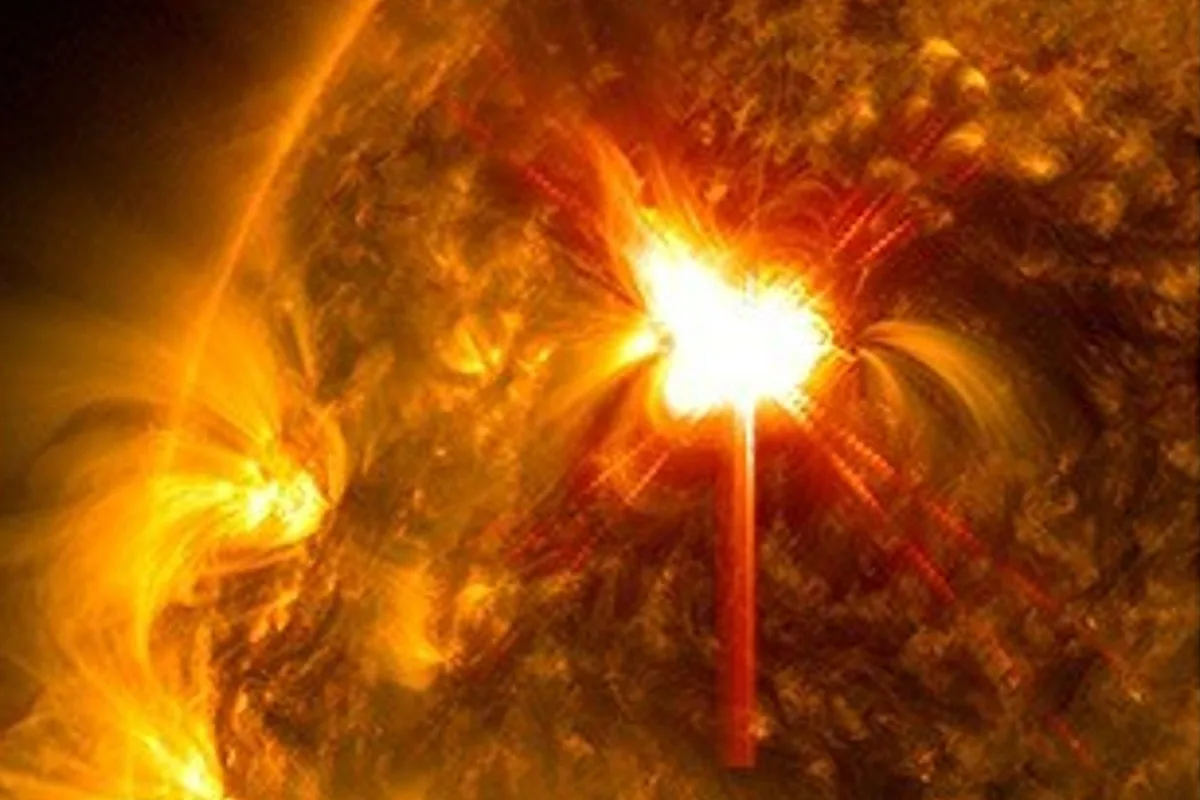 NASA Solar Dynamics Observatory image of an X2.8 solar flare that erupted from the Sun on 1 February 2026. Credit: NASA/SDO
The US Space Weather Prediction Center, part of the National Oceanic and Atmospheric Administration, says there will be increased space weather throughout the week of 1–7 February 2026.
Space weather describes how activity from the Sun affects the bodies of the Solar System, including Earth.
The Space Weather Prediction Center says the rotation of the Sun has brought a large cluster of sunspots into Earth’s view, and these sunspots have grown over the past few days.
The sunspot cluster, known as RGN 4366, is responsible for the release of strong solar flares that have erupted in Earth’s direction.
It’s thought that the associated coronal mass ejection could cause increased aurora activity on Thursday 5 February 2025.
What’s more, the Space Weather Prediction Center says its forecasters expect more activity from this region throughout the week, meaning there could be more solar flares on the way.
 Aurora over Howick Sands beach, Northumberland, 20 January 2026, captured by Tom Wright
The UK’s Met Office says aurora activity is expected to increase on 5 February, when the impact of the coronal mass ejection is felt on Earth.
This could mean increased aurora sighting in Scotland, the north of England and northern regions of Canada and the USA.
The reported geomagnetic storm as a result of current solar activity remains ‘minor’, but the Met Office says ‘moderate to high activity’ is expected to continue, and that there could be further strong solar flares on the way.
If you do observe or photograph the aurora this week, share your observations and images with us by emailing contactus@skyatnightmagazine.com