
NASA has concluded a Wet Dress Rehearsal (WDR) for Artemis II, but recurring liquid hydrogen leaks forced the test to be halted short of completion, prompting the agency to delay the mission’s launch to at least March 2026.
The extra time will be used to work through the issues that arose during the test before a second WDR.
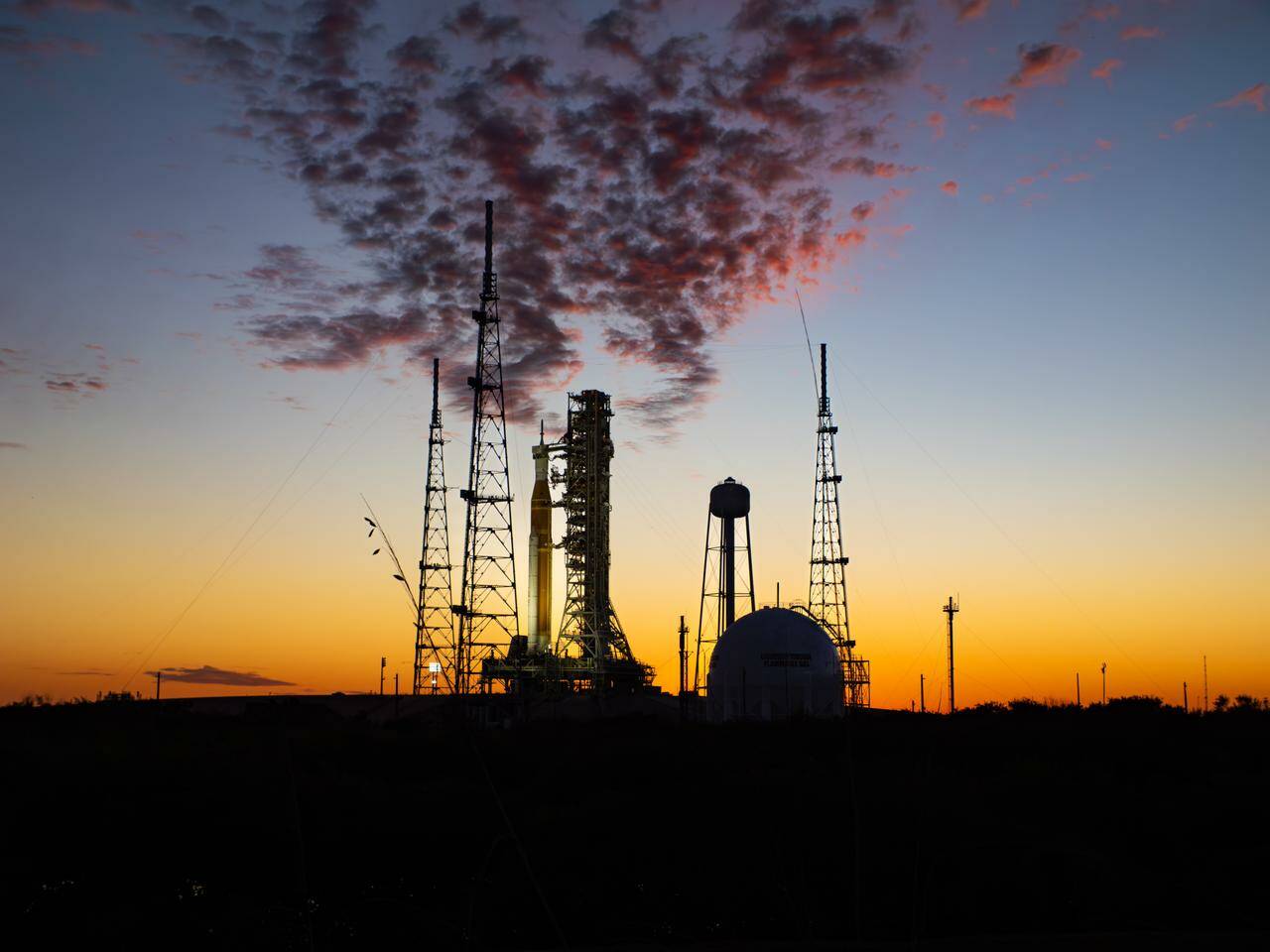
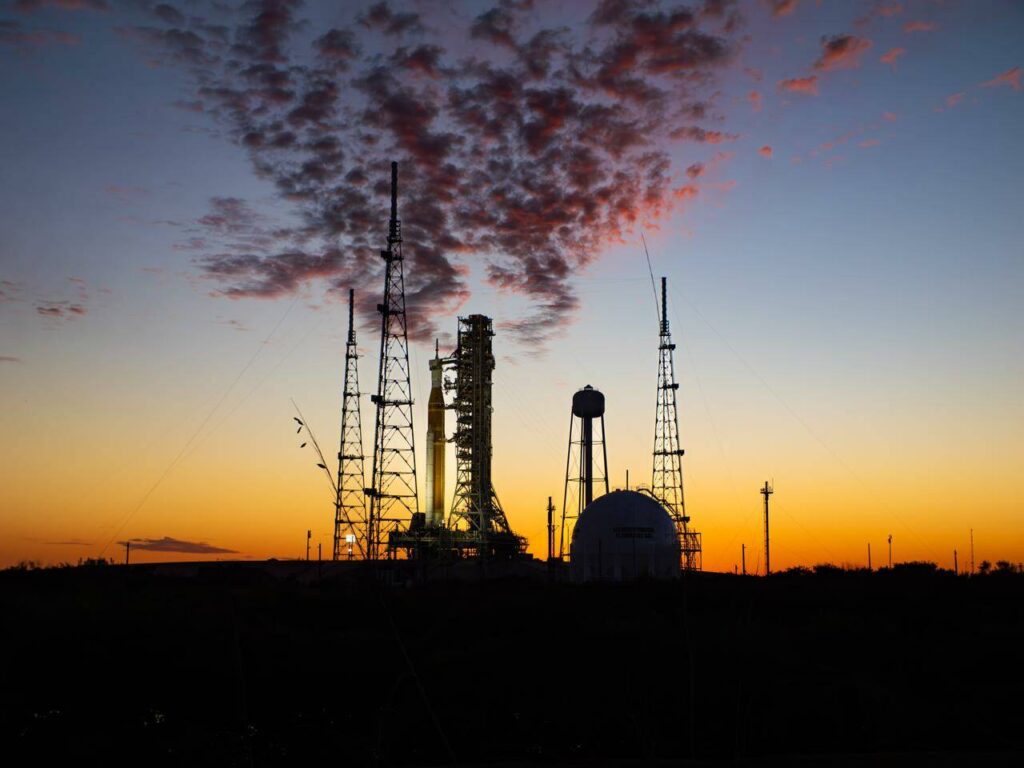
Artemis II on the launchpad at sunset (pic: NASA/Sam Lott)
The biggest problem was a liquid hydrogen leak. A leak in the interface that routes cryogenic propellant into the rocket’s core stage delayed engineers as the team opted to stop the flow of liquid hydrogen in the hope that warming the interface would allow the seals to reseat.
Eventually, the tanks in both the core stage and the interim cryogenic propulsion stage were filled, and the countdown could go ahead, but it was halted again at the five-minute mark when the ground sequencer automatically stopped proceedings due to a spike in the liquid hydrogen leak rate.
Other challenges included retorquing a valve associated with the Orion crew module hatch and dealing with communication dropouts, which had been an ongoing issue in the weeks leading up to the WDR.
Liquid hydrogen is a notoriously difficult fuel to work with, and NASA’s first Artemis SLS launch suffered similar problems. Things appear to have gone more smoothly this time, but the leaks still ended up halting the countdown before the tanks could be pressurized and the vehicle switched to internal power.
NASA did not confirm if the rocket will need to be rolled back to the Vehicle Assembly Building (VAB) or if the issues could be mitigated at the launch pad. However, having failed to reach the end of the WDR, a delay to the launch was inevitable, and the agency said the Artemis II crew would be released from quarantine.
The purpose of the WDR is to run through all the steps required to launch the rocket without actually launching it. As such, reaching T-5 minutes and 15 seconds was a case of “so near and yet so far” for the team.
The Register asked a chemical engineer with years of experience in dealing with liquid hydrogen and other cryogenics to comment on the recurrence of the leak issue, and he replied: “Repeating errors is generally frowned upon.”
After noting the challenges associated with handling liquid hydrogen, he added: “But then again, handling [liquid hydrogen] is hardly (ahem) rocket science.”
“You’d think the post-launch review from three years ago might have led with:
‘So, what can we improve on?’
‘Well, it’d be good not to trash the launch tower each time…’
‘Oh, and we should probably give that whole hydrogen pissing out all over the place issue a coat of looking at.’”
The recurrence of hydrogen leaks above acceptable levels will require investigation and mitigation, which is, as ever, one of the reasons why the WDR exists.
A delay to March creates an intriguing possibility that Artemis II’s launch could go ahead at the same time as SpaceX’s next Starship test flight. NASA has only managed one SLS launch so far, but the mission to the Moon was a tremendous success. SpaceX’s approach of moving fast and breaking stuff has, in comparison, yielded more but patchier results. ®